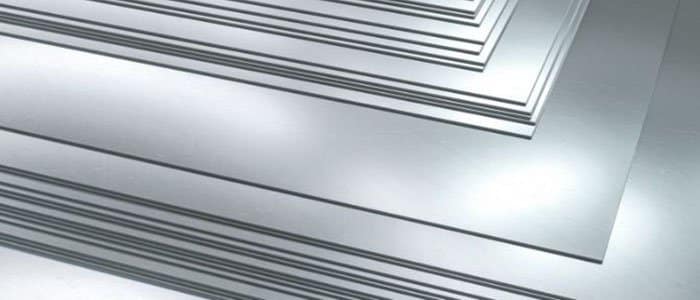



Among the many grades of stainless steel, 904L stands out for its exceptional corrosion resistance, making it a material of choice for demanding industrial environments. For engineers, procurement professionals, and project managers, a comprehensive understanding of 904L stainless steel is crucial. At Daxun Alloys Co., Ltd., we frequently receive inquiries about this high-performance material. This guide will provide an in-depth look at every aspect of 904L stainless steel.
What is 904L Stainless Steel?
904L is a highly alloyed austenitic stainless steel, often referred to as a “super-austenitic” stainless steel. It was specifically designed to withstand more corrosive environments than conventional stainless steels like 304 or 316L, particularly offering superior resistance to strong acids such as sulfuric and phosphoric acid.
Its main characteristics include:
- Extremely Low Carbon Content:With a carbon content below 0.020%, it effectively prevents intergranular corrosion after welding.
- High Nickel and Molybdenum Content:The addition of nickel (~25%) and molybdenum (~4.5%) significantly enhances its resistance to pitting and crevice corrosion in reducing acids and chloride environments.
- Excellent Acid Resistance:It demonstrates outstanding resistance to various concentrations of sulfuric acid, phosphoric acid, and organic acids like acetic acid, at both ambient and elevated temperatures.
Chemical Composition
The chemical composition is the foundation of 904L’s performance. The table below shows its typical composition range (per the ASTM B625 standard):
| Element | Wt% |
| Carbon, C | ≤ 0.020 % |
| Chromium, Cr | 19 – 23 % |
| Copper, Cu | 1.0 – 2.0 % |
| Iron, Fe | 38.9 – 53 % |
| Manganese, Mn | ≤ 2.0 % |
| Molybdenum, Mo | 4.0 – 5.0 % |
| Nickel, Ni | 23 – 28 % |
| Silicon, Si | ≤ 1.0 % |
| Sulfur, S | ≤ 0.035 % |
Main Application Areas
Due to its outstanding properties, 904L stainless steel is widely used in the following highly demanding industries:
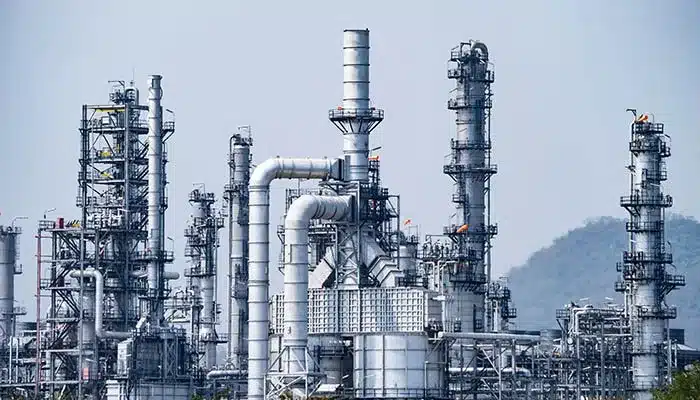
- Chemical Processing:For equipment in sulfuric, phosphoric, and acetic acid production, such as heat exchangers, reactors, distillation columns, and piping systems.
- Oil and Gas:Used for pipelines, valves, and pressure vessels in acidic environments containing high concentrations of hydrogen sulfide (H₂S) and carbon dioxide (CO₂).
- Pharmaceutical & Biotechnology:Its high purity and corrosion resistance make it an ideal material for equipment producing pharmaceuticals and biological products.
- Pulp and Paper Industry:Used in digesters and bleaching towers to resist the strong corrosion of bleaching agents.
- Marine Engineering:In some critical marine structural components to resist corrosion in high-salinity environments.
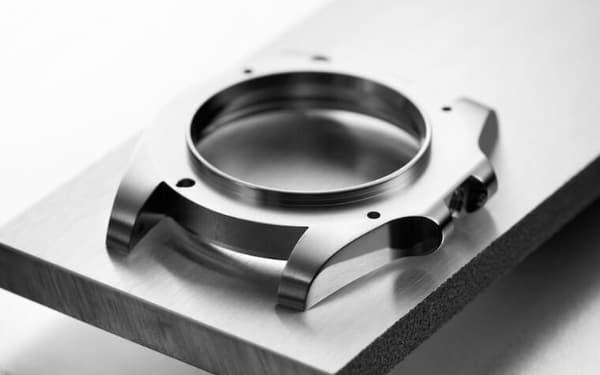
- Luxury Goods:The famous watch brand Rolex uses 904L steel for its watch cases because it is more corrosion-resistant and achieves a better polish after finishing than 316L.
Advantages and Disadvantages
Advantages:
- Superior Corrosion Resistance:Especially in reducing acids and chloride environments, far surpassing conventional stainless steels like 316L.
- Good Weldability:The low carbon content prevents intergranular corrosion after welding, eliminating the need for post-weld heat treatment.
- High Mechanical Strength:It possesses good tensile and yield strength.
Disadvantages:
- Higher Cost:Nickel and molybdenum are precious metals, making the cost of 904L significantly higher than 304 and 316L.
- More Difficult to Machine:It has a greater tendency to work-harden than 316L, requiring more stringent cutting and forming processes.
Equivalent Grades of 904L Stainless Steel
| Country/Region | Standard | Equivalent Grade |
| EU | EN 10088-1 | X1NiCrMoCu25-20-5 (1.4539) |
| USA | ASTM A240 | 904L, N08904 |
| France | NF A35-576 | Z2NCDU25-20 |
| England | BS 1449 | 904S13 |
| Sweden | SS 14 25 62 | 2562 |
| Poland | PN 67/H-86020 | 00H22N24M4TCu |
Physical and Mechanical Properties
Understanding a material’s physical and mechanical properties is essential for engineering design. The following are typical performance data for 904L in the solution-annealed condition:
Physical Properties
| Property | Value |
| Density | 8.0 g/cm³ |
| Melting Point | 1350 – 1400 °C |
| Thermal Conductivity (20°C) | 12.0 W/m.K |
| Modulus of Elasticity | 190 GPa |
Mechanical Properties (Room Temperature)
| Property | Minimum Value |
| Tensile Strength (Rm) | 490 MPa |
| Yield Strength (Rp0.2) | 215 MPa |
| Elongation (A5) | 0.35 |
| Hardness | ≤ 90 HRB |
Processing of 904L Stainless Steel
As mentioned earlier, processing 904L presents certain challenges, but they can be effectively overcome with the correct methods.
- Machining: 904L is prone to work hardening. It is essential to use sharp carbide tools with lower cutting speeds and higher feed rates. Simultaneously, abundant and effective coolant must be used.
- Forming and Bending: It requires more force than 316L. It is recommended to perform solution annealing after cold forming to relieve stress and restore corrosion resistance.
- Welding:904L has good weldability. Filler metals like ER NiCrMo-3 or ER NiCrMo-4 are recommended. Preheating is not required, but the interpass temperature should be kept below 150°C.
These processing challenges can be complex for many manufacturers. At Daxun Alloys Co., Ltd., we not only supply high-quality 904L raw materials but also offer professional processing services, including cutting, forming, and welding, to help clients directly obtain parts that meet their specifications.
Standard Product Specifications
Daxun Alloys Co., Ltd. supplies 904L stainless steel in various forms to meet diverse project needs. Below are some common size ranges:
- Plates:
Thickness: 3mm – 50mm
Width: 1000mm – 2000mm
Length: 2000mm – 6000mm - Bars:
Diameter: Ø10mm – Ø300mm
Length: Typically 2m – 6m, or custom-cut to client requirements. - Pipes/Tubes:
Seamless Pipe OD: Ø6mm – Ø325mm
Wall Thickness: 1mm – 30mm
(Note: Specific specifications can be customized based on client requirements.)
Other Common Questions
Q1: What is the core difference between 904L and 316L stainless steel?
A: The core difference lies in corrosion resistance and cost. 904L has much higher nickel and molybdenum content than 316L, giving it superior performance against strong acids (especially sulfuric acid) and chloride pitting. However, it is also significantly more expensive. For non-extreme corrosive environments, 316L is a more cost-effective choice.
Q2: Is 904L stainless steel magnetic?
A: 904L is an austenitic stainless steel and is typically non-magnetic in the solution-annealed condition. However, after cold working (e.g., deep drawing, bending), it may exhibit slight magnetism due to the formation of martensite, which is a normal phenomenon.
Q3: How do you passivate the surface of 904L?
A: Passivation can further enhance its corrosion resistance. It is typically done by immersing the material in a nitric acid or citric acid solution to remove free iron and other contaminants from the surface, forming a dense, chromium-rich oxide film. Specific procedures should follow relevant standards.
Conclusion
904L stainless steel is a high-performance material designed for the most corrosive environments. Its high-alloy composition provides excellent acid and pitting resistance, making it indispensable in industries like chemical processing, oil and gas, and pharmaceuticals. While its cost and processing difficulty are relatively high, its value is clear for critical equipment that demands long-term stability and safety.
Choosing the right material supplier is equally important. Daxun Alloys Co., Ltd. specializes in providing high-quality nickel-based alloys and specialty stainless steels. We have extensive inventory and a professional technical team to provide your project with one-stop solutions from material selection to custom fabrication.
If you are looking for a reliable 904L stainless steel supplier for your project, feel free to contact our team of experts at any time. We are ready to provide you with professional consultation and support.
Data source:
https://www.thyssenkrupp-materials.co.uk/stainless-steel-904l-14539.html
https://www.azom.com/article.aspx?ArticleID=1022