


When you ask us for titanium tubes, we know you are probably not looking for another basic lesson about titanium.
You may have a heat exchanger drawing waiting for approval, a condenser that needs retubing, or a purchasing deadline that is getting uncomfortably close. What you need from us is a clear answer: can we supply the right titanium tubes, in the right condition, with the right tests and documents?
The short answer is that titanium tubes for heat exchangers and condensers are commonly ordered to ASTM B338 or ASME SB-338. They can be supplied as seamless titanium tubes or welded titanium tubes. Grade 2 is a frequent starting point, while Grade 7 and Grade 12 may be considered when the corrosion conditions are more demanding.
But we would not want you to choose a grade or compare quotations from that short answer alone. The operating medium, tube construction, tolerances, tube-sheet connection and inspection plan matter just as much.
When You Send Us a Titanium Tube Inquiry, What Do We Look At First?
When we receive an inquiry that only says “Grade 2 titanium tube, 19.05 × 0.7 × 6,000 mm,” we can prepare a preliminary response, but we still have several questions.
Is the tube seamless or welded? Does the drawing specify ASTM B338 or ASME SB-338? Will the tube be mechanically expanded, seal welded or strength welded into the tube sheet? Which nondestructive tests are required? Does the customer need a specific MTC format or third-party inspection?
We ask these questions because we know what happens when they remain unanswered. A tube may meet the chemical requirements and still create trouble during installation because its OD, ovality, fixed length or tube-end condition does not match the equipment.
Table 1: Information We Confirm Before Quotation
| Item | What We Need to Confirm With You |
|---|---|
| Product | Heat exchanger tube, condenser tube, evaporator tube or general pipe |
| Main tube specification | ASTM B338 |
| ASME requirement | Whether ASME SB-338 is specified by the project |
| نمره | Grade 1, Grade 2, Grade 7, Grade 12 or another specified grade |
| ساختمانسازی | Seamless, welded or welded and cold-worked |
| ابعاد | Outside diameter × wall thickness × fixed or random length |
| Tolerances | OD, wall, ovality, straightness and length |
| Service conditions | Medium, concentration, pH, temperature, pressure and velocity |
| Inspection | Mechanical tests, NDT, pressure testing and third-party requirements |
| Documents | MTC, heat traceability and inspection records |
DAXUN’s general seamless pipe and tube capability covers OD Φ4-1219 mm, wall thickness 0.5-100 mm and lengths up to 24,000 mm. Our general welded range covers OD Φ6-2800 mm, wall thickness 0.3-45 mm and lengths up to 18,000 mm.
We present these as company-wide production ranges, not as a promise that every size is available from ASTM B338 stock. Once you tell us the grade, construction, tolerance and quantity, we can confirm what is genuinely workable.
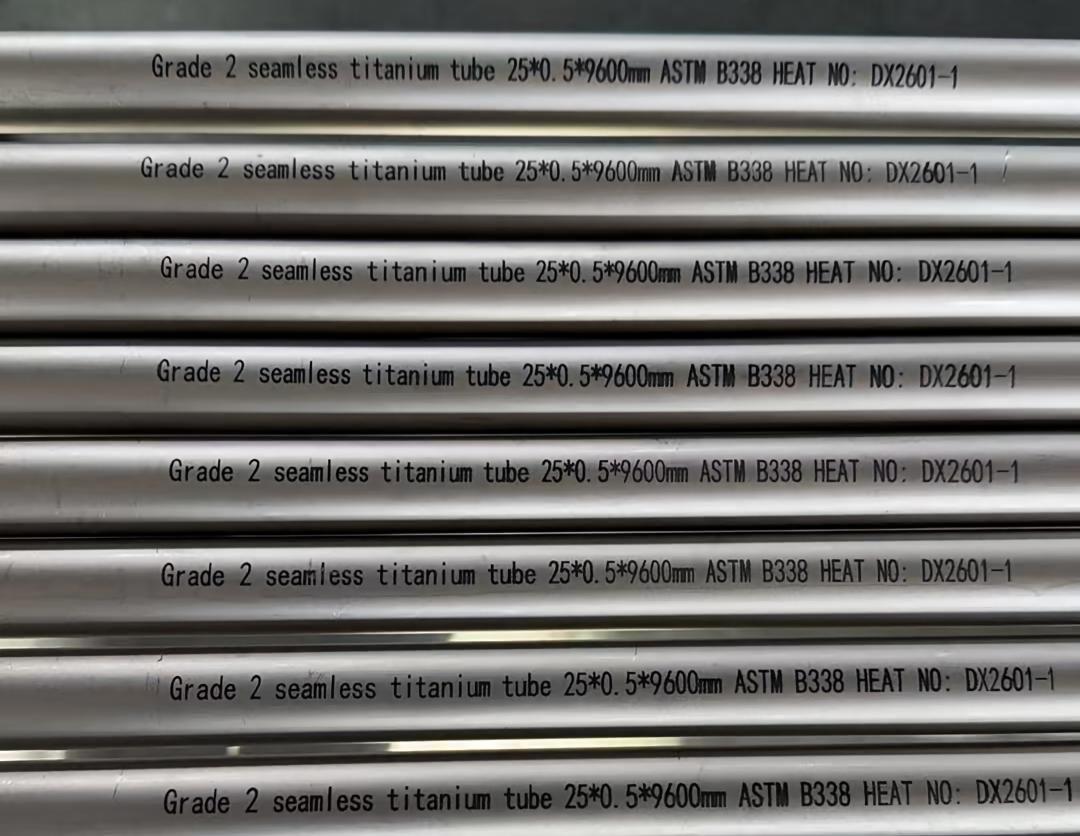
If Your Drawing Says ASTM B338, We Keep the Product Standard Clear
For condensers, evaporators, and heat exchangers, we normally work with ASTM B338, which covers both seamless and welded titanium tubes.
If your project requires seamless titanium pipe for general corrosion-resistant or elevated-temperature service, we review it against ASTM B861. For welded titanium pipe in similar service, we refer to ASTM B862.
These standards may be useful for equipment piping, but we would not quietly replace an ASTM B338 heat exchanger tube with a B861 or B862 pipe.
In everyday conversations, “tube” and “pipe” are often mixed together. In an order, that small wording difference can change the dimensions, manufacturing route and inspection requirements. We prefer to settle it before quotation rather than explain it after production.
Why Do We Ask About the Operating Medium Before Recommending a Grade?
Titanium is often considered because seawater, brine, chlorides or corrosive process fluids have made maintenance difficult with other tubing materials.
Commercially pure titanium develops a stable oxide film that provides useful corrosion resistance in many oxidizing and chloride-bearing environments. Its relatively low density can also reduce the weight of a large tube bundle.
Still, we do not want to tell you that titanium is suitable simply because the inquiry contains the word “seawater.”
We need to know the temperature, pH, concentration, deposits, flow conditions, shutdown environment, cleaning method and cathodic-protection arrangement. Hot crevices, reducing acids, hydrogen uptake, galvanic interaction and contaminated surfaces may change the material decision.
We also avoid describing titanium as the material with the “best thermal conductivity.” It is not. Actual exchanger performance depends on wall thickness, fluid-film coefficients, flow velocity, surface cleanliness, fouling and equipment design. What titanium can offer is the possibility of a thin, corrosion-resistant tube that remains serviceable and clean for longer.
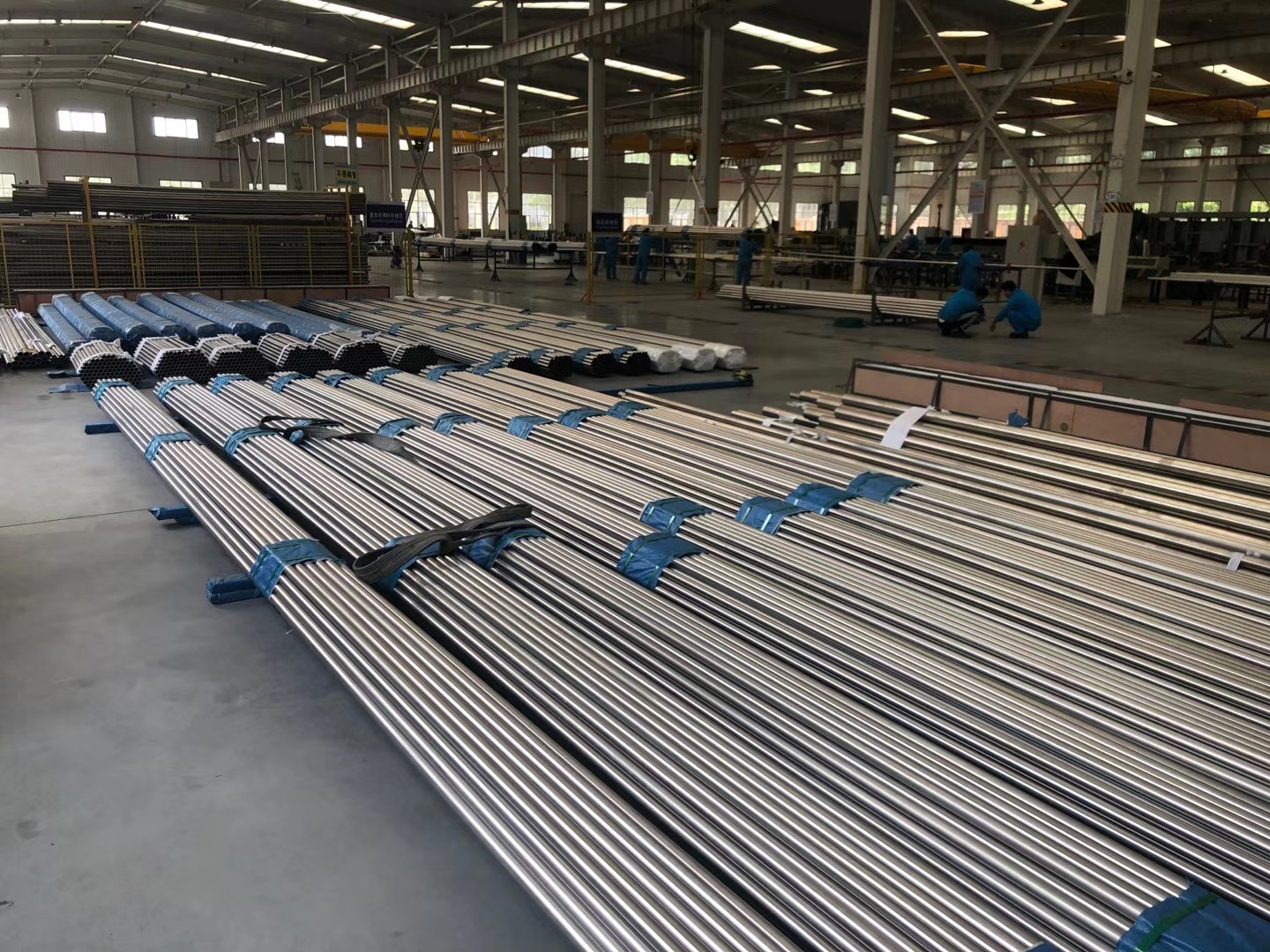
How Do We Discuss Grade 2, Grade 7, and Grade 12 ith You?
Grade 2 is where many conversations begin. It is commercially pure titanium and is frequently evaluated for seawater, brackish water and industrial cooling systems.
But we do not treat Grade 2 as a universal answer. When the service involves more difficult reducing-acid or crevice conditions, we may ask whether Grade 7 or Grade 12 has already been evaluated by the equipment designer.
Table 2: How We Compare Common Titanium Tube Grades
| نمره | بدون سرویس | Composition Focus | Indicative Minimum UTS / YS / Elongation | When We Would Discuss It |
| پایهٔ اول | R50250 | Lower-strength commercially pure titanium | 240 MPa / 170 MPa / 24% | When ductility and thin-wall forming are important |
| دوم | R50400 | Commercially pure titanium | 345 MPa / 275 MPa / 20% | As a common starting point for seawater and industrial cooling systems |
| پایه هفتم | R52400 | Grade 2-type titanium with 0.12-0.25% Pd | 345 MPa / 275 MPa / 20% | When certain reducing-acid or crevice-corrosion risks need additional review |
| Grade 12 | R53400 | Nominal Ti-0.3Mo-0.8Ni | 483 MPa / 345 MPa / 18% | When higher strength or improved performance in certain hot-brine and crevice environments is needed |
These values help us discuss the order, but they do not replace the specified standard. We will check the required chemistry, mechanical properties, sampling and acceptance criteria against the standard edition written on your purchase order. The final MTC governs the shipped material.
We would rather tell you that a corrosion review is still needed than recommend a more expensive grade without understanding the fluid.
Seamless or Welded Titanium Tubes? We Make the Difference Visible
Titanium tubes are divided into two principal categories: seamless titanium tubes and welded titanium tubes.
A seamless tube starts from billet, bar or hollow stock. The material is heated and pierced, then cold rolled or cold drawn until the required dimensions are reached.
A welded tube starts from titanium strip or coil. The strip is formed into a round section and automatically welded along its length. For ASTM B338 welded tube, the required cold work and subsequent heat treatment are important for establishing the final weld-zone structure and tube properties.
We do not describe seamless tube as automatically superior, and we do not treat welded tube as a cheaper substitute. Both can be appropriate when the construction is accepted by the drawing and the specified manufacturing and inspection requirements are satisfied.
For a thin-wall condenser bundle with a large quantity, welded titanium tube may offer practical dimensional consistency and production economics. If your design or qualification requires seamless tube, we follow that requirement from the beginning.
Table 3: How We Produce Seamless and Welded Titanium Tubes
| Production Stage | Seamless Titanium Tube | Welded Titanium Tube | What It Means for Your Order |
| Raw material | Heat-numbered billet, bar or hollow stock | Heat-numbered titanium strip or coil | We establish grade identity and traceability |
| Forming | Centering, heating and piercing | Slitting, edge preparation, forming and automatic welding | We follow the construction stated on your order |
| Size reduction | Cold rolling or cold drawing, sometimes in several passes | Cold reduction and sizing where required | We control dimensions and final structure |
| Cleaning | Pickling, lubrication control and degreasing | Weld-zone cleaning, degreasing and surface treatment | We reduce contamination and surface defects |
| پختوپز | Annealing according to grade and order | Annealing after the required cold work | We support mechanical properties and dimensional stability |
| پایان دادن | Straightening, cutting, tube-end finishing and cleaning | Sizing, straightening, cutting, tube-end finishing and cleaning | We prepare the tube for inspection and installation |
| Release | Inspection, testing, marking and packing | Weld-related inspection, testing, marking and packing | We link the physical tubes to their records |
The exact sequence may change with grade, diameter, wall thickness and order specification. Before we confirm a quotation, we check whether the proposed route can achieve the dimensions, tolerances and tests you need.
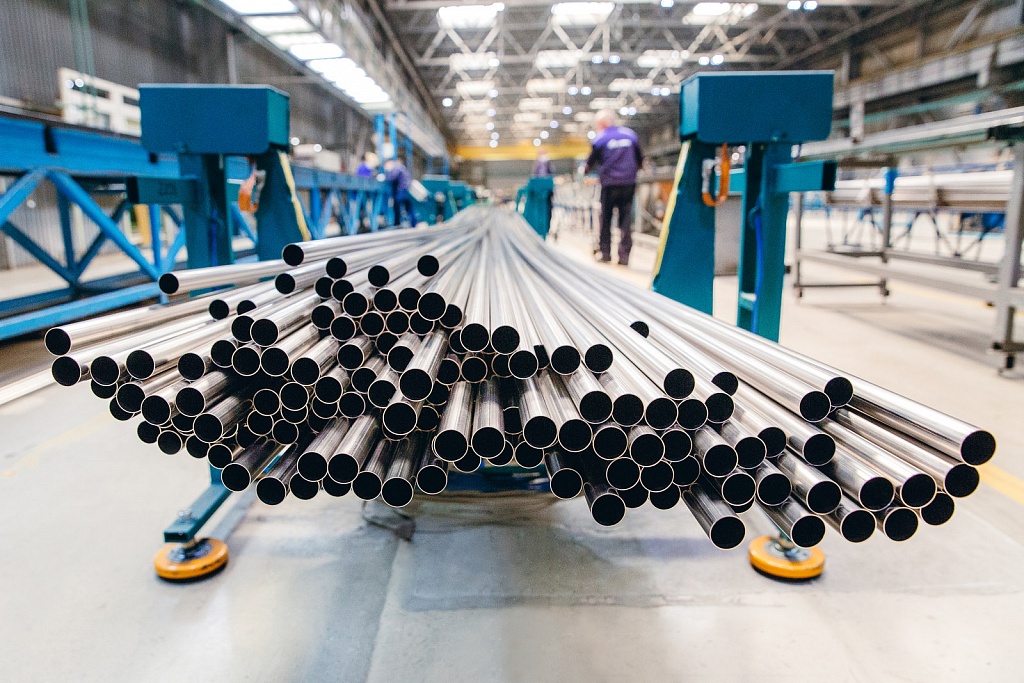
How Do We Control the Quality of Titanium Tubes?
For a condenser containing hundreds or thousands of tubes, one repeated dimensional problem can hold up an entire installation. We therefore look beyond chemical composition.
We check whether the physical tubes match the documents, whether the OD and ovality match the tube-sheet requirements, whether the wall thickness is controlled and whether the required test route has been completed.
Table 4: Our Titanium Tube Inspection and QC Flow
| Inspection Stage | What We Check | Why It Matters to You |
| Incoming material | Grade, heat number, chemistry and source documents | Your material remains traceable |
| ابعاد | OD, wall, length, ovality, straightness and tube ends | The tubes can match the tube sheet and installation process |
| سطح | Cracks, laps, pits, scratches, contamination and weld condition | You receive tubes suitable for further fabrication |
| Mechanical tests | Tensile and applicable flattening tests | The specified properties are verified |
| Welded-tube tests | Reverse flattening and applicable weld examination | The weld zone receives specific attention |
| Nondestructive testing | Electromagnetic and ultrasonic testing according to construction and standard | Relevant discontinuities can be identified |
| Pressure or leak testing | Hydrostatic or pneumatic testing where required | Tube integrity is checked before release |
| Document review | MTC, heat number, quantity, marking and test records | The shipment and records remain consistent |
| Additional inspection | PMI, applicable radiographic testing or third-party witnessing | We agree on the method and acceptance criteria before production |
ASTM B338 does not apply one identical test combination to every tube construction. If your inquiry only says “standard testing,” we may come back to you for clarification. That extra conversation protects both sides from assuming different inspection scopes.
Why Do We Ask About the Tube Sheet?
A tube may pass its material tests and still be difficult to install. That is why we ask about the tube sheet before production, especially for thin-wall or tightly controlled condenser tubes.
We want to understand:
- The tube-sheet material and hole dimensions
- Whether the joint is mechanically expanded, seal welded or strength welded
- The required OD, wall and ovality tolerances
- Fixed length and tube projection
- Surface condition in the expanded or welded area
- Tube-end cleaning and protection
- Inspection required after installation
If the tubes will be welded to the tube sheet, the equipment fabricator remains responsible for the welding procedure, qualification and completed joint. Supplying ASTM B338 material does not by itself certify the completed heat exchanger as ASME compliant.
Heat Exchanger and Condenser Projects Do Not Ask the Same Questions
For a process heat exchanger, we usually ask about both media, operating and design temperatures, pressure, contamination, cleaning chemistry and the consequences of leakage between the two sides.
For a surface condenser, we also pay attention to cooling-water quality, chlorides, debris, biofouling, vacuum conditions, tube velocity, support-plate spacing, vibration and water-box materials.
We make this distinction because a corrosion-resistant tube cannot solve every mechanical problem. Poor support spacing, flow-induced vibration, debris impact or incorrect expansion can still damage titanium tubing.
What Changes the Price and Delivery Time?
When you ask us for a price, the grade and weight are only part of the calculation.
The quotation can also change with seamless or welded construction, OD, wall thickness, reduction passes, fixed length, tolerances, quantity, heat treatment, surface condition, NDT, pressure testing, third-party inspection, documentation and export packing.
Grade 7 and Grade 12 should not be compared with Grade 2 on price per kilogram alone. A lower quotation may also exclude tests or documents that another supplier has included. We prefer to show the quotation basis clearly so you can compare like with like.
What Should You Send Us for an Accurate Quotation?
Table 5: Information We Need From You
| RFQ Field | Information to Provide |
| کاربرد | Heat exchanger, condenser, evaporator or general piping |
| استاندارد | ASTM B338 or ASME SB-338, including edition |
| نمره | Grade and UNS number |
| ساختمانسازی | Seamless, welded or welded and cold-worked |
| ابعاد | OD × wall thickness × length |
| Tolerances | OD, wall, length, ovality and straightness |
| Quantity | Number of tubes, total length or total weight |
| Service | Medium, concentration, pH, temperature, pressure and velocity |
| Installation | Tube-sheet material, hole size and joining method |
| Inspection | Mechanical tests, NDT, pressure test and additional inspection |
| Documents | MTC, traceability, test reports and third-party requirements |
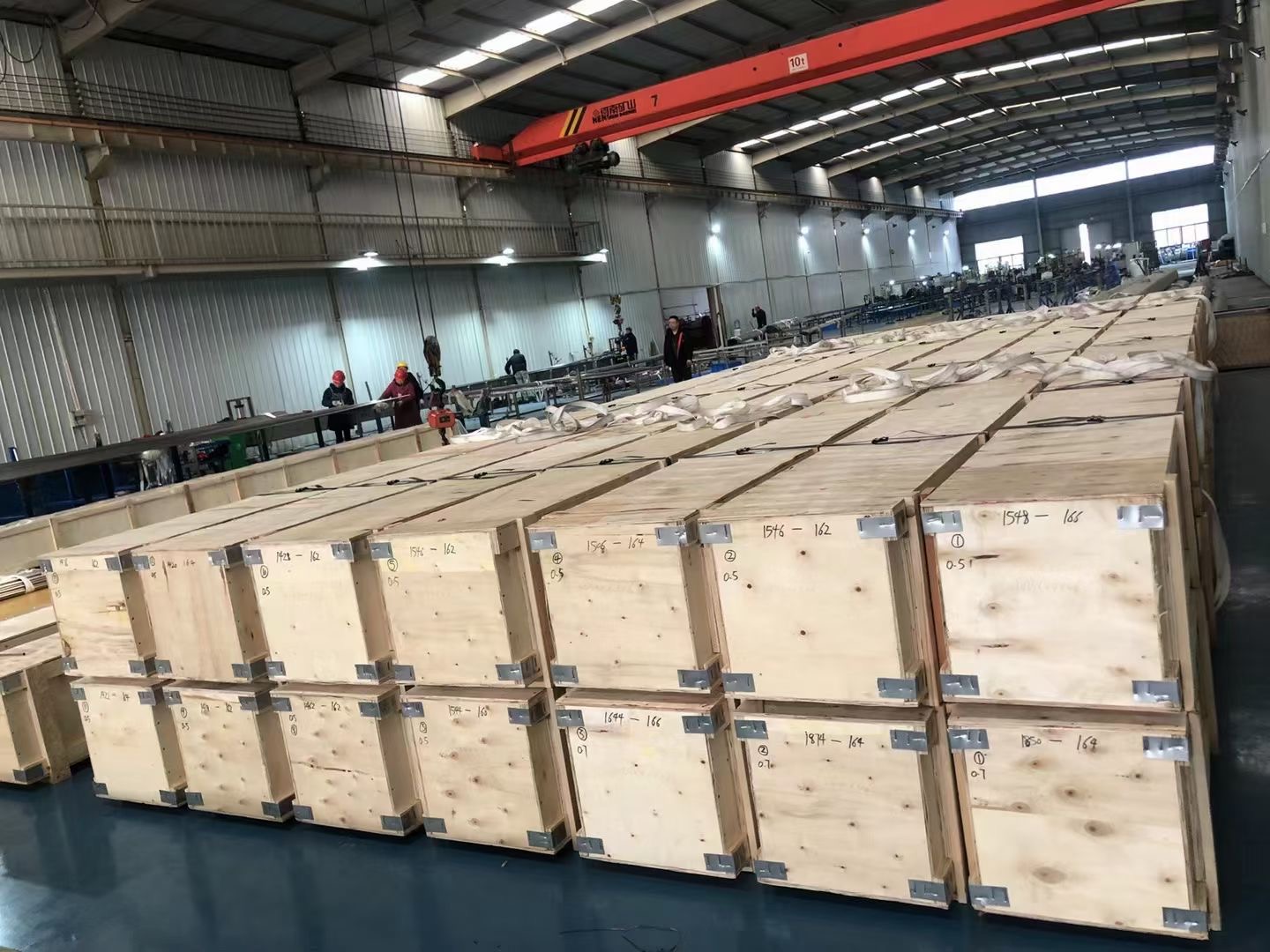
| Packing | End protection, waterproof wrapping, wooden cases and shipping marks |
If some operating information is unavailable, send us the drawing and the data you already have. We can identify the missing points that affect material supply and quotation.
سوالات متداول
Can you supply both seamless and welded titanium tubes?
Yes. We can discuss seamless, welded and welded/cold-worked construction according to the specified grade, dimensions, quantity and inspection requirements.
Which standard do you normally use for heat exchanger tubes?
When your project involves titanium tubes for condensers, evaporators, or heat exchangers, we normally work with ASTM B338 as the primary product specification.
Do you always recommend Grade 2 for seawater?
No. Grade 2 is a common starting point, but we still ask about temperature, deposits, crevices, cathodic protection, contamination and shutdown conditions before confirming the material direction.
Is seamless titanium tube better than welded titanium tube?
Not in every project. We follow the equipment specification and compare the manufacturing route, dimensions, inspection, quantity, delivery and overall project requirements.
Can you produce custom diameters and fixed lengths?
We can discuss custom production. We first need to check the grade, construction, OD, wall thickness, tolerance, quantity, tooling and test plan.
What will you include in the MTC?
The certificate content follows the order. It should identify the specification, grade, heat number, chemistry, applicable mechanical results and agreed inspection records.
Can you arrange third-party inspection?
Before we prepare the quotation, we can work with you to arrange third-party inspection. Together, we will confirm the inspection agency, hold points, test scope, and acceptance criteria.
How do you protect thin-wall tubes during shipment?
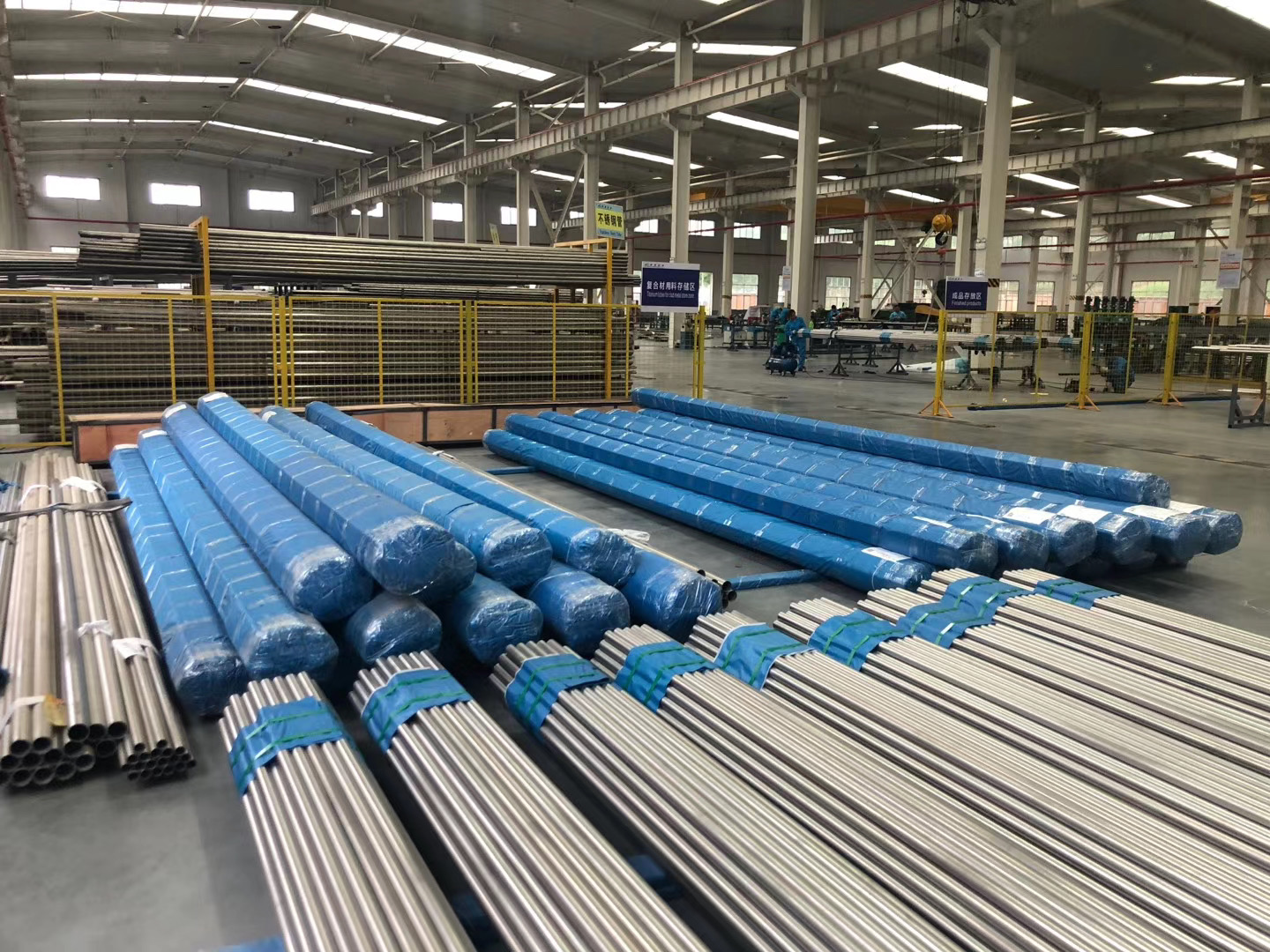
Depending on the size and destination, we can discuss bundle protection, end caps, waterproof wrapping and wooden cases to reduce scratching, contamination and tube-end damage.
Let’s Make the Quotation Worth Comparing
When you send us a titanium tube inquiry, our job is not only to return a number. We want to make sure the number refers to the material, construction, dimensions, tests, documents and packing that your project actually needs.
Send DAXUN ALLOY your drawing or specification together with the operating medium, temperature, pressure, dimensions, quantity and inspection requirements. We will review the technical basis with you before finalizing the quotation.