


In the world of advanced metallurgy, finding a material that balances high strength with excellent workability is often the holy grail for engineers. While Ti-6Al-4V is the industry standard, Titanium 15-3-3-3 (also known as Ti-15V-3Cr-3Al-3Sn) has emerged as a game-changer, particularly in the aerospace sector.
But what exactly makes this alloy unique? In this guide, we will dive deep into the chemistry, microstructure, and applications of Titanium 15-3-3-3, providing the insights you need to source and utilize this material effectively.
What is Titanium 15-3-3-3?
Titanium 15-3-3-3 is a metastable beta titanium alloy. Its name derives from its chemical composition:
- 15%Vanadium (V)
- 3%Chromium (Cr)
- 3%Aluminum (Al)
- 3%Tin (Sn)
- Balance:Titanium (Ti)
Originally developed in the 1960s to replace high-strength steels in airframe applications, this alloy is distinct because of its internal atomic arrangement.
Understanding the Beta Phase Structure
To truly understand the capabilities of Ti-15-3-3-3, we must look at its crystal structure. Titanium naturally exists in two different crystal phases depending on the temperature:
- Alpha Phase (α):At lower temperatures, titanium atoms arrange themselves in a Hexagonal Close-Packed (HCP) This is a very tight, densely packed arrangement. While strong, it limits the number of ways the atoms can slide past one another, making alpha alloys generally more difficult to form and shape at room temperature.
- Beta Phase (β):At high temperatures, the atoms shift into a Body-Centered Cubic (BCC) This structure is more “open” and less densely packed than the alpha phase.
What makes Titanium 15-3-3-3 special is that it retains this Beta Phase structure at room temperature. This is achieved through the addition of “beta stabilizers” like Vanadium and Chromium, which prevent the atoms from reverting to the tight alpha structure when the metal cools. The result? The atomic lattice allows for much easier movement (slip), giving the alloy significantly better ductility and formability than standard alpha or alpha-beta alloys.
Key Properties of Ti-15V-3Cr-3Al-3Sn
When selecting materials for high-performance applications, understanding the mechanical and physical properties is crucial. Here is why Titanium 15-3-3-3 stands out:
1. Exceptional Cold Formability
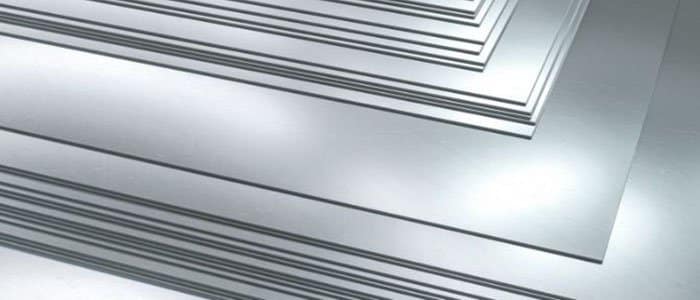
One of the biggest challenges with titanium alloys is their difficulty to form. However, Ti-15-3-3-3 is known for its superior cold formability. Thanks to its BCC beta structure, it can be formed in a solution-treated condition using standard equipment typically used for steel stamping. This makes it a cost-effective choice for manufacturing complex parts.
2. High Strength-to-Weight Ratio
Like most titanium alloys, 15-3-3-3 offers an outstanding strength-to-weight ratio. In the aged condition, it can achieve tensile strengths exceeding 1200 MPa (174 ksi), making it comparable to some high-strength steels but at a fraction of the weight.
3. Deep Hardenability
Thanks to its beta-stabilizing elements (Vanadium and Chromium), this alloy has excellent deep hardenability. Unlike some alpha-beta alloys that may require rapid cooling, large sections of Ti-15-3-3-3 can be heat treated to achieve uniform strength throughout.
4. Good Corrosion Resistance
While it may not match the corrosion resistance of pure titanium or Grade 5 (Ti-6Al-4V) in every environment, it still performs exceptionally well in oxidizing atmospheres and many marine applications.
Common Applications
The unique combination of beta-phase ductility and high strength has made Titanium 15-3-3-3 a favorite in demanding industries:
- Aerospace Components:It is widely used for airframe structures, fasteners, springs, and landing gear components where complex shapes are required.
- Jet Engines:Used for compressor blades, discs, and casings where high-temperature strength is needed.
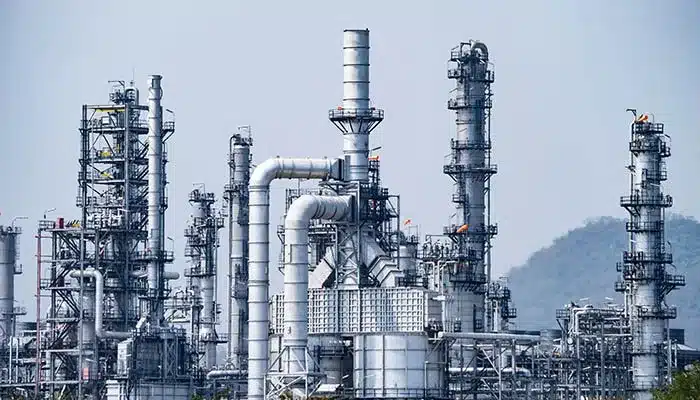
- Chemical Processing:Due to its resistance to certain corrosive environments, it is used in heat exchangers and pressure vessels.
Ti-15-3-3-3 vs. Ti-6Al-4V
| Feature | Ti-15-3-3-3 | Ti-6Al-4V |
| Crystal Structure | Metastable Beta (BCC) | Alpha-Beta (HCP + BCC) |
| Formability | Excellent (Cold formable) | Moderate (Often requires hot forming) |
| Heat Treatment | Can be aged after forming | Typically annealed |
| Density | Lower density (~4.76 g/cm³) | Higher density (~4.43 g/cm³) |
| Best Use Case | Complex shapes, fasteners, springs | General-purpose, high-temp parts |
Verdict: If your project involves complex shapes or sheet metal forming, Titanium 15-3-3-3 is often the superior technical and economic choice due to its room-temperature ductility.
Heat Treatment of Titanium 15-3-3-3
To achieve maximum strength, Ti-15-3-3-3 undergoes a two-step heat treatment process that manipulates the beta phase:
- Solution Treating:The material is heated to around 760°C–815°C (1400°F–1500°F) and then water quenched. This keeps the material in a single, soft beta phase, making it ductile and ready for forming.
- Aging:After forming, the material is aged at a lower temperature (typically 430°C–480°C or 800°F–900°F) for several hours. This causes fine alpha particles to precipitate within the beta matrix. These particles act as obstacles, locking the atomic structure in place and significantly increasing the strength.
Conclusion
Titanium 15-3-3-3 is a versatile, high-performance alloy that solves one of the biggest problems in metallurgy: how to get the strength of titanium without the manufacturing headaches. Its unique ability to retain a Beta phase structure at room temperature gives it unparalleled cold formability, making it an indispensable material for modern engineering.
If you are planning a project that requires precision-engineered titanium alloys, or if you want to learn more about our inventory of stainless steel, carbon steel, and titanium products, feel free to reach out to us.
*Looking for a reliable supplier for your next project? Contact Daxun Alloys Co., Ltd. today for a quote on Titanium 15-3-3-3 and other high-performance alloys.*