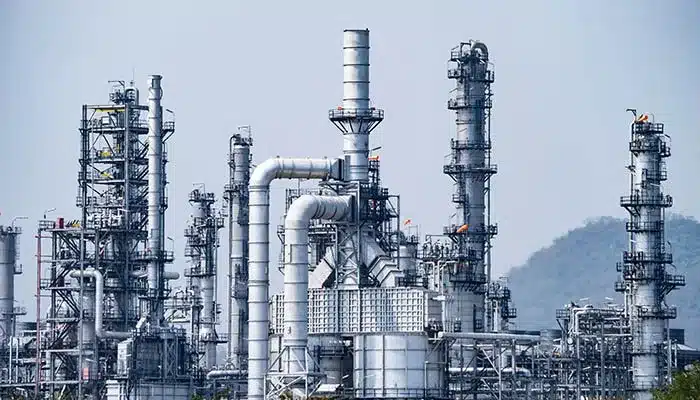



Heat exchangers are the workhorses of countless industrial processes, from power generation and chemical processing to marine propulsion and desalination. Their efficiency and longevity depend heavily on one critical component: the tubes. In demanding environments where conventional materials fail, titanium tubes have become the material of choice.
This article explores the practical reasons why, and how to select the right titanium tubes for your heat exchange applications.
Why Choose Titanium Tubes for Heat Exchangers?
The selection of titanium tubes is based on titanium’s unique properties, making it an exceptionally practical heat exchanger solution both in terms of material characteristics and long-term benefits.
Exceptional Corrosion Resistance: This is titanium’s most significant advantage. A stable oxide protective layer forms on its surface, granting it formidable corrosion resistance. This is particularly critical in high-chloride environments such as seawater, brackish water, and various chemical solutions. Unlike stainless steel or copper alloys, titanium tubing effectively resists pitting corrosion, crevice corrosion, and stress corrosion cracking, ensuring extended service life.
High Strength-to-Weight Ratio: Titanium combines exceptional strength with significant lightweight properties, being substantially lighter than steel. This characteristic offers advantages in weight-sensitive applications such as offshore platforms, aerospace systems, and marine condensers.
Superior Thermal Conductivity: While other metals may have higher thermal conductivity coefficients, titanium’s outstanding heat transfer capability combined with extreme durability makes it a reliable overall choice. The thin-walled construction commonly employed in titanium tube designs compensates for its thermal conductivity limitations, enabling highly efficient heat transfer performance.
Long-Term Cost Efficiency: While titanium tubes have a higher initial cost than other materials, their total lifecycle cost is typically lower. Extended service life, reduced maintenance requirements, and minimized downtime due to tube failures generate significant cost savings over the heat exchanger’s operational cycle.
Common Heat Exchanger Designs Using Titanium Tubes
The unique properties of titanium tubes make them the preferred material for several heat exchanger designs, especially where corrosion resistance is paramount. Here are the most common types that utilize titanium tubes:
Shell and Tube Heat Exchangers: This is the most widespread application for titanium tubes. In this design, a bundle of tubes is housed inside a cylindrical shell. One fluid flows through the tubes, while another flows over the tubes within the shell. Titanium is ideal for the tube side, especially when handling corrosive media like seawater in power plant and desalination plant condensers, or aggressive chemicals in process coolers. The robustness of the shell-and-tube design, combined with titanium’s durability, creates a highly reliable solution for harsh environments.
U-Tube Heat Exchangers: This is a variation of the shell-and-tube design where the tubes are bent into a U-shape. This design allows the tube bundle to expand and contract freely with thermal changes without inducing thermal stress, making it ideal for applications with large temperature differentials. The U-tubes are typically made from a single continuous titanium tube, which eliminates joints inside the tube sheet—a potential point of leakage.
Double Pipe Heat Exchangers: This is a simpler design consisting of one pipe inside another larger pipe. It is often used for smaller flow rates or high-pressure applications. Using titanium for the inner pipe provides excellent corrosion resistance for the process fluid while maintaining the structural integrity of the outer pipe.
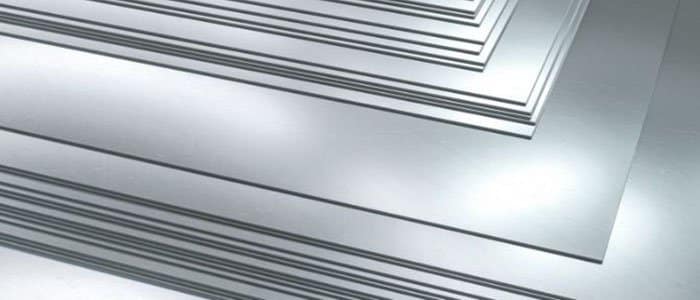
In addition to heat exchangers utilizing titanium tubes, there is also a plate heat exchanger. The plate heat exchanger surpasses traditional tube-type designs, achieving significant leaps in efficiency and compactness. It utilizes a series of stacked thin corrugated titanium plates instead of conventional tubular structures. Gaskets along each plate’s edges guide hot and cold fluids into alternating flow channels. The corrugated plate structure generates high turbulence, significantly enhancing the heat transfer coefficient while minimizing fouling.
Learn more about titanium heat exchangers >>
Seamless vs. Welded Tubes: How to Choose
The decision between seamless and welded titanium tubes is a critical engineering consideration that balances performance requirements with budget constraints. Both types are manufactured to meet strict industry standards, but their production processes and inherent characteristics make them suitable for different applications.
Seamless titanium tube
Seamless titanium tubes are produced by extruding or piercing a solid titanium billet to form a hollow tube. This process creates a tube with a uniform, homogeneous wall and no longitudinal weld seam.
The primary benefit of a seamless tube is its uniform strength. In high-pressure environments, the weld seam in a welded tube can be a point of concentrated stress. A seamless tube eliminates this potential weak point, providing consistent structural integrity around its entire circumference.
When to specify seamless: Seamless tubes are the preferred choice for applications with extremely high design pressures, aggressive cyclic loading, or where specified by stringent industry codes (e.g., certain ASME pressure vessel applications). They offer peace of mind in the most demanding conditions where failure is not an option.
Welded titanium tube
Produced by forming and welding a flat strip of titanium, modern welding techniques (like TIG and laser welding) create a high-quality, reliable weld.Crucially, high-quality welded tubes undergo a weld annealing heat treatment after welding. This process relieves the internal stresses from forming and welding, restores the corrosion resistance in the weld area, and ensures the mechanical properties of the weld match those of the parent metal.
Advantages of titanium welded tube: The welded process is more material-efficient and less costly, resulting in a lower price point for the end-user. Furthermore, welded tubes can often be produced in longer continuous lengths and with shorter lead times than seamless tubes.
Learn about the manufacturing processes of titanium welded pipes and seamless pipes >>
Standards and Dimensions for Heat Exchanger Tubes
When sourcing titanium tubes for these systems, adhering to established industry standards is non-negotiable for ensuring quality and compatibility. The most common specification for seamless and welded titanium tubes is ASTM B338. This standard covers the requirements for grade, dimensions, mechanical properties, and testing.
Common dimensions for heat exchanger applications typically include:
- Outer Diameter (OD): Ranging from 6mm to 50mm (1/4″ to 2″).
- Wall Thickness: Usually between 0.5mm and 3.0mm, depending on the pressure and temperature requirements.
The final selection of dimensions is always dictated by the specific design parameters of the heat exchanger, including operating pressure, temperature, and the fluid properties involved.
Selecting the Right Titanium Grade
Not all titanium is the same. The grade you choose depends on the specific operating environment. For heat exchangers, two grades are most common:
- Grade 1 (Gr1):This is the softest and most ductile grade of titanium, offering the best formability. It has excellent corrosion resistance and is typically used in applications with lower mechanical stress but highly corrosive environments.
- Grade 2 (Gr2): This is the “workhorse” grade and the most widely used for heat exchangers. It provides a balanced combination of moderate strength, good weldability, and outstanding corrosion resistance. For most general-purpose industrial and marine applications, Grade 2 is the standard and most reliable choice.
For more aggressive environments, such as those with reducing acids or high temperatures, Grade 7 (Gr2 + Pd) or Grade 12 may be specified, as they offer enhanced corrosion resistance.
Inspection and Testing
To guarantee performance and safety, rigorous quality control is essential. At Daxun Alloys Co., Ltd., we understand that trust is built on verifiable quality. Every batch of our heat exchanger tubes undergoes a comprehensive inspection process.
Key inspection methods include:
- Dimensional Inspection: Verifying outer diameter, wall thickness, and length.
- Visual Inspection: Checking for surface defects.
- Non-Destructive Testing (NDT):This is critical for detecting internal and surface flaws. We routinely perform Eddy Current Testing (ET) to find surface defects and Ultrasonic Testing (UT) to verify internal integrity.
- Mechanical and Chemical Analysis:Tensile tests, hardness tests, and spectrometry analysis ensure the tubes meet the required grade specifications.
Furthermore, we support third-party inspections from internationally recognized agencies like TUV and SGS. This provides our clients with an independent verification of quality, giving them complete confidence in the materials they receive.
Learn about quality inspection of titanium tubes >>
Your Trusted Partner for Titanium Heat Exchange Solutions
Selecting the right titanium tubing is a critical decision that directly impacts the efficiency and reliability of your entire project. DaXun Alloy Co., Ltd. maintains a comprehensive inventory of titanium tubing grades, combined with rigorous quality assurance processes, ensuring you receive qualified products meeting the highest standards.
Whether you’re evaluating materials for new heat exchangers or seeking replacements for underperforming tubing, contact our team. We stand ready to assist you in selecting the most effective and cost-efficient titanium alloy solutions tailored to your specific requirements.