


410 stainless steel is one of the most widely used and versatile grades in the martensitic family. Known for its good corrosion resistance and excellent hardenability, it serves as a cost-effective solution for applications requiring a combination of strength and moderate resistance to environmental factors. This guide provides a comprehensive overview of its definition, chemical makeup, key properties, and common uses.
What is 410 stainless steel?
410 stainless steel is a general-purpose martensitic stainless steel. The term “martensitic” refers to its crystal structure, which can be significantly hardened through heat treatment. Unlike austenitic stainless steels (such as 304 or 316), which are non-magnetic and cannot be hardened by heat, 410 steel is magnetic and gains its high strength and hardness from a controlled process of heating and quenching. This makes it an ideal choice for parts that need to withstand wear and stress.
410 Stainless Steel Chemical Composition
| Element | Content (%) |
| Chromium (Cr) | 11.5 – 13.5 |
| Carbon | 0.08 – 0.15 (min) |
| Manganese (Mn) | 1.00 (max) |
| Silicon (Si) | 1.00 (max) |
| Phosphorus (P) | 0.040 (max) |
| Sulfur (S) | 0.030 (max) |
410 Stainless Steel Properties
Hardenability: This is its most significant feature. It can be heat-treated to achieve high tensile strength and hardness (up to 45 HRC or higher).
Corrosion Resistance: It offers good resistance to corrosion from air, fresh water, steam, and many mild chemical environments. However, it is less resistant than austenitic grades and may rust in aggressive or chloride-rich conditions.
Strength and Toughness: In its annealed condition, it is ductile and easily machined. After heat treatment, it becomes very strong and tough.
Machinability: 410 machines well in its annealed state. When hardened, it becomes more challenging to machine.
Weldability: It can be welded, but requires pre-heating and post-weld heat treatment to prevent cracking in the heat-affected zone and restore corrosion resistance.
Applications and Specific Manufacturing
410 stainless steel is widely used in various industries. Common applications include:
Cutlery and Kitchenware: Knives, forks, and other utensils where hardness and edge retention are important.
Automotive Parts: Components like exhaust manifolds and fasteners that require strength and heat resistance.
Pump and Valve Components: Shafts, liners, and trim parts that benefit from hardness and moderate corrosion resistance.
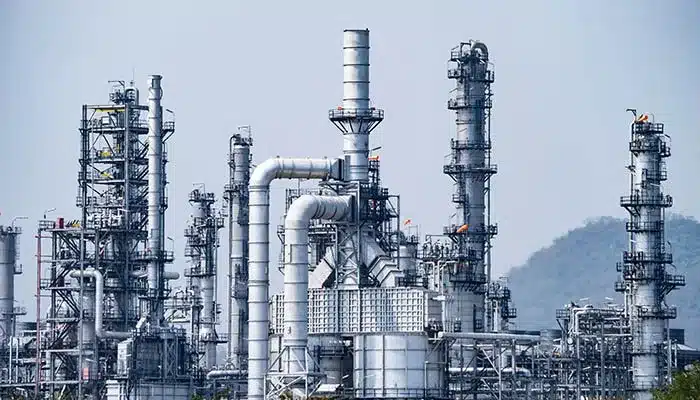
Petroleum and Chemical Processing: Used for bolts, nuts, and gaskets in less aggressive environments.
Medical Instruments: Surgical instruments like scalpels and forceps that can be sharpened and sterilized.
Physical and Mechanical Properties Tables
Physical Properties
| Property | Value |
| Density | 7.75 g/cm³ (0.28 lb/in³) |
| Melting Point | 1480-1530 °C (2700-2790 °F) |
| Thermal Expansion | 10.3 µm/m·K (at 20-100°C) |
| Modulus of Elasticity | 200 GPa (29 x 10⁶ psi) |
| Thermal Conductivity | 24.9 W/m·K (173 BTU-in/hr-ft²-°F) |
Mechanical Properties (Typical)
| Condition | Tensile Strength (MPa) | Yield Strength (MPa) | Elongation (%) | Hardness (HB) |
| Annealed | 520 | 275 | 25 | 155 |
| Hardened & Tempered | 690 – 1450+ | 450 – 1100+ | 15 – 10 | 200 – 450+ |
*Note: Mechanical properties in the hardened and tempered condition vary significantly based on the specific heat treatment used.*
International Equivalents Table
| Country / Region | Standard | Grade Designation |
| USA | AISI / ASTM / UNS | 410 / S41000 |
| Europe | EN / DIN | 1.4006 / X12Cr13 |
| Japan | JIS | SUS410 |
| China | GB | 12Cr13 |
Common Specifications
Daxun Alloys Co., Ltd. supplies 410 stainless steel in various forms to meet diverse project needs. Below are some common size ranges:
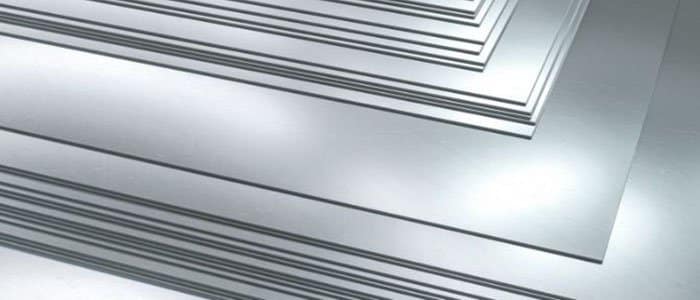
Plate and Sheet:
Thickness: 0.3mm – 100mm+
Common Widths: 1000mm, 1219mm (48″), 1500mm, 2000mm
Bar and Rod:
Diameter: 5mm – 500mm
Shapes: Round, Square, Hexagonal
Wire:
Diameter: 0.1mm – 10mm
Pipe and Tube:
Outside Diameter (OD): 6mm – 200mm+
Standards: Available in standard NPS/Schedule and OD/WT configurations.
(Note: Specific specifications can be customized based on client requirements.)
Frequently Asked Questions (FAQ)
- What is the main difference between 410 and 304 stainless steel?
The primary difference is their structure and properties. 410 is a martensitic steel that can be hardened by heat treatment and is magnetic. 304 is an austenitic steel that cannot be hardened by heat, is non-magnetic, and offers superior corrosion resistance. - Is 410 stainless steel magnetic?
Yes, due to its martensitic crystal structure, 410 stainless steel is magnetic in all conditions. - Can 410 stainless steel be used outdoors?
Yes, it can be used outdoors in many environments. It provides good resistance to atmospheric corrosion. However, in coastal areas with high salt spray or in industrial areas with harsh pollutants, a more corrosion-resistant grade like 304 or 316 may be a better long-term choice.
Conclusion
410 stainless steel is a highly versatile and cost-effective material, prized for its ability to be hardened to high strength levels while maintaining good corrosion resistance. Its wide range of applications, from cutlery to industrial machinery, makes it a staple in the metal industry.
If you are looking for a reliable supplier for your next project, contact Daxun Alloys Co., Ltd. We provide high-quality 410 stainless steel in various forms and can assist with custom processing to meet your precise requirements. Get in touch with us today for a competitive quote and expert consultation.
Data source:
https://www.azom.com/article.aspx?ArticleID=970
https://www.xometry.com/resources/materials/410-stainless-steel/