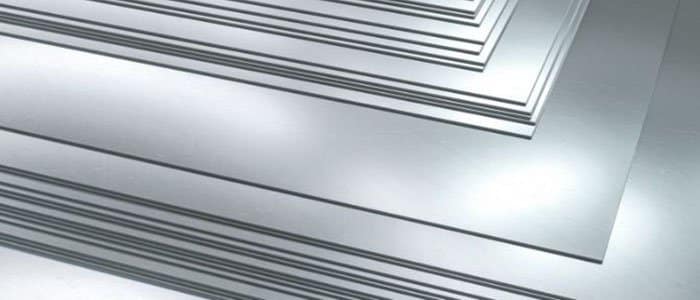



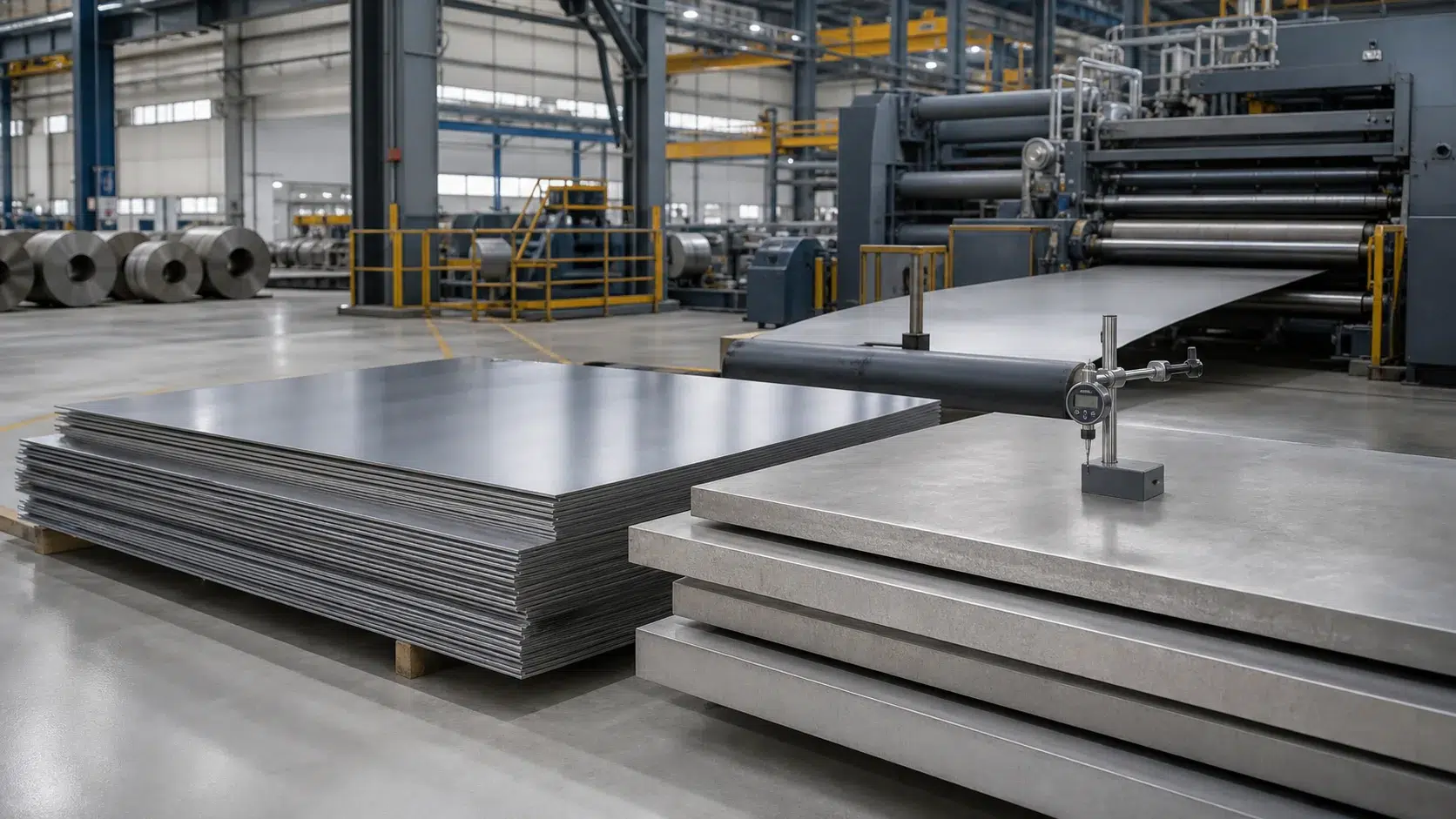
Direct answer: Inconel 600 sheet and plate are flat-rolled forms of UNS N06600, a nickel-chromium-iron alloy selected for combinations of heat resistance, oxidation resistance, fabricability, and corrosion resistance. ASTM B168-19e1 is the principal ASTM product specification for Alloy 600 plate, sheet, and strip, while AMS5540R is an annealed aerospace material route with its own dimensional and acceptance requirements.[1][3] DAXUN manufactures Inconel 600 sheet and plate and supplies order-specific cut blanks, finished dimensions, surface condition, inspection, and traceable material documentation.
MATERIAL IDENTITY
UNS N06600 nickel-chromium-iron alloy
FLAT-PRODUCT ROUTE
ASTM B168-19e1 with ASTM B906-22
AEROSPACE ROUTE
AMS5540R when the drawing and approval basis invoke it
The grade name alone is not a complete purchase description. A technically usable order must also define the product form, standard and edition, thickness, dimensions, condition, tolerances, surface, inspection, and any fabrication or service-specific requirements.
Inconel 600 Sheet and Plate at a Glance
| Item | Procurement information |
|---|---|
| Сплав | Nickel-chromium-iron Alloy 600 |
| UNS designation | UNS N06600 |
| Common product terms | Inconel 600 sheet, Alloy 600 sheet, Inconel 600 plate, Alloy 600 plate |
| Principal ASTM route | ASTM B168-19e1, used with the applicable general requirements of ASTM B906-22[1][2] |
| Aerospace route | AMS5540R for annealed sheet, strip, and plate up to 2.000 in. (50.80 mm), where the drawing or purchase order invokes it[3] |
| Strengthening mechanism | Solid-solution strengthening and cold work; Alloy 600 is not precipitation hardenable[4] |
| Manufacturing scope | Flat-rolled sheet and plate, cut pieces, blanks, formed parts, and project-defined finishing and inspection |
| Documentation | Mill test certificate, heat and lot traceability, inspection records, and supplementary test reports when ordered |
"INCONEL" is a trademark used for alloys produced under the Special Metals product family. In engineering documents, UNS N06600 and the applicable material specification provide the clearer contractual identity.
Is Inconel 600 Sheet Different from Inconel 600 Plate?
Sheet and plate are both flat-rolled products, but the words should not be used as casual substitutes on a purchase order. ASTM B168 covers plate, sheet, and strip, and ASTM B906 supplies general requirements for these flat-rolled nickel-alloy forms.[1][2] The applicable tolerances, testing provisions, edge condition, flatness expectations, and available manufacturing route can depend on the form and dimensions actually ordered.
There is no reliable universal thickness number that separates every commercial use of the words sheet and plate. A buyer should therefore state both the required product form and the actual dimensions. If a drawing calls the item "sheet" but also invokes plate tolerances, the conflict should be resolved before manufacture.
For a quotation, specify:
- nominal thickness, width, and length;
- sheet, plate, strip, or cut blank;
- ASTM B168-19e1, AMS5540R, or another approved specification;
- condition and any grain-size requirement;
- dimensional tolerances, edge condition, and flatness;
- surface finish and defect-removal limitations;
- quantity, piece identification, inspection, and documentation.
Which Standards Apply to Alloy 600 Flat-Rolled Products?
ASTM B168-19e1
ASTM B168-19e1 is active and includes UNS N06600 plate, sheet, and strip. Its scope covers chemistry, mechanical properties, dimensions, grain size where applicable, sampling, and testing for the listed nickel alloys.[1] The exact ordered form and condition still govern the applicable acceptance requirements.
ASTM B906-22
ASTM B906-22 provides general requirements for flat-rolled nickel and nickel-alloy plate, sheet, and strip, including products ordered to ASTM B168. ASTM states that, where requirements conflict, the purchase order, individual material specification, and general specification prevail in that sequence.[2] This makes a precise purchase order part of the technical specification, not an administrative afterthought.
AMS5540R
AMS5540R covers annealed nickel alloy sheet, strip, and plate of the Alloy 600 composition family up to 2.000 in. (50.80 mm) nominal thickness.[3] It is not simply an alternative label for any ASTM B168 material. Aerospace procurement may impose different dimensions, testing, traceability, approved-source, processing, and record-retention controls. Material should be certified to AMS5540R only when the complete order and manufacturing route satisfy that specification.
Chemical Composition of UNS N06600
The following limits identify the Alloy 600 composition published by Special Metals. Contract acceptance must follow the invoked material specification and edition.[4]
| Элемент | Composition, weight % |
|---|---|
| Nickel plus cobalt | 72.0 min |
| Хром | 14.0-17.0 |
| Iron | 6.0-10.0 |
| Углерод | 0.15 max |
| Марганцовка | 1.00 max |
| Кремний | 0.50 max |
| Copper | 0.50 max |
| Сера | 0.015 max |
Nickel supports resistance in many reducing and alkaline environments. Chromium contributes oxidation resistance and performance in many oxidizing conditions. The alloy's behavior, however, cannot be predicted from nominal chemistry alone. Temperature, contaminants, stress, heat treatment, fabrication, and exposure time can change the result substantially.
Reference Properties and Their Limits
Alloy 600 has a reported density of approximately 8.47 g/cm3 and a melting range of approximately 1354-1413 C.[4] These are useful design references, but they do not replace the governing design code or project material data.
The values below are producer-published room-temperature composites for selected product conditions. They are typical ranges, not ASTM B168 or AMS5540R acceptance values.[4]
| Product and condition | Tensile strength, MPa | 0.2% yield strength, MPa | Elongation, % | Reference hardness |
|---|---|---|---|---|
| Hot-rolled, annealed plate | 550-725 | 205-345 | 55-35 | 65-85 HRB |
| Hot-rolled, as-rolled plate | 580-760 | 240-450 | 50-30 | 80-95 HRB |
| Cold-rolled, annealed sheet | 550-690 | 205-310 | 55-35 | 88 HRB max |
| Cold-rolled, hard sheet | 830-1035 | 620-860 | 15-2 | 24 HRC min |
The table shows why the condition matters. Cold work can raise strength and hardness while reducing ductility. A certificate for annealed sheet does not establish the properties of a part after additional cold forming, welding, thermal exposure, or an unqualified heat-treatment cycle.
How Heat Treatment Changes the Purchasing Decision
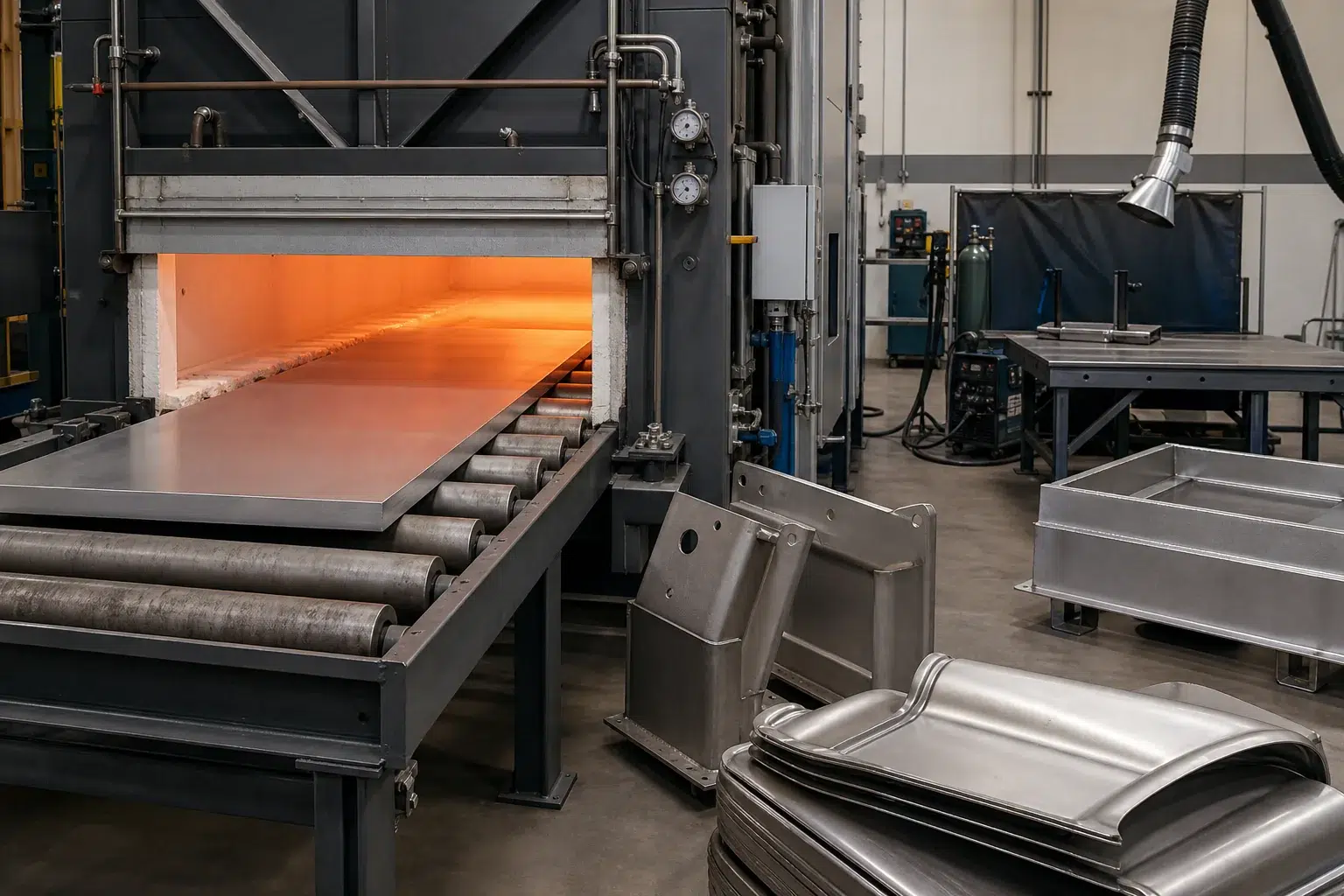
Alloy 600 is a solid-solution-strengthened alloy. It does not obtain a precipitation-hardening response like Alloy 718. Cold work and annealing history therefore have a direct influence on strength, ductility, grain size, forming response, and service behavior.[4]
Producer literature identifies approximately 540-760 C as a carbide-precipitation range and discusses rapid cooling through this range for corrosion-sensitive applications. It also gives examples of a short anneal around 1010 C and higher-temperature solution treatments around 1090-1150 C.[4] These values describe producer experience, not universal furnace instructions.
The engineering chain is straightforward:
thermal cycle -> carbide distribution and grain size -> mechanical and corrosion response -> final inspection requirement
Fine grain is often preferred where room-temperature strength, fatigue, impact behavior, and general corrosion performance dominate. Coarser grain can benefit creep and rupture performance at elevated temperature. The purchase order should therefore state the intended service and required final condition instead of asking only for "solution annealed Alloy 600."
Where Inconel 600 Plate and Sheet Fit Well
Alloy 600 is commonly evaluated for:
- furnace components, heat-treatment fixtures, retorts, and thermal-processing hardware;
- chemical-processing vessels, internals, covers, baffles, and fabricated equipment;
- alkali-handling and caustic-processing components after chemistry and stress review;
- heat shields, ducting, expansion components, and high-temperature sheet-metal fabrications;
- electrical and thermal equipment requiring oxidation resistance and stable nickel-alloy construction;
- aerospace or power-industry fabrications where the approved drawing invokes an applicable material route.
This is not a universal corrosion alloy. Hot, concentrated caustic can cause stress-corrosion cracking in Alloy 600 under unfavorable stress and metallurgical conditions. Strong acids, molten salts, sulfur-bearing atmospheres, halogens, and mixed contaminants each require their own review. Grade selection should be based on the actual process envelope, not an application list copied from a data sheet.
Fabrication: Forming, Machining, and Welding
Forming
Annealed Alloy 600 has useful ductility, but forming load, springback, bend radius, surface protection, and intermediate annealing depend on thickness and condition. Cold-worked sheet should not be substituted for annealed sheet merely because both carry the same UNS number.
Machining
Alloy 600 work-hardens during machining. Stable workholding, rigid equipment, sharp tools, positive cutting action, and continuous feed help prevent a hardened surface layer from being repeatedly recut. Thin sheet and ring-shaped plate blanks also need a machining sequence that controls residual-stress release and distortion.
Сварка
Alloy 600 can be welded by established fusion-welding processes. ERNiCr-3 is a commonly considered bare filler classification for compatible Alloy 600 welding, and AWS A5.14/A5.14M:2026 is the current AWS classification specification for nickel and nickel-alloy bare welding electrodes and rods.[5] Filler selection alone does not qualify a joint. The construction code, service chemistry, joint design, qualified WPS/PQR, heat input, interpass controls, cleaning, examination, and acceptance criteria govern the finished weld.
Fabrication tools and work areas should be controlled to avoid embedded iron and shop contamination. Any post-fabrication heat treatment must be specified with the final dimensions and service requirement in mind.
Engineering boundary: a correct UNS number does not qualify the final condition, fabrication route, or service environment. Acceptance must remain tied to the purchase order and approved procedures.
Common Failure Modes in Alloy 600 Plate Orders
| Failure mode | Why it happens | How to prevent it |
|---|---|---|
| Ordering only by trade name | The standard, form, condition, tolerances, and tests remain undefined | State UNS N06600, specification edition, form, dimensions, condition, and documentation |
| Treating typical properties as guaranteed minima | Producer tables combine sizes and conditions and are not acceptance tables | Use the invoked specification and project requirements for acceptance |
| Substituting sheet and plate terminology | Different dimensional and tolerance expectations may be assumed | Resolve product form, thickness, flatness, edge, and tolerance requirements in the PO |
| Ignoring cold work and residual stress | Strength, ductility, distortion, and caustic SCC response may change | Record condition and fabrication history; qualify stress relief when required |
| Applying a generic anneal | Grain size, carbide distribution, surface condition, and final dimensions can change | Approve the thermal cycle and post-treatment inspection before processing |
| Uncontrolled welding or contamination | Defects, hard local regions, embedded iron, or unsuitable filler can reduce performance | Use qualified procedures, controlled cleaning, and specified NDE |
| Assuming the alloy is corrosion-proof | Real media contain temperature gradients and contaminants | Review full chemistry and validate with published data, testing, or service evidence |
Inspection and Documentation
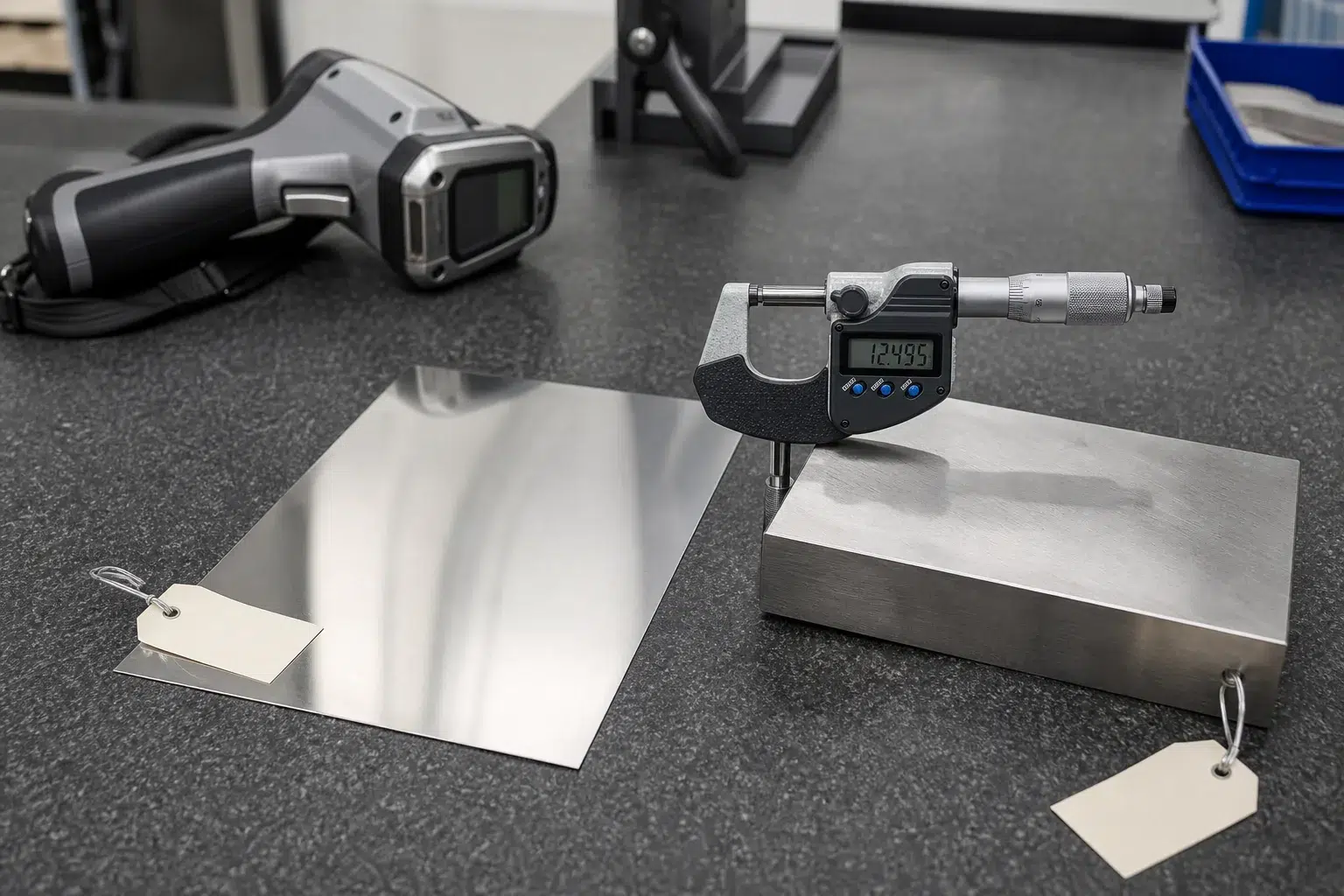
The basic material specification does not automatically include every inspection a project may need. A practical inspection plan can include:
- heat analysis and product analysis when ordered;
- tensile, yield, elongation, hardness, and grain-size testing as applicable;
- thickness, width, length, edge, squareness, and flatness inspection;
- visual and surface examination with agreed defect-removal rules;
- positive material identification as a supplementary verification;
- ultrasonic testing only when the method, coverage, reference standard, and acceptance criteria are stated;
- weld examination and procedure records for fabricated parts;
- heat-treatment charts and final mechanical retesting when contractually required;
- traceable marking, mill test certificates, inspection reports, and packing records.
An instruction such as "100% UT" is incomplete without a procedure and acceptance level. The same is true of "PMI pass" or "grain size acceptable." The order must define what is measured, where it is measured, and what constitutes acceptance.
DAXUN Inconel 600 Sheet and Plate Manufacturing
DAXUN manufactures Alloy 600 sheet and plate and can supply mill-size material, cut-to-size pieces, and drawing-based blanks. Order-confirmed operations can include heat treatment, leveling, cutting, edge preparation, surface finishing, dimensional inspection, supplementary testing, marking, and controlled export packaging.
Our manufacturing approach keeps the material identity connected to the finished delivery:
- Review the standard, product form, condition, service, and drawing.
- Confirm the manufacturing route and inspection plan before production.
- Maintain heat and lot traceability through processing.
- Verify dimensions, surface, condition, and ordered test results.
- Release the material with the agreed certificate and inspection package.
This does not mean that every possible code qualification or end-use approval is automatic. Aerospace source approval, pressure-equipment design compliance, nuclear requirements, customer-specific testing, and finished-component certification must be stated and reviewed separately.
Send a complete material and service description. DAXUN can then review the product form, manufacturing condition, inspection plan, and finished delivery as one technical package.
What to Include in an RFQ
Send the following information for a technically reviewable quotation:
UNS N06600and the required standard with edition;- sheet, plate, strip, coil, or cut blank;
- thickness, width, length, quantity, and unit system;
- annealed, as-rolled, cold-worked, or other required condition;
- dimensional tolerances, flatness, edge, and surface requirements;
- operating temperature, process medium, concentration, and known contaminants;
- forming, welding, machining, or heat-treatment requirements;
- mechanical, grain-size, corrosion, NDE, or witness-testing requirements;
- marking, MTC, supplementary reports, packaging, and destination.
Часто задаваемые вопросы
Is Alloy 600 the same as Inconel 600?
In commercial usage, both names commonly refer to the UNS N06600 nickel-chromium-iron alloy. The purchase order should use the UNS designation and applicable specification because a trade name alone does not define product requirements.
What is the ASTM specification for Inconel 600 sheet and plate?
ASTM B168-19e1 is the active product specification discussed here for UNS N06600 plate, sheet, and strip. ASTM B906-22 supplies applicable general flat-rolled requirements.[1][2]
Is AMS5540R material automatically equivalent to ASTM B168 material?
No. The two routes cover the same alloy family in flat-rolled forms, but their dimensions, acceptance requirements, documentation, and procurement controls are not automatically interchangeable. The drawing and purchase order must state the required route.
Can Inconel 600 plate be hardened by heat treatment?
Not by precipitation hardening. Alloy 600 is solid-solution strengthened and can be strengthened by cold work. Annealing changes cold-work effects, grain size, and carbide distribution.[4]
Is Inconel 600 suitable for caustic soda?
It can be a strong candidate, particularly where higher strength, heating-coil duty, or certain contaminants favor it. Hot concentrated caustic also creates stress-corrosion-cracking risk, so concentration, temperature, stress, contaminants, fabrication history, and qualification must be reviewed.
Can DAXUN supply finished Alloy 600 blanks rather than full plate?
Yes. DAXUN manufactures Alloy 600 flat-rolled products and can supply cut sizes or drawing-based blanks with the agreed processing, inspection, traceability, and packaging.
Technical Accuracy Statement
This page distinguishes specification requirements from producer-published typical values and general fabrication guidance. It does not replace the purchase order, governing design code, approved drawing, qualified welding or heat-treatment procedure, or project-specific corrosion assessment. Standard editions and project requirements must be confirmed at the time of order.
Last reviewed: August 1, 2026
Technical Sources
- ASTM B168-19e1, Standard Specification for Nickel-Chromium-Iron and Other Listed Nickel-Alloy Plate, Sheet, and Strip
- ASTM B906-22, Standard Specification for General Requirements for Flat-Rolled Nickel and Nickel Alloys Plate, Sheet, and Strip
- SAE AMS5540R, Nickel Alloy, Corrosion- and Heat-Resistant, Sheet, Strip, and Plate, Annealed
- Special Metals, INCONEL Alloy 600 Technical Bulletin
- AWS A5.14/A5.14M:2026, Specification for Nickel and Nickel-Alloy Bare Welding Electrodes and Rods