


2507 Super Duplex Stainless Steel Tube for Subsea Umbilicals
Direct answer: DAXUN can coordinate UNS S32750 (2507) super duplex tube for metallic fluid lines in subsea umbilicals, together with project-defined forming, orbital welding, inspection, traceability, and export packing. ASTM A789/A789M-24 may govern the tube product, while API Specification 17E and the project specification govern the complete umbilical. Wall, fatigue, collapse, HISC, sour-service, weld, and corrosion requirements must be fixed before quotation.[1][3][4][7]
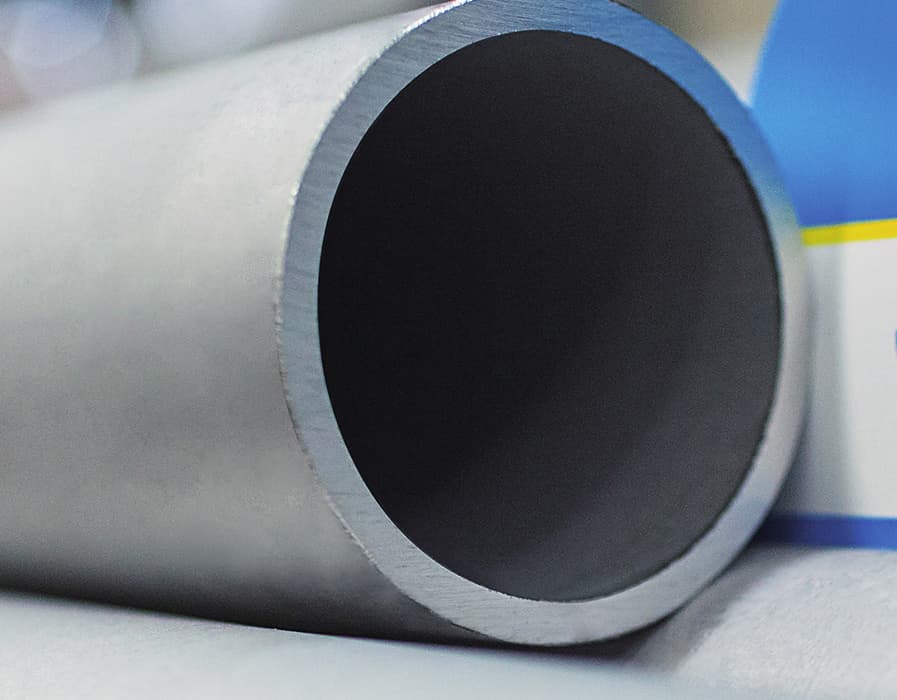
| Item | Supply scope available for technical review |
|---|---|
| Principal tubular material | UNS S32750 in the project-approved heat-treated and mechanical condition. ASTM A789 material is normally supplied in the specified heat-treated condition; any additional cold work, strength level, orbital-weld route, or project-specific mechanical requirement must be stated and qualified separately.[1][12] |
| Umbilical tube route | Seamless or welded tubing to ASTM A789/A789M-24 where allowed by the approved project specification; straight lengths, coiled delivery, and orbital-welded long lengths remain mill- and processor-specific.[1] |
| General process-pipe route | Seamless or straight-seam welded S32750 pipe to ASTM A790/A790M-24 for applicable piping duties; this is not an automatic substitute for umbilical tubing.[2] |
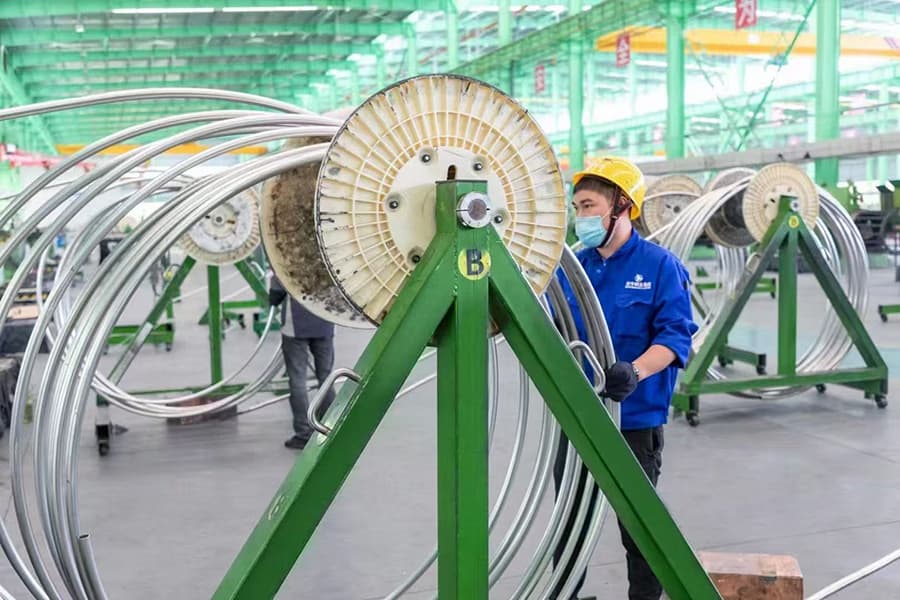
| Processing that may be coordinated | Cut lengths, end preparation, bending or coiling review, orbital-weld coordination, cleaning, marking, capping, and project packing, subject to written confirmation by the applicable mill or qualified processor. |
| Inspection that may be arranged | Mill test certificate (MTC) review, dimensional inspection, PMI, pressure or nondestructive electric testing, weld NDE, microstructure testing, ASTM A923 or ASTM G48 testing, and third-party inspection as specified.[1][6][9][10] |
| Matching components | ASTM A815/A815M-26 S32750 fittings in the ordered class and construction subclass, and ASTM A182/A182M-26a Grade F53 forged components, subject to dimensions, pressure-design basis, heat treatment, NDE, and project approval.[15][16][18] |
| Documentation | Heat and item traceability, process and weld records, inspection reports, test certificates, packing list, and document index as agreed in the purchase order. |
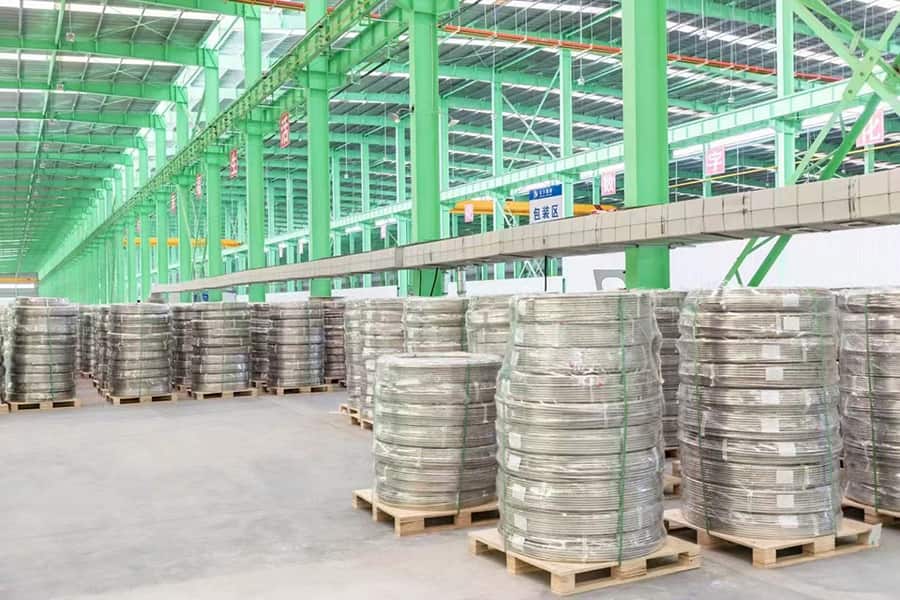
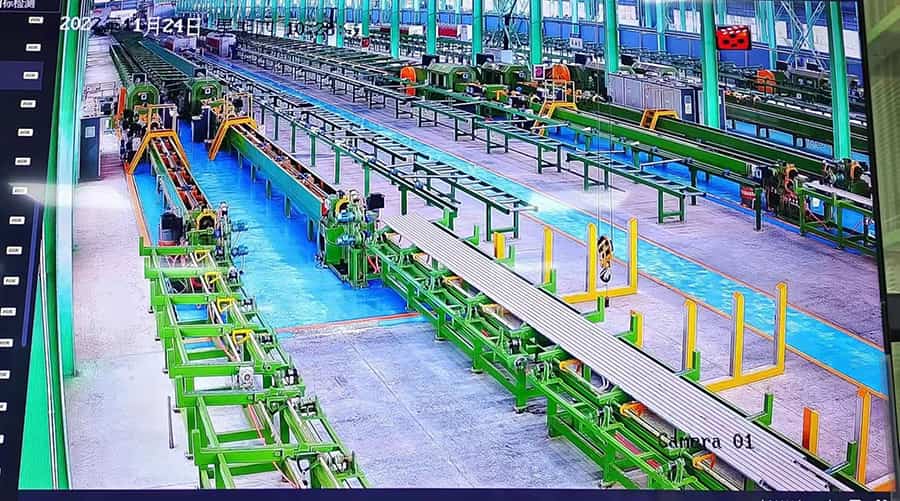
The quotation should identify which work is performed by the producing mill, qualified processor, testing laboratory, or inspection body. Coordinating a finished-material package does not mean that melting, tube production, orbital welding, testing, and packing all occur in one plant.
What Is 2507 Super Duplex Stainless Steel?
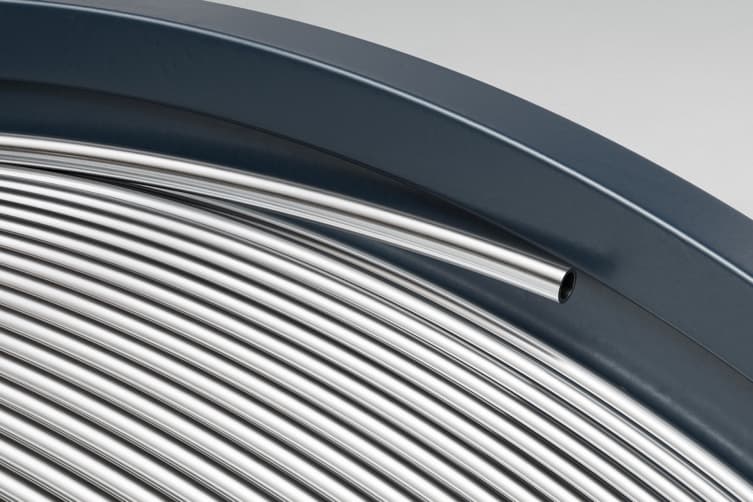
2507 is a common commercial name for the super duplex stainless steel grade UNS S32750. Its microstructure contains both ferrite and austenite, while its relatively high chromium, molybdenum, and nitrogen contents give it strong resistance to chloride pitting and crevice corrosion compared with conventional austenitic stainless steels. The same alloy also offers substantially higher strength than 316L, which can be useful when pressure, tube mass, and package diameter must be balanced.[11]
That combination is why S32750 is widely considered for hydraulic and process-fluid tubes inside subsea umbilicals. The material can help the designer carry high-pressure fluids through compact metallic lines while resisting seawater-related external exposure and aggressive internal fluids. It is not, however, selected by alloy name alone. A tube may meet ASTM A789 and still be unsuitable for a particular fatigue spectrum, cathodic-protection condition, sour fluid, weld sequence, or installation method.
The important procurement distinction is simple: ASTM A789 qualifies a tubular product within its scope; it does not qualify a complete subsea umbilical.
What Does a 2507 Tube Do Inside a Subsea Umbilical?
A subsea umbilical is a bundled functional system rather than a single pipe. Depending on the design, it may combine metallic tubes or thermoplastic hoses with electrical conductors and optical fibers. The metallic tubes can transmit hydraulic control fluid, chemical-injection media, service fluids, or other project-defined process fluids between topside, subsea equipment, and subsea production units.[5][12]
The tube therefore has to survive more than internal pressure. During manufacture, spooling, transport, installation, and operation, it can experience bending, straightening, axial strain, local contact pressure, external hydrostatic pressure, temperature changes, and repeated dynamic cycles. Welded joints may also pass through the same strain history.
This creates a linked design problem:
Higher material strength can support a thinner or lighter tube design, but reduced wall, tight bend radius, weld mismatch, ovality, and cyclic strain can consume fatigue or collapse margin. The final wall cannot be chosen from burst pressure alone. The umbilical designer must consider internal pressure, external pressure, combined loading, manufacturing tolerances, reeling strain, installation route, dynamic response, and design life under the governing specification.[3]
Which Standards Apply to 2507 Umbilical Tube?
No single standard completes the whole qualification. The purchase order should assign a clear role to each document.
| スタンダード | Role in the order | Boundary that must remain clear |
|---|---|---|
| ASTM A789/A789M-24 | Material and product route for seamless and welded ferritic/austenitic stainless steel tubing for general corrosive service.[1] | Does not establish complete umbilical fatigue, collapse, installation, or system qualification. |
| ASTM A790/A790M-24 | Material and product route for seamless and straight-seam welded duplex stainless steel pipe.[2] | Intended for pipe; not interchangeable with thin-wall umbilical tube by name alone. |
| API Specification 17E, Fifth Edition, July 2017 | Published API specification for subsea umbilicals and the principal system-level route discussed on this page.[3] | API lists a sixth edition under development, so the order must state the edition, amendments, and project supplements.[4] |
| ISO 13628-5:2009 | Former international standard for subsea umbilicals, including metallic tubes.[5] | ISO withdrew this edition on December 8, 2025; cite it only when a legacy contract expressly invokes it. |
| ISO 17781:2017 | Destructive quality-control methods for duplex microstructure in solution-annealed components and as-welded fabrication welds.[6] | Supplements product and fabrication standards; it does not cover HISC design. |
| DNV-RP-F112, 2019-09, amended 2021-09 | Design guidance for duplex stainless components installed subsea and exposed to cathodic protection.[7] | Applies when invoked by the project; it does not replace the complete umbilical design basis. |
| ISO 15156-3:2020 | Selection and qualification of corrosion-resistant alloys for H2S-containing oil and gas production environments.[8] | Addresses cracking mechanisms, not general or localized corrosion; ISO currently marks the edition for revision, and the project must state the approved edition. |
| ASTM A923-25 | Methods for detecting detrimental intermetallic phase in duplex stainless steels.[9] | Method and acceptance criteria must be specified; it does not detect every cause of poor performance. |
| ASTM G48-25 | Laboratory pitting and crevice-corrosion methods using ferric chloride solution.[10] | Method, temperature, duration, specimen condition, and acceptance criterion must be ordered. |
This version check matters. ISO 13628-5:2009 still appears in older specifications and supplier pages, but it is now withdrawn. It should not be described as the current international umbilical standard. API published Specification 17E Fifth Edition in July 2017, and API’s standards plan currently shows Edition 6 in development.[3][4][5]
What Chemistry and Mechanical Data Are Useful for Initial Review?
Contract acceptance must follow the ordered ASTM specification, project requirements, licensed standard tables, and heat-specific MTC. The following values apply specifically to Alleima SAF 2507 solution-annealed tube and pipe and are not universal umbilical-tube strength values. They help identify the material family and support preliminary engineering, but they are not universal acceptance values for every S32750 mill, size, cold-work level, weld condition, or umbilical project.[11][12]
Producer Nominal Composition
| エレメント | Nominal or maximum value, wt.% |
|---|---|
| Chromium | 25 nominal |
| Nickel | 7 nominal |
| Molybdenum | 4 nominal |
| 窒素 | 0.30 nominal |
| カーボン | 0.030 max |
| Silicon | 0.8 max |
| Manganese | 1.2 max |
| Phosphorus | 0.025 max |
| Sulfur | 0.015 max |
Producer Reference Properties for Solution-Annealed Tube and Pipe
| プロパティ | Published value and condition |
|---|---|
| 0.2% proof strength at 20 deg C | 550 MPa minimum |
| 1.0% proof strength at 20 deg C | 640 MPa minimum |
| Tensile strength at 20 deg C | 800–1000 MPa |
| Elongation, A | 25% minimum |
| 硬度 | 32 HRC maximum |
| 密度 | Approximately 7.8 g/cm3 |
The mechanical values above are published for the producer’s solution-annealed tube and pipe with wall thickness up to 20 mm. They are neither pressure-design allowables nor a promise that every A789 tube will have the same tensile range. Size-dependent ASTM and project requirements remain controlling.[11]
The pitting resistance equivalent number is often calculated as PRE = %Cr + 3.3 × %Mo + 16 × %N. Alleima states a minimum PRE of 42.5 for its seamless SAF 2507 tube. That is a producer-specific product claim, not a universal UNS S32750 acceptance requirement. PRE is useful for alloy screening, but it cannot represent weld microstructure, surface condition, crevice geometry, temperature, contamination, or actual service chemistry.[11]
Which Variables Decide Whether 2507 Is Suitable?
The project name is not enough. A reliable selection begins with the load history and both sides of the tube.
| Decision variable | Why it changes the result | Required evidence or control |
|---|---|---|
| Static or dynamic umbilical | Dynamic motion adds repeated bending and axial cycles; static lines still experience manufacture and installation strain. | Design fatigue spectrum, installation analysis, bend radii, and project qualification plan. |
| Internal pressure and minimum wall | Burst capacity depends on minimum effective wall, strength basis, tolerances, and combined loads. | Defined wall basis, dimensional records, pressure design, and proof or hydrostatic test. |
| Water depth and external pressure | External hydrostatic pressure can drive ovalization and collapse, especially after reeling or local damage. | Collapse analysis and project test with realistic ovality and tolerances. |
| Fluid chemistry | Chlorides, acids, oxygen, scale inhibitors, methanol, hydraulic fluids, or contamination can change general and localized corrosion. | Complete normal, cleaning, shutdown, and upset chemistry with temperature and concentration. |
| Cathodic-protection exposure | Low potential can generate hydrogen; stressed duplex steel can become susceptible to HISC. | Electrical-contact review, DNV-RP-F112 design basis, microstructure control, and project verification.[7] |
| H2S-containing service | H2S partial pressure, pH, chloride, temperature, stress, hardness, and metallurgical condition affect cracking risk. | ISO 15156-3 or project-specific qualification with the required edition stated.[8] |
| Reeling and bend radius | Plastic strain can increase ovality, residual stress, local thinning, and fatigue demand. | Forming procedure, strain limits, spool geometry, dimensional checks, and fatigue qualification. |
| Welded joints | Weld heat input and cooling alter ferrite/austenite balance and can form detrimental phases. | Approved WPS/PQR, filler control, weld map, NDE, microstructure testing, and corrosion testing where invoked.[6][9] |
| Surface and cleanliness | Heat tint, embedded iron, grinding damage, and bore contamination can reduce local corrosion resistance or contaminate service fluid. | Controlled tools, cleaning procedure, visual or borescope inspection, and agreed cleanliness acceptance. |
| Traceability | Long tube assemblies may contain many heats, cut lengths, and orbital welds. | Heat-to-length map, unique weld IDs, inspection linkage, and final document index. |
The most common sourcing error is to specify only “2507 tube, ASTM A789.” That identifies an alloy and a product standard, but leaves the factors most likely to govern umbilical life unresolved.
Why Must HISC Be Reviewed Separately?
2507 has high strength and strong chloride-corrosion resistance, but it is not immune to hydrogen-induced stress cracking. DNV-RP-F112 specifically addresses duplex stainless components installed subsea and exposed to cathodic protection.[7]
The mechanism is important. Electrical connection to a cathodically protected subsea structure can create a sufficiently negative potential for hydrogen to form at the metal surface. Hydrogen moves more readily through the ferritic phase. If the tube or weld also carries high local stress, unfavorable strain, or a coarse microstructure, cracking susceptibility can increase.
The control chain is therefore:
Cathodic-protection exposure → hydrogen generation and entry → ferritic transport plus tensile stress → HISC risk → design, microstructure, stress, and installation controls → project verification.
ISO 17781 controls destructive microstructure quality testing for duplex products and welds, but ISO itself notes that austenite spacing related to subsea HISC falls outside that standard and refers users to DNV-RP-F112.[6] A favorable phase count or an ASTM A789 MTC alone cannot close the HISC assessment.
Does ISO 15156 Make 2507 Automatically Suitable for Sour Service?
No. The phrase “NACE compliant 2507” is incomplete without the environment, product condition, and acceptance route. ISO 15156-3:2020 gives requirements and recommendations for corrosion-resistant alloys in H2S-containing oil and gas production environments. It addresses cracking mechanisms including SSC, SCC, and galvanically induced hydrogen stress cracking, but it does not cover general or localized corrosion.[8]
For a sour-service review, the buyer should provide at least:
- H2S partial pressure and total pressure;
- CO2 partial pressure;
- operating, shutdown, and upset temperatures;
- pH, chloride concentration, water phase, and elemental sulfur where relevant;
- applied and residual stress basis;
- product form, heat treatment, hardness, cold work, and weld condition; and
- the exact ISO 15156/NACE MR0175 edition and any operator-specific limits.
ISO 15156-3:2020 principally addresses material selection for load-controlled design. Where the tube experiences significant cold work, plastic strain, reeling strain, or another strain-based design history, the project must address the additional requirements of ISO 15156-1:2020, the operator specification, and the approved qualification plan.[8][17]
ISO currently lists ISO 15156-3:2020 as published and scheduled for revision. The purchase order must state the approved edition and any operator-specific requirements rather than using the undefined phrase “latest NACE.”[8]
How Do Heat Treatment, Forming, and Welding Affect Performance?
The corrosion and toughness of 2507 depend on retaining a suitable duplex microstructure. Slow cooling or excessive thermal exposure can promote detrimental intermetallic phases; unfavorable welding can also leave an unsuitable phase balance. ASTM A923 notes that duplex stainless steels can be susceptible to intermetallic formation within an approximate 320–955 deg C range, although the actual response depends on grade, time, section size, and thermal history.[9]
Alleima publishes 1050–1125 deg C followed by rapid cooling in air or water as solution-annealing guidance for its SAF 2507 tube and pipe. It also warns that prolonged exposure above 250 deg C can change the microstructure and reduce impact strength. These are producer references for its product, not universal instructions or a single service-temperature limit for every component.[11]
For welding, the approved project WPS/PQR governs. As producer guidance, Alleima gives a heat-input range of approximately 0.2–1.5 kJ/mm, an interpass temperature below 150 deg C, and ER2594 matching filler for GTAW. AWS A5.9/A5.9M:2022 classifies bare stainless steel welding electrodes and rods, including filler classifications used for duplex welding, but a filler certificate does not qualify the weld procedure.[11][14]
An orbital weld in a long umbilical tube should be treated as a structural and corrosion-critical location. The project may need to control fit-up, purge quality, root profile, heat input, travel speed, shielding, interpass temperature, weld reinforcement, phase balance, hardness, intermetallics, NDE, corrosion response, and fatigue performance. The weld map must remain linked to the tube heat and all inspection records.
What Failure Modes Should Be Prevented?
Most serious failures begin with an incomplete responsibility split rather than a wrong alloy label.
- A789 is treated as full umbilical qualification. The tube passes its material specification, but fatigue, collapse, installation strain, weld behavior, or system tests remain unverified.
- A withdrawn standard is presented as current. ISO 13628-5:2009 is copied from an old specification without recording its withdrawn status or obtaining project approval.[5]
- Tube, pipe, control line, and OCTG are mixed. A789 tubing, A790 process pipe, small-bore downhole control line, and API 5CRA/ISO 13680 production tubing have different design and qualification routes.
- Burst pressure is checked but collapse is not. Deepwater external pressure, ovality, local thinning, and reeling history can reduce collapse capacity.
- Cathodic protection is ignored. The corrosion-resistant tube is assumed safe because it is stainless, while electrical contact, hydrogen charging, stress, and microstructure create HISC risk.[7]
- Weld heat input or cooling is uncontrolled. Phase imbalance or detrimental intermetallics reduce toughness and localized-corrosion resistance.
- A “G48 pass” is requested without a method. Results cannot be compared because method, temperature, duration, surface, specimen location, and acceptance are missing.[10]
- PRE is treated as a service guarantee. A chemistry formula is used to replace service-fluid review, weld qualification, crevice analysis, or surface inspection.
- PMI is treated as full certification. Portable XRF can verify major alloying elements but does not reliably establish nitrogen, carbon, heat treatment, mechanical properties, or original heat traceability.
- Traceability breaks at orbital welds. Finished length, parent heats, weld IDs, NDE reports, and pressure-test records can no longer be reconciled.
How Should 2507 Umbilical Tube Be Verified?
Verification should follow the risk and the exact claim being made. No single certificate or corrosion test proves the complete tube assembly.
| Claim to verify | Practical evidence | Important boundary |
|---|---|---|
| Correct S32750 heat | Original MTC, heat number, product marking, and purchase-order review. | PMI supports identity but does not replace full chemistry or heat traceability. |
| A789 tubular compliance | Chemistry, mechanical results, heat treatment, dimensions, and required hydrostatic or nondestructive electric test records.[1] | Does not prove API 17E system performance. |
| Minimum wall and geometry | Calibrated OD, minimum wall, ovality, straightness or coil geometry, ends, and surface records. | Inspection basis must match the design basis, not only nominal dimensions. |
| Acceptable duplex microstructure and related A923 properties | ISO 17781 test plan and results. ASTM A923 Method A, B, or C may be specified according to the product form and project purpose.[6][9] | The selected method, sampling location, specimen condition, acceptance criterion, and disposition rules must be stated; the three methods are not automatically interchangeable. |
| Relative pitting or crevice resistance | ASTM G48-25 with method, temperature, duration, surface, specimen location, and acceptance stated.[10] | Ferric-chloride testing is a controlled laboratory comparison, not a direct service-life guarantee. |
| Orbital-weld quality | Approved WPS/PQR, welder or operator qualification, filler records, weld log, visual inspection, specified NDE, and destructive qualification samples. | A sound-looking root does not prove phase balance, corrosion resistance, or fatigue life. |
| Pressure integrity | Hydrostatic, proof, leak, or pneumatic testing under the approved project procedure. | Test pressure alone does not establish collapse or cyclic fatigue resistance. |
| Reeling and service life | Bend, straightening, strain, collapse, and fatigue qualification representative of the real assembly. | Base-metal tensile data cannot substitute for full-scale or project-defined qualification. |
| Subsea HISC control | DNV-RP-F112-based design review, cathodic-protection assumptions, stress, and microstructure controls.[7] | A923 or ISO 17781 alone does not close the HISC assessment. |
| Sour-service suitability | ISO 15156-3 and operator-specific review for the declared environment.[8] | Does not evaluate general or localized corrosion. |
The inspection and test plan should connect every requirement to a record, acceptance criterion, responsible party, and release stage. For long welded lengths, a heat-and-weld traceability map is as important as the individual certificates.
ASTM A923 Method A uses sodium-hydroxide etching for microstructure classification, Method B uses Charpy impact testing, and Method C uses a ferric-chloride corrosion test. They assess different responses and cannot be treated as three names for the same acceptance test. ASTM also cautions that A923 does not detect every cause of reduced toughness or corrosion resistance; sampling must represent the slowest-cooled or otherwise most susceptible region.[9]
Where Else Is 2507 Tube or Pipe Used?
The same alloy family is used beyond subsea umbilicals, but the product standard and qualification route must follow the application.
| 申し込み | Why 2507 may be reviewed | Typical product-route boundary |
|---|---|---|
| Seawater cooling and heat exchangers | Chloride pitting, crevice corrosion, high velocity, and compact wall requirements. | ASTM A789 tube plus equipment design and service-specific corrosion review.[1][11] |
| Desalination and high-salinity brine systems | Concentrated chloride and high-pressure seawater duties. | A789 tube or A790 pipe, depending on geometry and system design.[1][2][11] |
| Chemical and refinery service | Chloride-contaminated acids, process streams, and high-strength piping requirements. | A789/A790 plus the governing construction Code and complete chemistry review.[11] |
| Salt evaporation, flue-gas desulfurization, and pulp processing | Localized-corrosion risk in concentrated or contaminated chloride media. | Product and fabrication route selected by equipment form and project specification.[11] |
| Geothermal brines | Hot chloride brine, pressure, scaling, and possible acid-gas exposure. | Service-specific corrosion and cracking qualification; sour limits where applicable.[8][11] |
| Downhole production tubing, casing, or liners | High strength combined with CO2, H2S, chloride, pressure, and temperature demands. | A separate OCTG route such as API Spec 5CRA or ISO 13680; not an umbilical-tube certificate.[13] |
| Small-bore downhole control or chemical-injection lines | Corrosion resistance and long continuous lengths may be valuable. | Drawing-, forming-, cleanliness-, weld-, and well-qualification requirements are separate from API 17E. |
An application list is a starting point, not a material-selection approval. Seawater composition, temperature, chlorination, deposits, crevices, stress, cathodic protection, acid gases, fabrication, and cleaning can all move the decision.
Can DAXUN Coordinate Fittings, Flanges, and a Finished Tube Package?
DAXUN can review a coordinated S32750 package containing tube or pipe, specified fittings, forged flange material, processing, inspection, documentation, and export packing. ASTM A815/A815M-26 S32750 fittings must identify the ordered WP or CR class and, where applicable, the construction subclass. ASTM A182/A182M-26a Grade F53 is the forged-component material route discussed here for UNS S32750. Dimensions, pressure design, heat treatment, NDE, and project approval remain mandatory.[15][16][18]
These are material specifications, not complete assembly approvals. Fitting class, wall, dimensions, weld category, flange facing, drilling, pressure class, temperature rating, gasket, bolting, corrosion allowance, construction Code, and project design approval remain separate decisions.
A practical DAXUN coordination sequence is:
- Review the data sheet, drawings, umbilical specification, bill of materials, and governing editions.
- Separate the A789 tube requirement from API 17E system requirements and any A790 process-pipe items.
- Confirm UNS S32750, manufacturing route, project-approved heat-treated and mechanical condition, OD, minimum wall, lengths, quantity, and surface.
- Record static or dynamic duty, internal and external pressure, installation strain, fatigue life, fluid chemistry, CP exposure, and sour-service limits.
- Coordinate the applicable mill, qualified orbital-weld processor, laboratory, NDE provider, or inspection body under the written order scope.
- Review MTCs, dimensions, weld qualification, heat and weld maps, microstructure, corrosion, pressure, NDE, and third-party records as ordered.
- Preserve item-to-document traceability through marking, tagging, capping, packing lists, and a final document index.
- Release the finished-material package with the agreed export protection and delivery documents.
Final manufacturing source, coil or spool capability, available lengths, weld spacing, inspection route, lead time, and stock status are confirmed only in the written quotation.
RFQ Checklist for 2507 Umbilical Tube
Please send:
- material designation: 2507 / UNS S32750 and any approved-mill restrictions;
- product function: subsea umbilical tube, hydraulic line, chemical-injection line, downhole control line, process tube, process pipe, or OCTG;
- applicable ASTM, API, ISO, DNV, operator, and project specification editions;
- seamless or welded manufacturing route and whether longitudinal welds are permitted;
- outside diameter, minimum or nominal wall, tolerance, ovality, and total quantity;
- straight length, coil or spool dimensions, maximum shipping size, and allowable parent-length or orbital-weld spacing;
- static or dynamic service, design life, bend radius, installation method, strain history, and fatigue spectrum;
- design and test pressures, external pressure, water depth, temperature range, and collapse basis;
- complete internal-fluid chemistry for normal, cleaning, shutdown, and upset conditions;
- seawater exposure, cathodic-protection potential, electrical-contact assumptions, coating, and HISC design basis;
- H2S, CO2, pH, chlorides, elemental sulfur, hardness, and ISO 15156/NACE requirements where applicable;
- heat treatment, cold work, weld procedure, filler, purge, microstructure, ferrite, austenite-spacing, and intermetallic-phase requirements;
- MTC, PMI, dimensional, hydrostatic, NDE, ISO 17781, ASTM A923, ASTM G48, fatigue, collapse, or third-party inspection requirements;
- fittings, connectors, flange or termination-component drawings and required material standards;
- marking, heat and weld mapping, data-book format, document language, packing, destination, and requested delivery date.
The fastest useful quotation starts with a design data sheet and inspection requirements, not only a grade and diameter.
よくある質問
What ASTM Standard Covers 2507 Tube for a Subsea Umbilical?
ASTM A789/A789M-24 is a principal material specification for seamless and welded duplex stainless steel tubing and includes the applicable S32750 tubular route. It does not qualify the complete umbilical. API Specification 17E and the approved project specification control system-level design, manufacture, verification, and testing.[1][3]
Is API Specification 17E Fifth Edition Still the Published Edition?
API published Specification 17E Fifth Edition in July 2017. As reviewed on July 21, 2026, API’s standards plan lists Edition 6 as under development. The order should state Fifth Edition and any required addenda or project supplements rather than saying only “latest edition.”[3][4]
Is ISO 13628-5:2009 Still Current?
No. ISO marks ISO 13628-5:2009 as withdrawn on December 8, 2025. It may still appear in legacy contracts, but a new order should not describe it as a current standard. If an existing project invokes it, the responsible engineering authority should define how it remains applicable.[5]
Is 2507 Immune to HISC Under Cathodic Protection?
No. Duplex stainless steel installed subsea and exposed to cathodic protection requires a specific HISC assessment. Material microstructure, austenite spacing, stress, strain, welds, geometry, and cathodic-protection conditions all matter. DNV-RP-F112 provides the principal recommended-practice route discussed on this page.[7]
Does a High PRE Number Guarantee Seawater Performance?
No. PRE is a chemistry-based screening number. It does not include weld condition, phase balance, heat tint, surface damage, deposits, crevices, chlorination, temperature, velocity, stress, or cathodic-protection effects. Service selection and project testing remain necessary.[10][11]
Can the Same 2507 Certificate Be Used for Umbilical Tube, Process Pipe, and OCTG?
No. ASTM A789 tubing, ASTM A790 pipe, API 17E umbilical qualification, and API 5CRA or ISO 13680 OCTG routes have different scopes. The alloy may be S32750 in each case, but product form, manufacturing route, dimensions, testing, and design responsibility must match the actual application.[1][2][3][13]
Can DAXUN Provide Processed Long Lengths and Matching Components?
DAXUN can review and coordinate tube or pipe, project-defined cutting or forming, qualified orbital-weld processing, specified inspection, documentation, S32750 fittings, F53 forged components, and export packing. Feasibility, manufacturing source, available length, qualification route, and inspection scope are confirmed in the written quotation.[15][16][18]
Technical Accuracy Statement
This page is a procurement and engineering-review guide, not an umbilical design, pressure-system calculation, fatigue qualification, corrosion warranty, or substitute for licensed standards. ASTM product compliance does not establish API 17E system compliance. Producer values apply only to the stated product, condition, dimensions, and test basis. Final material selection, wall design, HISC control, sour-service limits, weld qualification, fatigue, collapse, and acceptance criteria remain the responsibility of the project engineering authority. Standard status and source pages were reviewed on July 21, 2026; the purchase order must identify the approved editions.
Last reviewed: July 21, 2026.
Technical Sources
- ASTM International, ASTM A789/A789M-24: Standard Specification for Seamless and Welded Ferritic/Austenitic Stainless Steel Tubing for General Service.
- ASTM International, ASTM A790/A790M-24: Standard Specification for Seamless and Welded Ferritic/Austenitic Stainless Steel Pipe.
- American Petroleum Institute, API Specification 17E, Fifth Edition: Specification for Subsea Umbilicals, publication notice dated July 24, 2017.
- American Petroleum Institute, API Standards Plan: API Specification 17E, Edition 6, under development.
- International Organization for Standardization, ISO 13628-5:2009: Petroleum and natural gas industries — Design and operation of subsea production systems — Part 5: Subsea umbilicals, withdrawn December 8, 2025.
- International Organization for Standardization, ISO 17781:2017: Test methods for quality control of microstructure of ferritic/austenitic (duplex) stainless steels.
- DNV, DNV-RP-F112, Edition 2019-09, amended 2021-09: Duplex stainless steel — design against hydrogen induced stress cracking.
- International Organization for Standardization, ISO 15156-3:2020: Materials for use in H2S-containing environments in oil and gas production — Part 3.
- ASTM International, ASTM A923-25: Standard Test Methods for Detecting Detrimental Intermetallic Phase in Duplex Austenitic/Ferritic Stainless Steels.
- ASTM International, ASTM G48-25: Standard Test Methods for Pitting and Crevice Corrosion Resistance of Stainless Steels and Related Alloys by Use of Ferric Chloride Solution.
- Alleima, SAF 2507 seamless tube and pipe: composition, mechanical properties, corrosion behavior, heat treatment, welding, and application data.
- Alleima, Umbilical tubes: metallic fluid lines for hydraulic and process functions.
- Alleima, SAF 2507 for OCTG: downhole production tubing, casing, and liners.
- American Welding Society, AWS A5.9/A5.9M:2022: Specification for Bare Stainless Steel Welding Electrodes and Rods.
- ASTM International, ASTM A815/A815M-26: Standard Specification for Wrought Ferritic, Ferritic/Austenitic, and Martensitic Stainless Steel Piping Fittings.
- ASTM International, ASTM A182/A182M-26a: Standard Specification for Forged or Rolled Alloy and Stainless Steel Pipe Flanges, Forged Fittings, and Valves and Parts for High-Temperature Service.
- International Organization for Standardization, ISO 15156-1:2020: Materials for use in H2S-containing environments in oil and gas production — Part 1: General principles for selection of cracking-resistant materials.
- Alleima, SAF 2507 billets: UNS S32750 material suitable for further production to ASTM A182 Grade F53.