



Ti-6Al-4V ELI Grade 23 Titanium Bar
Direct answer: Ti-6Al-4V ELI Grade 23 titanium bar is used when a drawing requires tighter interstitial control and damage tolerance than Grade 5. DAXUN can coordinate bar, cut blanks, finishing, inspection, and traceable documents. ASTM B348/B348M-25 Grade 23 and ASTM F136-26 cover the same ELI alloy family but define different procurement routes, product requirements, and certification bases. The purchase order must state the exact standard and UNS designation.[1][2]
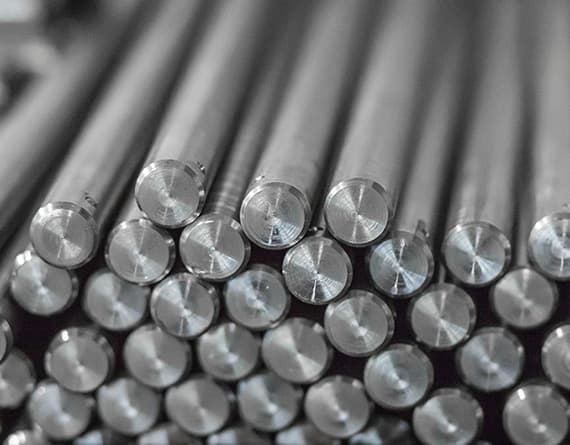
Supply Scope for Technical Review
The useful starting point is not the phrase “medical titanium bar.” It is a complete material requirement that connects the bar to the drawing, the intended application, and the acceptance records.
| Item | Supply scope that DAXUN may coordinate |
|---|---|
| Principal material | Ti-6Al-4V ELI, commonly called Grade 23 |
| Product form | Round bar, specified bar shapes, billet, and cut-to-length machining blanks, subject to the governing standard and written quotation |
| Main specification routes | ASTM B348/B348M-25 Grade 23; ASTM F136-26; AMS4930M; AMS4931H when the drawing specifically requires its duplex-annealed fracture-toughness route |
| Material condition | Annealed or another condition expressly permitted by the ordered specification and approved drawing |
| Surface and preparation | Descaled, peeled, rough turned, ground, centerless ground, cut, chamfered, or supplied with machining allowance, as confirmed for the order |
| Inspection that may be arranged | Chemistry, tensile testing, dimensions, straightness, surface condition, microstructure, ultrasonic testing, and third-party witnessing where specified |
| Documentation | Mill test certificate (MTC), heat and lot traceability, test reports, inspection records, packing list, and agreed export documents |
| Supply boundary | Material compliance does not by itself certify a finished medical implant, aerospace part, or other safety-critical component |
Availability, diameter range, tolerance, test coverage, approved source, and lead time remain subject to written quotation. Coordinating a finished material package does not mean that melting, bar conversion, testing, grinding, and cutting all occur in one DAXUN-owned plant.
What Does ELI Change Compared with Grade 5?
ELI means extra low interstitial, but Grade 23 should not be described simply as a stronger Grade 5. Both are alpha-beta Ti-6Al-4V alloys. Grade 23 places tighter limits on interstitial elements and iron, particularly oxygen, to support ductility, fracture toughness, fatigue-crack-growth resistance, and low-temperature performance.[6][7]
The engineering chain is straightforward:
Lower interstitial content -> less interstitial strengthening and embrittlement -> improved ductility and damage tolerance -> greater suitability for fracture-critical, cryogenic, and specification-controlled medical applications.
This does not guarantee that every Grade 23 bar has higher tensile strength, fatigue life, or fracture toughness than every Grade 5 bar. Section size, thermomechanical history, heat treatment, microstructure, surface condition, residual stress, test orientation, and the governing acceptance criteria still control the result.
The following chemistry is a producer reference for Ti-6Al-4V ELI, not a substitute for the ordered standard or an MTC.[6]
| Element | Producer reference, mass % | Why it matters |
|---|---|---|
| Alüminyum | 5.50-6.50 | Alpha stabilizer and principal strengthening addition |
| Vanadyum | 3.50-4.50 | Beta stabilizer contributing to the alpha-beta structure |
| Demir | 0.25 max | Controlled residual/beta stabilizer; excessive content can alter properties and segregation risk |
| Oksijen | 0.130 max | Major interstitial strength-and-ductility variable |
| Karbon | 0.080 max | Interstitial element requiring control |
| Azot | 0.050 max | Interstitial element that can increase strength while reducing ductility when excessive |
| Hidrojen | 0.013 max | Requires tight control because titanium alloys are susceptible to hydrogen embrittlement |
| Other elements, total | 0.40 max | Producer reference limit; individual and contractual limits must also be checked |
| Titanyum | Denge | Base metal |
Different specifications may use different rounding, analytical, residual-element, or product-analysis provisions. Contract acceptance must follow the exact edition stated in the purchase order.
Which Standard Should Be Written on the Purchase Order?
The correct route depends on the product form, application, heat-treatment condition, and approval basis. The words “Grade 23” alone do not complete the specification.
| Standart | Product and condition covered on this page | Key purchasing point |
|---|---|---|
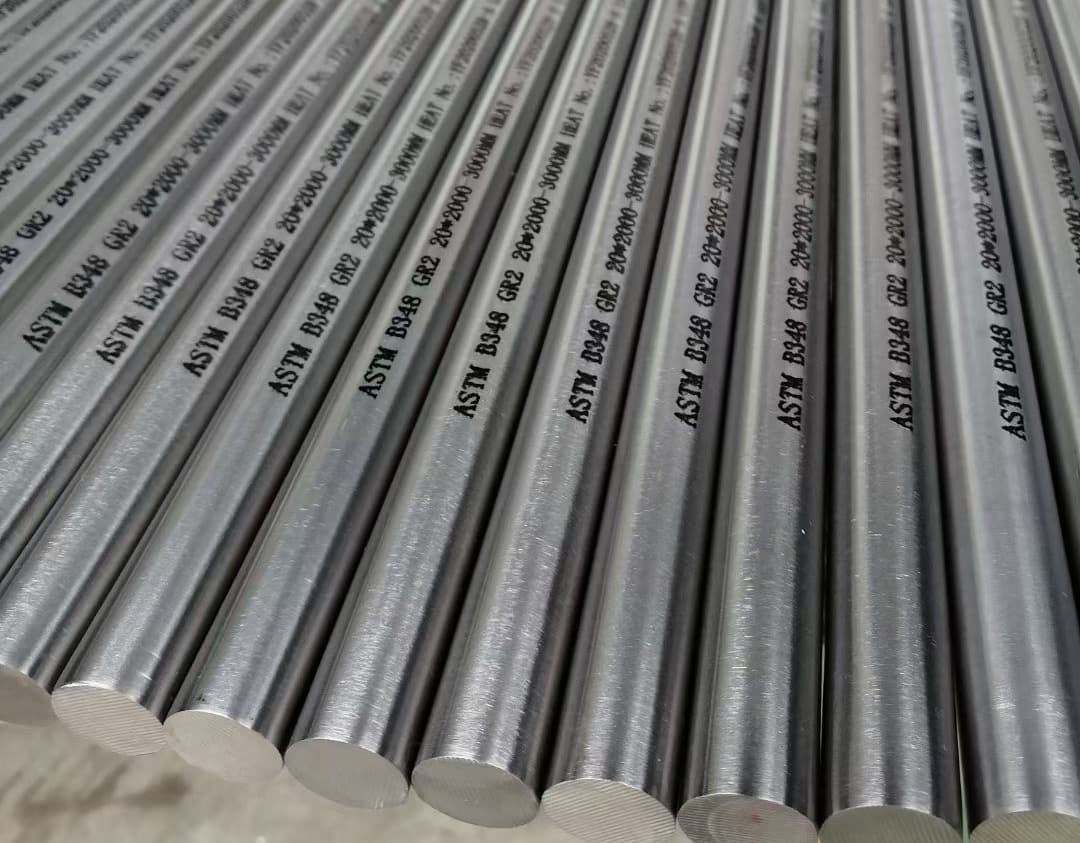
| ASTM B348/B348M-25 Grade 23 | Annealed titanium alloy bars and billets; Grade 23 is UNS R56407 | General ASTM bar-and-billet route. It is not automatically an implant-material release.[1] |
| ASTM F136-26 | Wrought annealed Ti-6Al-4V ELI, UNS R56401, for manufacturing surgical implants; forms include bar and forging bar | Medical material route. Compliance applies to the ordered material, not automatically to the finished device.[2] |
| AMS4930M | Annealed ELI alloy wire, forgings, rings, forging stock, and bars through 10.000 in. (254 mm), subject to the standard’s cross-sectional limits | Aerospace/material route. State the revision letter M, size, condition, and all drawing supplements.[3] |
| AMS4931H | Duplex-annealed, fracture-toughness-controlled ELI bars, forgings, rings, and stock; bars are limited to 6.000 in. (152.40 mm) in the published scope | Use only when the drawing requires this route. It is not interchangeable with AMS4930M merely because both concern ELI Ti-6Al-4V.[4] |
| ISO 5832-3:2021 | Wrought Ti-6Al-4V for manufacturing surgical implants | It is a separate international standard. Do not call it an automatic equivalent to ASTM F136 without reviewing both specifications and the approved drawing.[5] |
One especially important distinction is easy to miss: ASTM B348/B348M-25 identifies Grade 23 as UNS R56407, whereas ASTM F136-26 identifies its wrought annealed surgical-implant material as UNS R56401.[1][2] The chemistry family is closely related, but the specification identity, intended use, test requirements, and certification statement are not interchangeable.
What Properties Can Be Expected from Annealed Grade 23 Bar?
Grade 23 bar combines high specific strength with a relatively low elastic modulus and improved damage tolerance compared with conventional Ti-6Al-4V. Exact acceptance values remain dependent on the specification, bar size, orientation, condition, and test location.
The figures below are general producer reference values for wrought Ti-6Al-4V ELI. They are not universal contractual values for every diameter or standard.[6][7]
Example Producer Reference Properties for Annealed Ti-6Al-4V ELI Products
| Mülkiyet | Reference value or range | Condition and limitation |
|---|---|---|
| Yoğunluk | Approximately 4.43 g/cm3 | Converted from a producer value of 0.160 lb/in3; physical reference only |
| Elastic modulus | Approximately 105-116 GPa | Producer range; affected by texture and test basis |
| Beta transus | Approximately 963-990 degrees C | Producer range of 1765-1815 degrees F; heat-specific measurement may differ |
| 0.2% yield strength | 793 MPa | Producer’s listed minimum-specified reference for mill-annealed material; ordered specification and size govern |
| Ultimate tensile strength | 862 MPa | Same limitation as above |
| Elongation in 4D | 10% | Same limitation as above |
| Reduction of area | 25% | Same limitation as above |
A catalogue value is useful for preliminary material selection, but it cannot close a purchase order. For acceptance, the buyer must identify the applicable table in the ordered specification, the specimen orientation, the bar diameter or least cross-sectional dimension, and any customer-specific minimum or maximum values.
When Is Grade 23 a Better Choice Than Grade 5?
Grade 23 is justified when the design or qualification basis values ELI chemistry and damage tolerance. It is not automatically the economical or technically necessary choice for every Ti-6Al-4V part.
| Decision condition | Grade 23 implication | Verification before release |
|---|---|---|
| Drawing explicitly calls for Grade 23, ASTM F136-26, AMS4930M, or AMS4931H | Supply the exact named route; do not substitute Grade 5 on nominal alloy composition | Drawing and purchase-order review, MTC, revision check |
| Surgical-implant raw material is required | ASTM F136-26 may be the applicable material route, subject to the device manufacturer’s approved specification | Confirm UNS R56401, product form, heat treatment, microstructure, test records, and regulatory quality plan |
| Fracture toughness is a design variable | A fracture-toughness-controlled route such as AMS4931H may be required | Confirm the exact property, specimen orientation, test method, acceptance value, and size scope |
| Cryogenic or low-temperature service is involved | ELI chemistry may support better low-temperature ductility and toughness | Use design-temperature test data and project qualification, not room-temperature catalogue values alone |
| General high-strength machined hardware is required | Grade 5 may be adequate if the drawing does not require ELI chemistry | Engineering approval and a life-cycle/cost comparison |
| The component will be additively manufactured | Wrought bar standards are not the manufacturing standard for the printed component | Use the applicable AM route, such as ASTM F3001-14(2021) for Ti-6Al-4V ELI powder-bed-fusion components when specified.[12] |
The safest rule is simple: select the specification from the component’s design and approval basis, then source the bar to that specification. Do not choose a standard by application keywords alone.
Can ASTM F136 Bar Be Called a Certified Medical Implant?
No. ASTM F136-26 covers wrought annealed Ti-6Al-4V ELI material intended for the manufacture of surgical implants.[2] A compliant bar can be appropriate feedstock, but the certificate does not automatically validate the finished implant.
Machining can change surface integrity, introduce burrs or residual stress, interrupt lot identity, and expose the part to cutting fluids or foreign-metal contamination. Subsequent heat treatment, cleaning, passivation or surface modification, packaging, sterilization, and device testing add further controlled steps. The device manufacturer remains responsible for the approved drawing, manufacturing validation, biocompatibility rationale, cleanliness, fatigue and functional testing, risk management, regulatory submission, and final release.
This boundary matters commercially. A quotation should say ASTM F136-26 bar material, when that is what can be demonstrated. It should not say FDA-approved bar, certified implant, or medical-device approval unless a separate and valid regulatory basis exists.
How Do AMS4930M and AMS4931H Change an Aerospace Order?
AMS4930M and AMS4931H solve different purchasing problems. AMS4930M is an annealed ELI alloy product specification with a published bar scope through 254 mm, subject to its area limitation.[3] AMS4931H is a duplex-annealed, fracture-toughness route whose published bar scope is 152.40 mm and under.[4] The additional fracture-toughness requirement makes AMS4931H a design-driven specification rather than simply a higher-strength grade.
If the drawing requires AMS4931H, supplying annealed AMS4930M bar and adding a generic toughness claim is not an acceptable shortcut. The specified thermal history influences microstructure; microstructure influences crack-growth and fracture behavior; those properties determine whether the material meets the design basis. The required revision, approved source, melt practice, heat-treatment record, test location, fracture-toughness criterion, ultrasonic class, and purchaser supplements must all be reviewed together.
Likewise, an AMS certificate alone does not establish approval for a particular aircraft or engine program. Customer source approvals, delegated-quality requirements, drawing notes, and record-retention rules may add obligations beyond the base material specification.
What Must Be Controlled During Machining and Heat Treatment?
Grade 23 machines much like other Ti-6Al-4V products: heat is concentrated near the cutting edge, the alloy can gall or smear, and the workpiece has a strong affinity for reactive gases at elevated temperature. A rigid setup, controlled cutting speed, positive and continuous feed, sharp tooling, and abundant non-chlorinated cutting fluid are common starting principles.[6]
The practical cause-and-effect chain is:
Poor tool support or interrupted rubbing -> localized heat and surface damage -> dimensional error, tearing, or reduced fatigue performance -> controlled tooling, coolant, allowance, and final inspection.
Chlorinated processing fluids should be avoided unless a qualified procedure demonstrates their suitability. Carpenter Technology notes both the risk of halide-related stress-corrosion behavior at elevated temperature and the use of non-chlorinated cutting fluids for titanium processing.[6]
Heat treatment needs the same discipline. Producer literature gives broad reference practices such as 705-790 degrees C for 1-4 hours for a mill anneal and 480-650 degrees C for 1-4 hours for stress relief, followed by air cooling or an equivalent route.[6] These are processing references, not a DAXUN heat-treatment instruction and not a substitute for the governing specification.
Above all, reheating titanium without atmospheric control can form oxygen-enriched alpha case, a hard and brittle surface layer. Improper pickling or thermal processing can also introduce hydrogen or other contamination, reducing ductility and notch tolerance.[6][7] Any post-supply heat treatment therefore needs a qualified furnace route, cleanliness controls, calibrated records, defined alpha-case removal or evaluation, and an agreed recertification plan.
Which Failures Occur When the Order Is Underspecified?
Most costly failures begin before the bar is cut.
| Failure mode | Typical trigger | Possible consequence | Required control |
|---|---|---|---|
| Wrong material identity | PO states only “Grade 23” or “implant titanium” | B348, F136, and AMS documentation are mixed or incorrectly represented | State standard, edition, UNS, product form, and condition |
| Wrong thermal route | AMS4930M material is used where AMS4931H fracture-toughness control is required | Microstructure and toughness basis may not meet the drawing | Review all heat-treatment and property notes before sourcing |
| False ELI verification | Handheld XRF is treated as proof of Grade 23 | Aluminum and vanadium may be identified, but critical O, N, and H limits remain unverified | Use traceable heat analysis and appropriate interstitial test methods |
| Unspecified ultrasonic acceptance | RFQ says only “UT required” | Examination method or acceptance class does not match the design risk | State standard, revision, class, scan coverage, reference standard, and reporting rules |
| Alpha case or gas pickup | Uncontrolled high-temperature exposure | Brittle surface, reduced ductility, altered fatigue behavior | Qualified atmosphere, thermal records, metallographic or agreed surface verification |
| Broken traceability after cutting | Heat and lot IDs are not transferred to blanks | Finished blank cannot be linked reliably to its MTC | Positive piece identification, traveler, cut map, and marking procedure |
| Insufficient machining allowance | Ground size, straightness, surface, and finished part geometry are not reconciled | Clean-up failure or undersize finished part | Review drawing stock envelope, tolerance, straightness, and sacrificial allowance |
| Material certificate treated as device approval | ASTM F136 MTC is used as the complete medical release | Regulatory, cleaning, fatigue, and finished-device requirements remain open | Maintain separate material, process, and device-release records |
How Should Grade 23 Bar Be Verified?
Verification must connect the test result to the delivered pieces, not merely produce a folder of unrelated certificates.
- Confirm the contract identity. Match the purchase order, drawing, standard edition, UNS designation, condition, dimensions, quantity, and any purchaser supplements.
- Review heat and product chemistry. Oxygen and nitrogen in titanium can be determined by inert-gas-fusion methods such as ASTM E1409-13(2021), while hydrogen can be determined under ASTM E1447-22.[8][9] The approved specification still controls sampling, permitted methods, and acceptance.
- Do not rely on handheld XRF for ELI status. XRF can assist alloy-family identification, but it does not establish the critical oxygen, nitrogen, and hydrogen limits. The ELI claim needs traceable laboratory results and an unbroken heat/lot chain.
- Check mechanical results in context. Verify diameter or section size, specimen orientation, heat-treatment condition, test temperature, and the applicable acceptance table.
- Review microstructure and surface condition. Where required, confirm alpha-beta structure, absence or removal of unacceptable alpha case, and the agreed surface finish.
- Define ultrasonic testing completely. ASTM E2375-26a establishes a general wrought-product ultrasonic practice and requires the contract to indicate acceptance criteria.[10] AMS2631G is a titanium bar, billet, and plate route for products 6.4 mm and over in cross section or diameter.[11] The order must still state the required class and project-specific details.
- Close dimensional and traceability records. Confirm diameter, length, straightness, surface, cut-piece IDs, weight or piece count, and their relationship to the source MTC.
PMI, tensile testing, ultrasonic inspection, and dimensional inspection answer different questions. None should be presented as a universal substitute for the others.
How DAXUN Coordinates a Finished Grade 23 Bar Package
DAXUN’s role is to keep the material, processing, inspection, documentation, and delivery requirements aligned from quotation to shipment.
- Review the drawing, application, standard edition, UNS designation, bar size, condition, and approval requirements.
- Confirm the applicable mill or qualified material source and reconcile available manufacturing scope with the order.
- Coordinate agreed cutting, peeling, turning, grinding, straightening, end preparation, marking, and packing through the applicable source or processor.
- Arrange and review the agreed chemistry, mechanical, microstructural, ultrasonic, dimensional, surface, and third-party inspections.
- Build the document package so each delivered bar or blank remains linked to the applicable heat, lot, processing route, and inspection record.
- Coordinate export packing and delivery against the written commercial terms.
This approach gives the buyer one technical interface for a finished material package without implying that all melting, conversion, machining, and testing are performed in one facility.
What Should Be Included in an RFQ?
For a technically reviewable quotation, send:
- Exact material standard and edition;
- Grade and UNS designation;
- End use and governing drawing or specification;
- Round diameter or bar shape, dimensions, and tolerances;
- Length, cut-blank dimensions, quantity, and unit system;
- Required heat-treatment and mechanical condition;
- Surface finish, straightness, end preparation, and machining allowance;
- Chemistry, tensile, microstructure, hardness, ultrasonic, or other inspection requirements;
- Ultrasonic standard, class, coverage, and reporting level;
- Melt practice or approved-source restrictions, when applicable;
- MTC format, traceability, marking, third-party witness, and record-retention requirements;
- Packing method, delivery destination, and required date.
Where the end use is medical or aerospace, include the customer specification and all drawing notes before the source is selected. A short RFQ with the wrong standard usually takes longer to correct than a complete RFQ takes to review.
Sıkça Sorulan Sorular
Is Grade 23 Titanium Bar the Same as ASTM F136 Bar?
Not automatically. ASTM B348/B348M-25 Grade 23 is UNS R56407, while ASTM F136-26 identifies wrought annealed surgical-implant material as UNS R56401.[1][2] The purchase order must state the exact route required.
Is Grade 23 Always Stronger Than Grade 5?
No. Grade 23 is selected primarily for tighter interstitial control and improved damage tolerance. Static strength depends on specification, size, condition, microstructure, and test orientation.
Can an ASTM F136 MTC Certify the Finished Implant?
No. It can demonstrate compliance of the ordered material with ASTM F136 when the records are valid. Finished-device design, machining, surface condition, cleaning, testing, sterilization, regulatory approval, and release remain separate responsibilities.
What Is the Difference Between AMS4930M and AMS4931H?
AMS4930M is an annealed ELI alloy product route. AMS4931H is a duplex-annealed route with fracture-toughness requirements and a different published size scope.[3][4] The drawing decides which one applies.
Can Handheld XRF Prove That a Bar Is ELI Grade 23?
No. It may help identify titanium, aluminum, and vanadium, but it does not establish the low oxygen, nitrogen, and hydrogen limits that are central to ELI control. Use traceable laboratory chemistry and heat/lot records.
Is ASTM F3001 a Grade 23 Bar Standard?
No. ASTM F3001-14(2021) covers Ti-6Al-4V ELI components made by full-melt powder bed fusion.[12] It is not a wrought-bar purchasing standard.
Can DAXUN Provide Cut or Ground Grade 23 Bar?
DAXUN can coordinate cut lengths, machining blanks, peeling, turning, grinding, dimensional inspection, testing, documentation, and export packing when confirmed in the written quotation. Final capability depends on size, tolerance, specification, source approval, and required inspection.
Technical Accuracy Statement
This page distinguishes standards, producer reference data, and project-specific acceptance requirements. It does not replace the purchased ASTM, SAE, ISO, customer, medical-device, or aerospace specification. Standard editions, source approvals, dimensions, test methods, and acceptance criteria must be confirmed on the purchase order. Material compliance does not establish finished-component certification or regulatory approval.
Last reviewed: July 22, 2026.
Technical Sources
- ASTM B348/B348M-25, Standard Specification for Titanium and Titanium Alloy Bars and Billets, ASTM International.
- ASTM F136-26, Standard Specification for Wrought Titanium-6Aluminum-4Vanadium ELI (Extra Low Interstitial) Alloy for Surgical Implant Applications (UNS R56401), ASTM International.
- AMS4930M, Titanium Alloy Bars, Wire, Forgings, and Rings, 6Al-4V, Extra Low Interstitial, Annealed, SAE International, revised November 13, 2025.
- AMS4931H, Titanium Alloy Bars, Forgings, and Rings, 6Al-4V Extra Low Interstitial (ELI), Duplex Annealed, Fracture Toughness, SAE International, revised March 19, 2026.
- ISO 5832-3:2021, Implants for Surgery – Metallic Materials – Part 3: Wrought Titanium 6-Aluminium 4-Vanadium Alloy, International Organization for Standardization.
- Ti 6Al-4V ELI Datasheet, Carpenter Technology.
- TIMETAL 6-4, 6-4 ELI and 6-4-.1Ru Technical Data Sheet, TIMET.
- ASTM E1409-13(2021), Standard Test Method for Determination of Oxygen and Nitrogen in Titanium and Titanium Alloys by Inert Gas Fusion, ASTM International.
- ASTM E1447-22, Standard Test Method for Determination of Hydrogen in Reactive Metals and Reactive Metal Alloys by Inert Gas Fusion, ASTM International.
- ASTM E2375-26a, Standard Practice for Ultrasonic Testing of Wrought Products, ASTM International.
- AMS2631G, Ultrasonic Inspection Titanium and Titanium Alloy Bar, Billet, and Plate, SAE International, revised June 20, 2022.
- ASTM F3001-14(2021), Standard Specification for Additive Manufacturing Titanium-6 Aluminum-4 Vanadium ELI with Powder Bed Fusion, ASTM International.