


Grade 2 titanium (UNS R50250) represents the optimal balance of formability, corrosion resistance, and cost within the commercially pure titanium spectrum. As the most widely specified unalloyed titanium grade globally, it serves as the backbone for chemical processing equipment, medical implants, and marine systems where failure is not an option. Yet engineers frequently default to this grade without understanding its precise limitations—particularly regarding temperature thresholds and chloride exposure limits. This guide provides a detailed analysis of Grade 2 titanium, helping engineers gain a thorough understanding of this most commonly used pure titanium material.
What Is Grade 2 Titanium?
Basic Introduction
Grade 2 titanium is a single-phase alpha titanium alloy belonging to the commercially pure (CP) titanium family. Unlike alloyed grades (e.g., Grade 5 Ti-6Al-4V), Grade 2 contains no intentional alloying elements—its mechanical properties derive entirely from controlled interstitial impurities within a high-purity titanium matrix. This fundamental characteristic defines its unique position in material selection: offering superior corrosion resistance compared to alloyed grades while maintaining adequate strength for many structural applications.
Detailed Chemical Composition
- Oxygen: 0.18-0.25% (critical strength contributor; each 0.05% increase raises yield strength by ~40 MPa)
- Iron: 0.20-0.30% (must be tightly controlled as it forms brittle Fe-Ti intermetallics at grain boundaries)
- Carbon: ≤0.08% (higher levels cause titanium carbide precipitation during welding)
- Nitrogen: ≤0.03% (significantly embrittles titanium even at low concentrations)
- Hydrogen: ≤0.015% (maximum allowable to prevent hydride formation and embrittlement)
- Residual Elements: Each ≤0.1%, total ≤0.4% (includes aluminum, vanadium, chromium, nickel)
- Titanium + Other Named Elements: Balance
This composition creates a material with approximately 20% higher strength than Grade 1 while retaining 85% of Grade 1’s superior ductility—making it the most versatile commercially pure grade.
Crystallographic Structure
Grade 2 titanium maintains a hexagonal close-packed (HCP) alpha phase structure at all service temperatures. Unlike alpha-beta alloys, it has no phase transformation until melting (1668°C), which provides exceptional dimensional stability during thermal cycling. The absence of beta phase eliminates galvanic corrosion risks between phases—a critical advantage in corrosive environments.
The grain structure is typically equiaxed with ASTM grain size 5-7 after standard annealing. For medical applications requiring ASTM F67 compliance, additional vacuum annealing produces grain size 2-3 to enhance fatigue resistance. Electron microscopy reveals minimal interstitial atom clustering when properly processed, preserving ductility.
Manufacturing Process
- Kroll Process: Initial titanium sponge production through magnesium reduction of TiCl₄
- Vacuum Arc Remelting (VAR): Double or triple melting under vacuum (10⁻³ mbar) to remove volatile impurities
- Homogenization: 12-hour soak at 950°C to eliminate chemical segregation
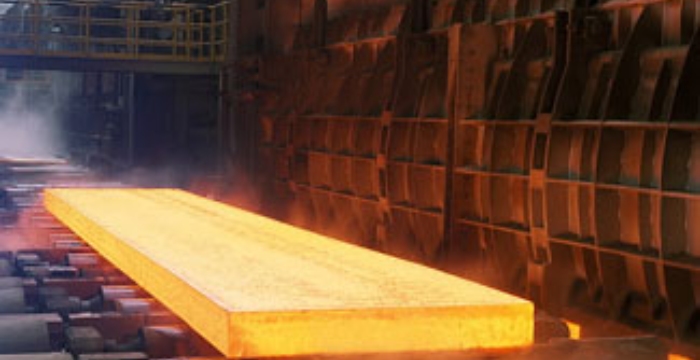
- Hot Working: Forging/rolling between 900-750°C in the alpha phase field
- Final Annealing: 675-790°C for 1 hour followed by air cooling to optimize grain structure
Global Standard Equivalents and Specifications:
- USA: UNS R50250 (ASTM B265, B348, F67 for medical)
- Europe: EN 1.0294 (ISO 5832-2 compliant when processed to medical grade)
- Russia: OT4-0 (GOST 19807-91) with identical composition limits
- Japan: JIS Grade 2 (JIS H 4600) with stricter hydrogen limits (≤0.0125%)
- China: TA2 (GB/T 3621) with equivalent requirements
Gr.2 Historical Development Context:
Grade 2 titanium evolved from early titanium development in the 1950s. Initially, titanium was produced with inconsistent purity, causing unpredictable corrosion failures. The development of vacuum arc remelting in the 1960s enabled controlled interstitial levels, leading to ASTM’s formal classification in 1973. Grade 2 emerged as the optimal balance after extensive testing in DuPont’s chemical plants revealed that 0.25% oxygen provided sufficient strength without compromising the corrosion resistance that made titanium valuable.
Mechanical and Physical Properties
Mechanische Eigenschaften:
- Tensile Strength: 345 MPa minimum (434 MPa typical)
- Yield Strength (0.2% offset): 275 MPa minimum
- Elongation: 20% minimum in 50mm (25% typical)
- Modulus of Elasticity: 103 GPa
- Hardness: 70-90 HRB
Physical Constants:
- Density: 4.51 g/cm³
- Melting Point Range: 1615-1670°C
- Thermal Conductivity: 21.9 W/m·K at 100°C
- Coefficient of Thermal Expansion: 8.6 µm/m·°C (20-100°C)
- Electrical Resistivity: 420 nΩ·m
Corrosion Resistance: Where Grade 2 Excels and Fails
Advantages
- Seawater: Immune to crevice corrosion at temperatures up to 110°C (tested per ASTM G48 Method D)
- Chlorine Gas: Resists wet chlorine up to 90°C and dry chlorine to 150°C
- Nitric Acid: Handles all concentrations up to 80°C with corrosion rates <0.025 mm/year
- Organic Acids: Excellent resistance to citric, acetic, and oxalic acids at all temperatures
- Alkaline Solutions: Withstands caustic soda up to 70% concentration at 100°C
Critical Limitations:
- Hydrochloric Acid: Maximum 10% concentration at 30°C (corrosion rate: 0.1 mm/year). At 20% concentration, rate exceeds 1.0 mm/year.
- Sulfuric Acid: Limited to <5% concentration below 40°C. Higher concentrations require tantalum or Hastelloy.
- Anhydrous Conditions: Fails in dry chlorine gas above 150°C due to loss of protective oxide film.
Critical Applications of Grade 2 Titanium
Chemical Processing:
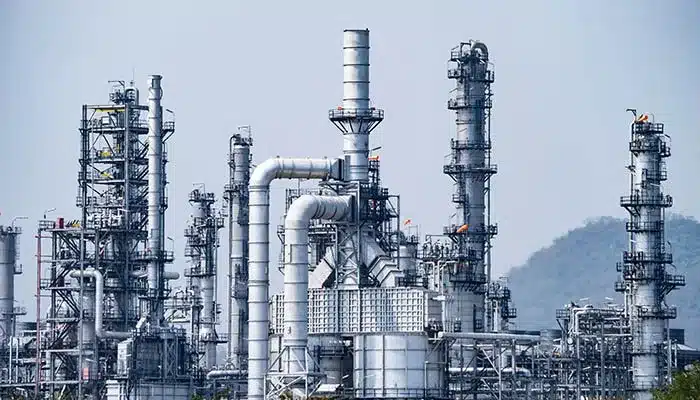
- Distillation columns for organic acid recovery (citric, lactic)
- Heat exchangers in chlorine dioxide bleach plants
Medical Devices:
- Bone screws and plates (ASTM F67 compliant)
- Dental implant abutments
- MRI-compatible surgical instruments
Marine Engineering:
- Submarine seawater piping systems
- Naval condenser tubes in aircraft carrier power plants
- Offshore platform anode brackets
Aerospace:
- Cryogenic fuel system components (liquid nitrogen/oxygen)
- Hydraulic reservoirs for fighter jets
Frequently Asked Questions About Grade 2 Titanium
Q: How does Grade 2 compare to 316L stainless steel in seawater?
A: Grade 2 provides fundamentally different protection. 316L relies on chromium-molybdenum passive film vulnerable to chlorides above 60°C. Grade 2’s titanium dioxide film remains stable to 110°C in flowing seawater. In stagnant zones with biofouling, 316L typically fails within 18 months while Grade 2 operates 20+ years. The initial cost premium (3-4x) is offset by elimination of replacement costs in critical marine systems.
Q: Is Grade 2 suitable for cryogenic applications below -100°C?
A: Absolutely—this is where Grade 2 excels. Unlike many alloys that become brittle at low temperatures, Grade 2’s ductility increases as temperature drops. NASA specifies it for liquid hydrogen (-253°C) transfer lines per AMS 2759/3. The key requirement is proper annealing to prevent hydrogen pickup during fabrication, which could cause embrittlement.
Schlussfolgerung
Grade 2 titanium offers the optimal balance of corrosion resistance, formability, and cost for demanding applications in chemical processing, marine systems, medical devices, and cryogenic environments.Although the initial cost is higher than stainless steel, the long-term project cost is lower than stainless steel.
Daxun Alloy Co, Ltd. provides premium secondary titanium materials to global customers, certified to various standards. Contact our professional engineers for consultation immediately.