


Grade 2 Titanium Tube & Pipe | ASTM B338, B861 and B862
Direct answer: Grade 2 titanium tube is a corrosion-resistant tubular product made from commercially pure titanium identified as UNS R50400. Its combination of moderate strength, formability, weldability, low density, and resistance to many aerated chloride environments makes it a practical candidate for water lines, chemical process piping, and selected fluid paths inside medical equipment. The grade name alone, however, does not establish suitability. The fluid composition, concentration, temperature, pressure, velocity, cleaning chemicals, product specification, manufacturing route, joint design, and finished-equipment requirements must all be reviewed.
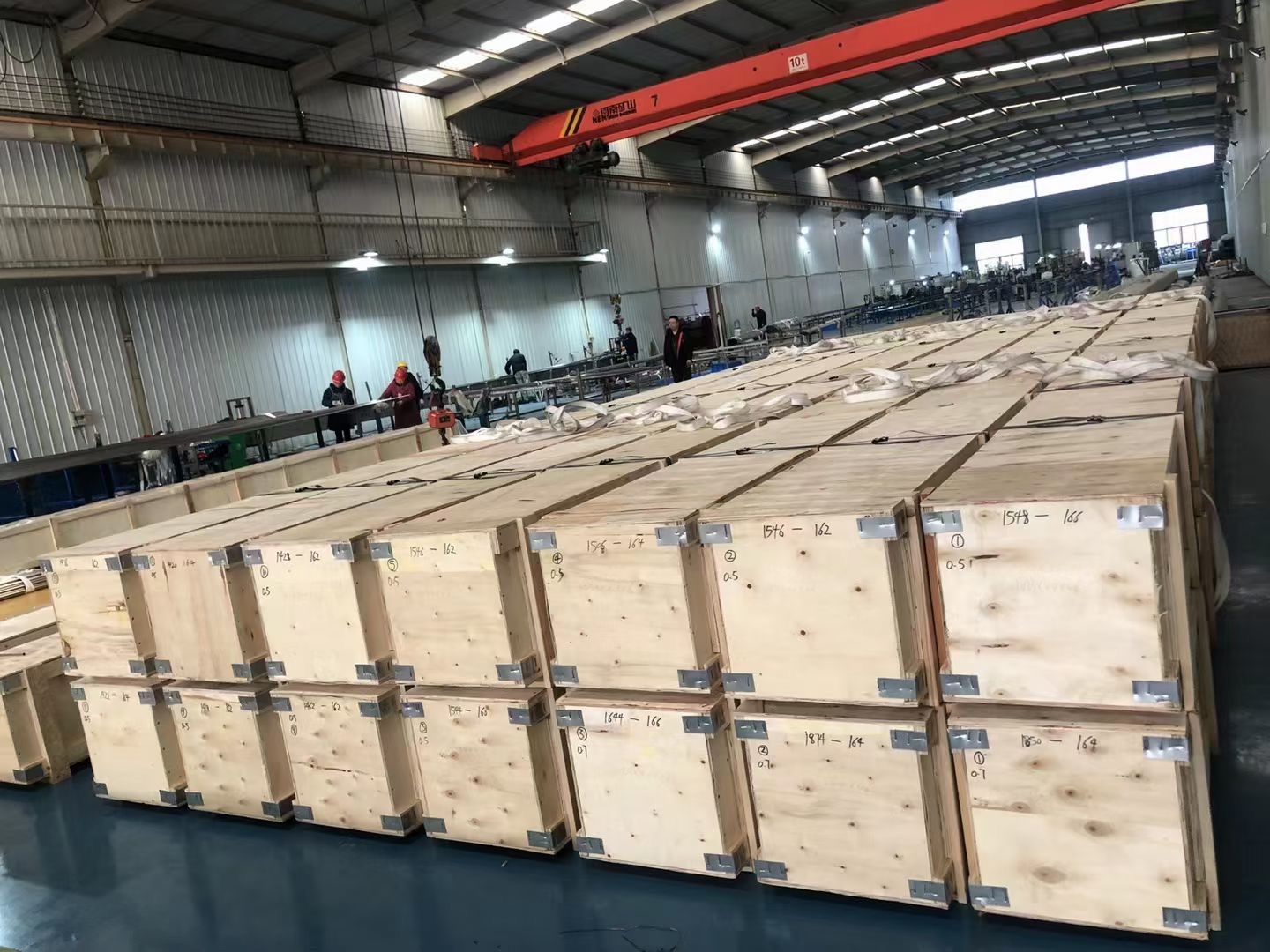
DAXUN can supply Grade 2 seamless titanium pipe, welded titanium pipe, welded-and-cold-worked tube, and heat-exchanger tube to an agreed specification. We can also quote matching elbows, tees, reducers, caps, lap-joint stub ends, and forged titanium flanges. Reviewing the straight tube, fittings, and flanges as one piping package helps align the material grade, outside diameter, wall thickness, end preparation, flange drilling, inspection, traceability, and documentation before shipment.
| Item | DAXUN supply scope available for review |
|---|---|
| Material | Grade 2 commercially pure titanium, UNS R50400 |
| Tubular forms | Seamless pipe, welded pipe, welded/cold-worked tube, and specified heat-exchanger tube |
| Principal tube and pipe standards | ASTM B338, ASTM B861, and ASTM B862; applicable ASME SB adoptions can be reviewed for Code work |
| Matching welding fittings | Elbows, returns, tees, reducers, caps, and lap-joint stub ends, generally reviewed to ASTM B363 and the drawing |
| Matching flanges | Forged Grade F-2 titanium flanges, generally using ASTM B381-26 for material; dimensions and facings follow the project standard or drawing |
| Typical service discussions | Seawater, brine, cooling water, demineralized water, high-purity water, chemical process fluids, and internal medical-equipment fluid circuits |
| Processing and inspection that may be coordinated | Cut lengths, end preparation, surface finishing, dimensional inspection, NDE, pressure testing, cleaning, and project packaging, subject to written quotation and confirmation by the applicable mill or qualified processor |
| Documentation | Mill test certificates (MTCs) plus the agreed dimensional, mechanical, NDE, pressure-test, traceability, and third-party records |
Available outside diameters, wall thicknesses, lengths, manufacturing routes, minimum quantities, and stock positions require confirmation at quotation. A dimension appearing in a standard is not a promise that it is continuously stocked. A coordinated package also does not mean that every tube, fitting, and flange will come from one heat or one manufacturing facility unless the order specifically requires that condition.
What Is Grade 2 Titanrohr?
Grade 2 is a commercially pure titanium grade with the UNS designation R50400. “Commercially pure” does not mean laboratory-pure or 100 percent titanium. Iron, oxygen, nitrogen, carbon, hydrogen, and residual elements are controlled. Oxygen is particularly important because it contributes to strength and hardness while also influencing ductility.
Grade 2 is generally stronger than Grade 1 and more formable than Grades 3 and 4. This balance is one reason it is so widely considered for industrial tubing, process equipment, and welded fabrications.
Its useful combination of properties includes:
- a stable and self-healing passive oxide film in many aerated aqueous environments;
- excellent resistance to seawater and many chloride salt solutions;
- a density of approximately 4.51 g/cm³, substantially below steels and nickel alloys;
- practical strength and ductility in the annealed condition;
- good weldability when cleanliness and inert-gas shielding are properly controlled; and
- corrosion performance that does not depend on a paint or polymer coating remaining intact.
Common search and drawing terms include CP Titanium Grade 2, CP Ti Grade 2, Titanium Gr.2, Gr 2 titanium tube, Ti Grade 2, and UNS R50400 pipe. Chinese TA2, European material number 3.7035, and other national designations are sometimes shown as approximate cross-references. They must not be treated as automatic contractual equivalents because the product standards, tolerances, testing frequency, and acceptance requirements can differ.
Where Can Grade 2 Titanium Tubing Be Considered?
| Service | Potential Grade 2 advantage | Information still required |
|---|---|---|
| Seawater, brine, and chloride-bearing cooling water | Strong resistance to general corrosion and flow-assisted attack | Temperature, crevices, deposits, biofouling, velocity, and dissimilar-metal joints |
| Fresh water, demineralized water, and high-purity water | Corrosion resistance, low weight, and cleanable surfaces | Potable-water rules, extractables, surface finish, cleaning, and sanitization |
| Chemical process fluids | Useful resistance to many salt solutions, wet chlorides, and oxidizing media | Full chemistry, pH, redox condition, concentration, temperature, pressure, and cleaning fluids |
| Internal medical-equipment fluid paths | Candidate for water, reagent, thermal-control, or cleaning circuits | Patient contact, reprocessing, cleanability, sterilization, biocompatibility, and regulatory pathway |
| Condensers and heat exchangers | Thin-wall tubing can resist seawater and high-velocity cooling media | ASTM B338 or another exchanger-tube specification rather than an assumed piping specification |
Suitability must be assessed against the most severe credible condition, not only normal operation. A neutral brine line may be exposed to a fluoride-bearing cleaner during shutdown. A high-purity water circuit may experience a much higher sterilization temperature. A medical device may contain long, narrow lumens that are difficult to drain and reprocess. These less frequent conditions can control material selection and validation.
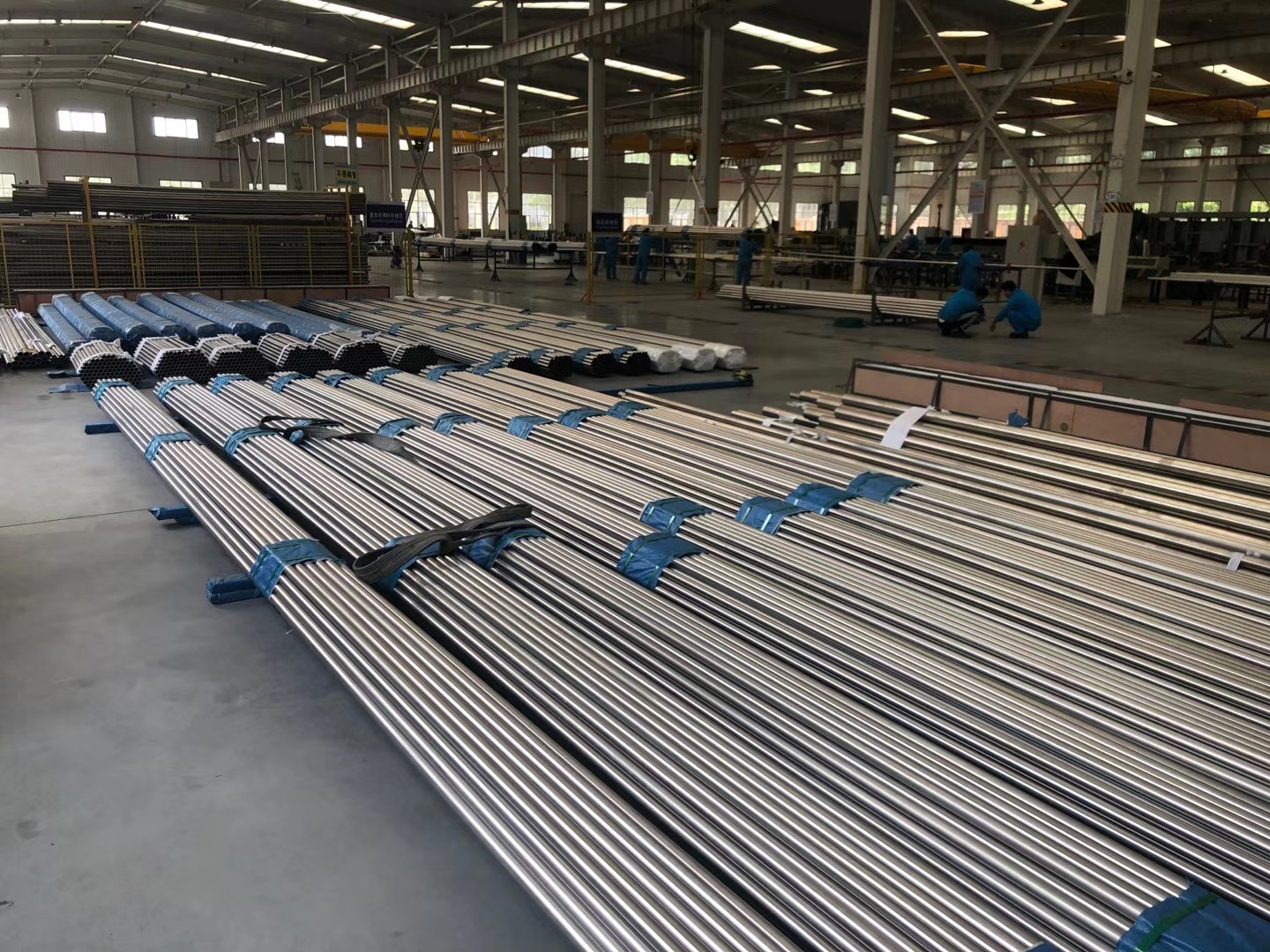
What Is the Difference Between Titanrohr and Titanium Pipe?
The words tube und pipe are not always interchangeable in technical purchasing.
Tube is commonly ordered by actual outside diameter and wall thickness. Its function may be heat transfer, close dimensional control, bending, or a compact fluid path inside equipment. ASTM B338 is specifically written for seamless and welded titanium tubing used in surface condensers, evaporators, and heat exchangers.
Pipe is commonly used for fluid transport and pressure piping and may be ordered by NPS and schedule or by outside diameter and wall thickness. ASTM B861 covers seamless titanium and titanium alloy pipe, while ASTM B862 covers welded titanium and titanium alloy pipe. Both specifications address general corrosion-resisting and elevated-temperature service.[1][2][3]
| Purchasing purpose | Common specification route | Critical ordering details |
|---|---|---|
| Condenser, evaporator, or shell-and-tube exchanger | ASTM B338 / ASME SB-338 | OD, wall, length, straightness, tubesheet joint, NDE, and pressure test |
| Seamless process piping | ASTM B861 / applicable ASME SB-861 | NPS or OD, wall/schedule, length, ends, testing, and design Code |
| Welded process piping | ASTM B862 / applicable ASME SB-862 | Size, longitudinal weld, delivery condition, weld NDE, pressure test, and joint factor |
| Small-bore medical-equipment fluid tube | Drawing plus an applicable tubular-product specification | Tight tolerances, ID surface, roughness, cleanliness, particles, ends, and traceability |
ASTM B338, ASTM B861, and ASTM B862 are the principal ASTM routes discussed on this page. The purchase order must state the required edition because approved drawings, Code requirements, and customer specifications may invoke a particular revision.
Grade 2 Titanium Chemistry and Mechanical Properties
The following values are general Grade 2 reference values published for UNS R50400 products. They are not universal tubular-product acceptance values. Contract acceptance must follow the applicable ASTM B338, B861, B862, or customer specification, including the size-dependent mechanical requirements and the actual MTC named in the order.[6]
| Element | Common maximum, wt.% | Purchasing significance |
|---|---|---|
| Iron, Fe | 0.30 | Controlled contributor to strength and microstructure |
| Oxygen, O | 0.25 | Important interstitial element affecting strength and ductility |
| Carbon, C | 0.08 | Controlled impurity |
| Nitrogen, N | 0.03 | Interstitial element; excessive content can reduce ductility |
| Hydrogen, H | 0.015 | Controlled to reduce hydrogen-related embrittlement risk |
| Other elements | Per the applicable specification | Residual rules and product-analysis tolerances must follow the specification |
| Titanium, Ti | Balance | Base metal |
ATI publishes general room-temperature reference values for selected annealed Grade 2 / UNS R50400 products of approximately 345 MPa minimum tensile strength, 275 MPa minimum 0.2 percent yield strength, and 20 percent minimum elongation.[6] These values cannot be applied as universal ASTM B338, B861, or B862 tube and pipe acceptance values. Some Grade 2 product specifications or dimensional ranges may also impose a maximum yield-strength requirement to preserve ductility and formability. The ordered tubular specification must be checked directly.
| Eigentum | Common Grade 2 reference | Limitation |
|---|---|---|
| Density | Approximately 4.51 g/cm³ | Suitable for preliminary weight calculations |
| Minimum tensile strength | Approximately 345 MPa | Product specification and size control acceptance |
| 0.2% yield strength | Approximately 275 MPa minimum reference | Check the ordered tubular standard and dimensional range directly |
| Minimum elongation | Commonly 20% | Depends on product form, thickness, and specimen |
| Annealed hardness | 80 HRB maximum in the cited ATI product data | Not a universal tubular-product acceptance limit |
Handheld XRF or PMI can help identify titanium and selected metallic elements. It cannot reliably quantify the oxygen, nitrogen, carbon, and hydrogen limits that distinguish commercially pure grades. A reading that merely says “titanium” does not establish Grade 2 compliance. Heat traceability, source MTCs, manufacturing records, and appropriate laboratory analysis remain the primary controls.
Why Is Grade 2 Used for Water Piping?
Seawater, Brine, and Chloride Cooling Water
Titanium forms a stable oxide film in the presence of water and oxygen. Published TIMET and ATI data describe commercially pure titanium as highly resistant to seawater, inorganic salt solutions, and many chloride environments, including conditions with substantial flow velocity.[7][8] That behavior supports its use as a candidate material for seawater intake and discharge systems, desalination equipment, brine circulation, cooling water, and condenser systems.
“Resistant to seawater” does not mean that every geometry and temperature is immune. Elevated temperature, acidic crevices, oxygen-depleted gasket interfaces, deposits, scaling, and stagnant zones can change the local chemistry. Grade 7, Grade 12, or another titanium alloy may be more appropriate for severe hot-crevice or reducing conditions. The project corrosion engineer must approve the final selection.
Fresh Water, Demineralized Water, and High-Purity Water
Grade 2 can avoid red rust contamination associated with carbon steel and can reduce dependence on applied corrosion coatings. It can also be pickled, finished, cleaned, and packaged to an agreed equipment specification. For high-purity water or medical-equipment water circuits, buyers should additionally define:
- internal surface finish or maximum roughness;
- whether a longitudinal weld is permitted and the allowable internal weld profile;
- limits for particles, oil, cleaning-agent residue, and extractables;
- drainability, dead legs, connection geometry, and internal visual inspection;
- sanitizing or sterilizing media, temperature, time, and number of cycles; and
- end caps, double bagging, and clean-environment packaging.
An ASTM Grade 2 MTC does not automatically provide potable-water, pharmaceutical-water, or medical-device approval. The completed system must comply with the applicable local regulations and the equipment manufacturer’s validation plan.
Dissimilar-Metal Joints
Titanium behaves as a relatively noble material in many aqueous systems. When electrically coupled to carbon steel, aluminum, copper alloys, or certain stainless steels, the titanium may remain unaffected while accelerating galvanic corrosion of the less noble metal.[7] Designers should evaluate insulating gaskets, sleeves, transition joints, cathodic-protection potentials, and cathode-to-anode area ratios rather than reviewing only the titanium tube.
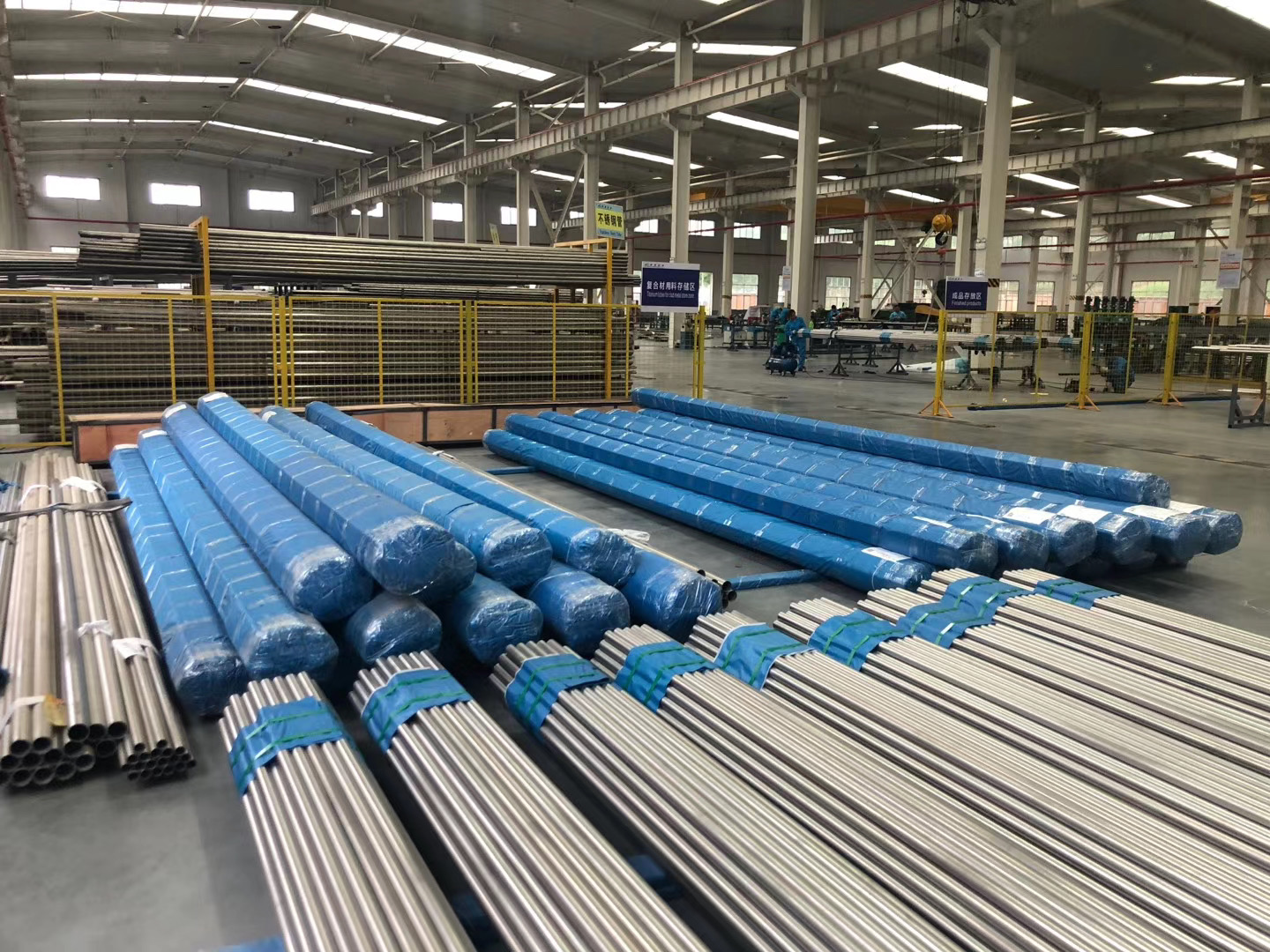
What Must Be Checked for Chemical Process Piping?
Grade 2 is often considered for chloride brines, wet chlorine-bearing streams, inorganic salt solutions, selected oxidizing acids, and corrosive cooling fluids. Its performance depends on maintaining the passive film; it is not universally immune to chemicals.
| Process information | Why it matters |
|---|---|
| Main fluid and all minor constituents | Small amounts of fluoride, metal ions, or reducing contaminants can alter passivity |
| Concentration and operating range | Evaporation, crystallization, or local concentration may be more severe than the inlet condition |
| Minimum and maximum temperature | General corrosion, crevice corrosion, and hydrogen uptake vary with temperature |
| pH during operation, startup, shutdown, and cleaning | A brief cleaning cycle may control selection |
| Oxidation-reduction condition | Titanium depends on a stable passive film; reducing media need special review |
| Pressure, velocity, and entrained solids | These affect wall design, erosion, vibration, and fatigue |
| Crevices, gaskets, and deposits | Local oxygen depletion and acidification can initiate crevice corrosion |
| Galvanic contacts and impressed current | These can attack other metals or promote hydrogen absorption by titanium |
Important Limits
- Fluoride-bearing media: Fluoride ions and hydrofluoric acid can destabilize the titanium oxide film. Chloride-service experience must not be extrapolated to fluoride systems.
- Strong reducing acids: Deaerated or low-oxygen hydrochloric and sulfuric acid conditions may corrode unalloyed Grade 2 rapidly. Reliable corrosion data or testing is required.
- Hot concentrated alkali: Published producer guidance identifies hydrogen uptake and possible embrittlement concerns at elevated temperature and high pH.[7][8]
- Dry chlorine and high-concentration oxygen: Successful wet-chloride service does not prove suitability for dry chlorine, pure oxygen, or oxygen-enriched systems. Dedicated ignition and compatibility analysis is required.
- Tight crevices: Commercially pure titanium can lose passivity in hot, acidic salt crevices. Geometry changes or a more crevice-resistant alloy may be necessary.
Online corrosion tables are screening tools, not performance warranties. Final selection should consider actual process samples, upset conditions, existing plant experience, corrosion testing, and formal approval by the responsible designer.
Can Grade 2 Titanium Tube Be Used in Medical Equipment?
It can be a candidate for selected medical-equipment fluid paths, but the phrase “medical equipment tubing” must be defined.
This page primarily addresses internal water, saline, reagent, cleaning, waste-fluid, cooling, or thermal-control circuits where corrosion resistance, low weight, or freedom from ferrous rust is valuable. It does not describe an implantable catheter, and it does not imply that ordinary ASTM B338, B861, or B862 Grade 2 tube is an approved medical device.
Why ASTM F67 Is Not Automatically a Grade 2 Tube Specification
ASTM F67-24 includes Grade 2 commercially pure titanium for manufacturing surgical implants, but its published scope lists strip, sheet, plate, bar, billet, forging, and wire. Tubing is not listed.[9] A supplier therefore should not relabel ordinary UNS R50400 pipe as “ASTM F67 medical-grade tube” merely because its chemistry resembles Grade 2.
If the tube is implantable, directly or indirectly patient contacting, or part of a regulated medical device, the device manufacturer must define an appropriate material specification, risk classification, biological-evaluation plan, cleaning, sterilization, traceability, and regulatory-submission path. FDA guidance on ISO 10993-1 evaluates biocompatibility within a risk-management process for the finished medical device, not through the raw material name alone.[10]
Critical Medical-Equipment Tube Requirements
| Requirement | Purchasing and validation question |
|---|---|
| Patient-contact category | No contact, indirect contact, contact with fluid, tissue, or circulating blood, and for what duration? |
| Process fluid | Water, saline, reagent, cleaner, coolant, waste, or another medium, including disinfectants |
| Lumen geometry | ID, length, bends, dead spaces, drainability, and access for cleaning |
| Internal surface | Roughness, scratches, weld profile, heat tint, particles, and residue limits |
| Reprocessing | Method, temperature, pressure, cycles, material compatibility, and validation responsibility |
| Manufacturing quality | Clean cutting, forming, shielding, cleaning, closure, packaging, and batch segregation |
| Regulatory records | Risk management, biological evaluation, cleaning/sterilization validation, and finished-device conformity |
FDA notes that long narrow lumens, rough internal surfaces, ridges, and sharp angles can retain debris and make reusable medical devices difficult to reprocess. Manufacturers are expected to validate that the stated cleaning, disinfection, or sterilization procedure consistently works.[11] A requirement such as “bright ID” is therefore incomplete unless geometry, surface condition, connection design, and the reprocessing method are validated together.
Seamless, Welded, or Welded-and-Cold-Worked?
| Manufacturing route | Typical characteristic | Suitable discussion | Purchasing controls |
|---|---|---|---|
| Nahtlos | Produced from hollow billet by cold reduction, drawing, or another compliant route; no longitudinal fusion weld | Small and medium diameters, specified high-integrity service, bending, or projects prohibiting longitudinal welds | Eccentricity, laps, straightness, cold work, annealing, UT, and pressure test |
| Welded | Formed from flat product and automatically welded; often attractive for long lengths and larger diameters | General water and chemical piping where a longitudinal weld is accepted | Feedstock, welding method, weld NDE, delivery condition, and internal weld profile |
| Welded and cold worked | Further cold reduced and heat treated after welding to improve dimensions and weld-zone structure | Heat exchangers and close-tolerance equipment tubing | Reduction, final anneal, weld-zone microstructure, dimensional control, and full-length testing |
Seamless does not mean defect-free, and welded does not mean corrosion-prone. Reliability comes from the correct material, qualified manufacturing route, appropriate heat treatment, full-length examination, pressure testing, welding quality, and system design. Pressure- or fatigue-sensitive equipment should state the permitted construction, weld joint factor, and NDE coverage in the design documents.
Which Standards Apply to Grade 2 Titanium Tubing and Piping?
| Standard | Principal scope | Information still required on the RFQ |
|---|---|---|
| ASTM B338-17(2021) | Seamless and welded titanium tube for condensers, evaporators, and heat exchangers | Grade 2, construction, OD, wall, length, NDE, pressure test, and finish |
| ASTM B861-24 | Seamless titanium pipe for general corrosion-resisting and elevated-temperature service | Grade 2, NPS/OD, wall, ends, length, testing, and design Code |
| ASTM B862-23 | Welded titanium pipe for general corrosion-resisting and elevated-temperature service | Grade 2, dimensions, weld condition, weld examination, pressure test, and supplements |
| ASTM B363-23 | Factory-made titanium and titanium alloy welding fittings | Type, size, wall, material, construction, NDE, and ends |
| ASTM B381-26 | Annealed titanium and titanium alloy forgings, including Grade F-2 and Grade F-2H | Flange type, forging size, drawing, material grade, testing, and NDE |
| ASTM B600-22 | Descaling and cleaning titanium and titanium alloy surfaces | Cleaning method, final surface, residue control, and packaging |
| AWS D10.6/D10.6M:2000 | Recommended GTAW practices for titanium piping and tubing | Does not replace the governing construction Code, qualified WPS/PQR, or project acceptance criteria |
| AWS A5.16/A5.16M:2023 | Classification of titanium and titanium-alloy welding electrodes and rods | Filler classification, chemistry, packaging, and approved application |
| ASME B16.5-2025 | Dimensional and other requirements for NPS 1/2 through NPS 24 flanges and flanged fittings | Titanium acceptance, material rating basis, Class, facing, and drilling |
| ASME BPE-2026 | Design and construction of bioprocessing, pharmaceutical, and high-purity fluid equipment | Whether formally invoked, material acceptance, surface, welding, inspection, and certification scope |
ASTM documents are material or product specifications. ASME B31 Codes, the Boiler and Pressure Vessel Code, B16 standards, or BPE may control system design, fabrication, and acceptance. ASTM B861 pipe alone does not prove that a completed system complies with ASME B31.3. Likewise, a flange that matches ASME B16.5 drilling does not automatically receive a listed material-group pressure-temperature rating.
Matching Grade 2 Titanium Fittings and Flanges
DAXUN can review and quote straight Grade 2 pipe together with the connecting components listed on the piping BOM, isometric drawing, or equipment interface drawing.
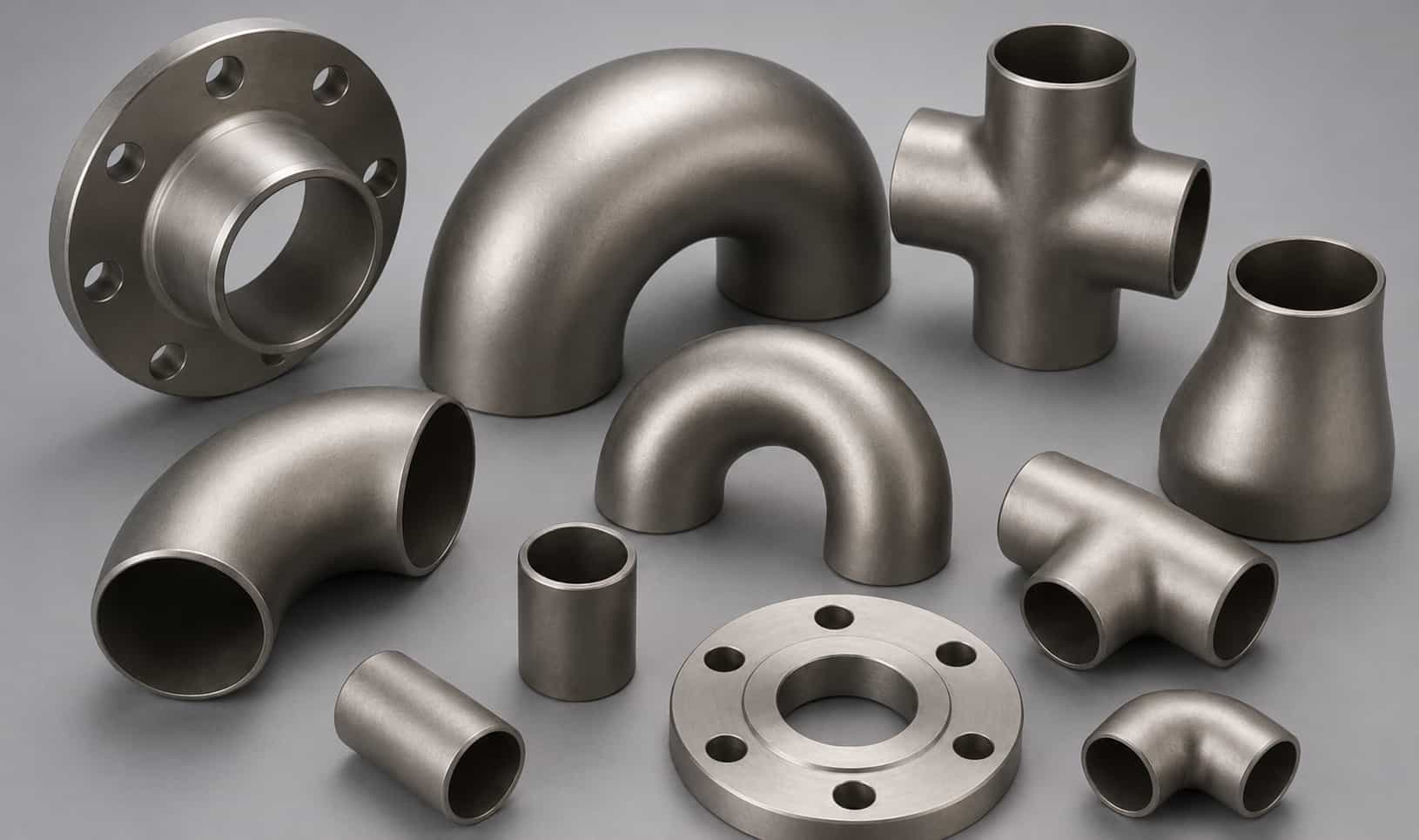
Titanium Welding Fittings
- 45-degree and 90-degree elbows;
- 180-degree returns;
- equal and reducing tees;
- concentric and eccentric reducers;
- caps;
- lap-joint stub ends; and
- drawing-specific bends, branches, or welded assemblies.
ASTM B363 covers factory-made welding fittings including elbows, returns, caps, tees, reducers, and lap-joint stub ends.[4] A fitting may be produced from seamless pipe, welded pipe, plate, bar, or billet using forming, welding, machining, or a combination. The order should state whether seamless construction is mandatory, welded construction is permitted, or several qualified routes may be proposed. Required RT, UT, PT, dimensional inspection, or pressure testing must also be identified.
Forged Grade 2 Titanium Flanges
The material route for forged Grade 2 titanium flanges is commonly reviewed to ASTM B381-26 Grade F-2.[5] Welding-neck, slip-on, blind, lap-joint, or drawing-specific machined flanges may be discussed. Each flange inquiry should state:
- dimensional standard and edition;
- NPS and pressure Class or project design pressure;
- flange type and bore;
- RF, FF, ring-joint, or drawing-specific facing;
- facing finish and machining pattern;
- bolt-hole quantity, diameter, and bolt circle;
- ASTM B381-26 Grade F-2 material;
- NDE, dimensional report, marking, and MTC requirements; and
- wall, bevel, and bore transition to the connecting pipe.
ASME B16.5-2025 addresses dimensions, materials, markings, testing, and pressure-temperature ratings for flanges and flanged fittings from NPS 1/2 through NPS 24.[12] The project must not assume that writing “Class 150” by itself establishes the allowable pressure for an F-2 titanium flange. The responsible designer must confirm that the governing piping Code accepts the material and whether the rating comes from a listed standard table, Code rules, or project-specific calculation.
Why Package Review Reduces Interface Problems
| Interface issue | Common split-purchase risk | Package-review control |
|---|---|---|
| Diameter system | Tube OD does not match NPS fitting geometry | Align nominal size, actual OD, and bore |
| Wall thickness | Excessive internal mismatch at fitting or flange | Check schedule, actual wall, counterbore, and transition bevel |
| Material | Grade 2 pipe is paired with an unspecified flange forging | Lock the grade and product standard in the BOM and document index |
| Facing | RF/FF or roughness differs from the mating equipment | Match face-to-face dimensions and facing details to the interface drawing |
| Standard edition | Separate suppliers use different revisions | State one approved edition in the purchasing specification |
| Traceability | Fittings arrive without clear heat or manufacturing traceability | Define piece marking and the final document index before production |
“Matching supply” does not require every component to originate from one titanium heat. If same-heat, same-heat-treatment-batch, or approved-source restrictions apply, they must be stated at inquiry because they can materially affect minimum quantity, price, and delivery.
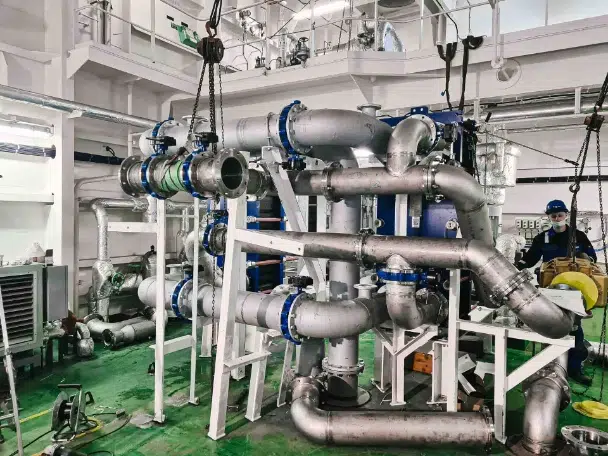
Welding and Installation of Grade 2 Titanium Pipe
The central welding risk is contamination of hot titanium by oxygen, nitrogen, or hydrogen from the atmosphere. The weld face, root, and hot trailing region require appropriate inert-gas shielding under an approved procedure. AWS D10.6/D10.6M:2000 provides guidance for GTAW of titanium piping and tubing, including joint preparation, preweld cleaning, gas shielding, welding procedures, and weld quality tests.[14]
Key controls include:
- remove grease, oxide, iron particles, moisture, and marker residue before welding;
- use titanium-dedicated brushes, abrasives, gloves, and work areas to prevent carbon-steel contamination;
- use a qualified WPS/PQR and appropriately qualified welders;
- where filler is required, use ERTi-2 or another filler approved by the design and welding procedure and classified under the applicable welding-consumable specification;[15]
- provide stable internal purge gas and control oxygen level and purge time;
- inspect weld color, surface, geometry, and NDE results to the project acceptance standard; and
- perform required postweld cleaning or pickling without grinding away evidence of an unacceptable contaminated layer.
Weld color can be used as a process-control indicator, but acceptable discoloration limits must follow the approved welding procedure, project specification, and responsible engineering authority. Color alone does not establish weld acceptance. Discoloration outside the approved criteria must be evaluated and dispositioned under the applicable welding and quality procedures rather than concealed by cosmetic polishing.[14]
Inspection of Tube, Fittings, and Flanges
The inspection plan should match the product specification, manufacturing route, and consequence of failure.
| Inspection | Zweck | RFQ detail required |
|---|---|---|
| Chemistry | Establish Grade 2 / UNS R50400 identity | Heat analysis, product analysis, residual rules, and report format |
| Tensile test | Verify strength and ductility | Lot definition, orientation, size applicability, and acceptance values |
| Flattening, bend, or flare test | Check tube ductility and weld-zone integrity | Select the test from the applicable tubular standard |
| Eddy-current/electromagnetic test | Full-length screening for tube discontinuities | Reference standard, sensitivity, coverage, and marking |
| Ultrasonic test | Evaluate wall or longitudinal discontinuities | Method, reference block, acceptance, and coverage |
| RT or UT of welds | Examine welded pipe and fitting seams | Percentage, technique, quality level, and acceptance criteria |
| Liquid penetrant test | Detect surface-breaking discontinuities | Areas, surface condition, and acceptance standard |
| Hydrostatic or pneumatic test | Demonstrate pressure integrity | Pressure, hold time, medium, and pneumatic-test safety controls |
| Dimensional and borescope inspection | Verify OD, wall, ends, bore, and internal surface | Sampling/full inspection, roughness, weld profile, and image records |
| Cleanliness testing | Control oil, particles, and residues | Test method, limits, rinse quality, and packaging environment |
Medical and high-purity systems may additionally need cleaning validation, particle or residue testing, surface-roughness reports, packaging confirmation, and detailed batch traceability. Pressure equipment may require third-party witness points, material traceability maps, welding records, and statutory files. These requirements should appear in the inspection and document schedule before quotation.
How DAXUN Coordinates a Grade 2 Titanium Piping Package
| Stage | Main activity |
|---|---|
| 1. Technical review | Separate B338 exchanger tube, B861 seamless pipe, and B862 welded pipe; confirm the fluid and design Code |
| 2. BOM review | Check every straight length, elbow, tee, reducer, stub end, and flange against the interfaces |
| 3. Material route | Confirm Grade 2 tube, B363 fitting feedstock, and B381-26 Grade F-2 flange-forging routes |
| 4. Manufacturing coordination | Organize tubing, forming, forging, machining, heat treatment, and finishing within the quoted scope |
| 5. Inspection | Coordinate and review the agreed dimensional, mechanical, NDE, pressure, surface, and cleanliness inspections through the applicable mill, qualified processor, or inspection body |
| 6. Traceability | Link source heats, manufacturing lots, inspection reports, and finished markings |
| 7. Packaging | Cap ends, isolate surfaces, protect machined faces, and apply clean or export packing as required |
| 8. Documentation | Submit MTCs, inspection records, dimensional reports, packing lists, and agreed manufacturing records |
DAXUN’s exact responsibility is defined by the written quotation. Coordinating a package does not imply that melting, tube production, forging, testing, and machining all occur in one plant. The useful control is that each manufacturing responsibility, specification, and release document is identified and traceable.
Grade 2 Titanium Tube RFQ Checklist
| RFQ field | Example or decision required |
|---|---|
| Material | Grade 2 / UNS R50400; state if Grade 2H is required |
| Service | Water, chemical, medical equipment, heat exchanger, or another system |
| Fluid data | Full composition, concentration, pH, contaminants, temperature, pressure, and cleaning conditions |
| Tube/pipe specification | ASTM B338, B861, B862, applicable ASME SB, customer specification, and edition |
| Manufacturing route | Seamless, welded, welded/cold-worked, or supplier proposal permitted |
| Dimensions | OD x wall x length or NPS x schedule x length |
| Quantity | Pieces, total length, or weight for each size |
| Ends | Plain, beveled, flared, stub-ended, or drawing-specific machining |
| Fittings | Type, angle, radius, size, wall, ends, and quantity |
| Flanges | Standard, Class, type, facing, bore, dimensions, and quantity |
| Oberfläche | Pickled, ground, internal roughness, cleanliness, and weld-color requirements |
| Inspection | Eddy current, UT, RT, PT, hydro, pneumatic, borescope, or third-party inspection |
| Documents | MTC, EN 10204 type, NDE, pressure, dimensions, cleanliness, and traceability records |
| Design/regulatory basis | ASME B31.3, BPVC, BPE, medical-device specification, or customer standard |
| Verpackung | End caps, iron-free isolation, clean packaging, or export case |
| Commercial details | Destination, Incoterm, project schedule, and required delivery date |
If the current project information consists only of an equipment drawing or piping BOM, send the original file. We can identify which requirements belong to the material specification and which belong to system design or medical-device validation, then record missing items in the technical clarification or quotation deviation list.
Häufig gestellte Fragen
Is Grade 2 titanium tube pure titanium?
It is commercially pure titanium, not 100 percent pure titanium. Grade 2 controls iron, oxygen, carbon, nitrogen, hydrogen, and residual elements and is identified as UNS R50400.
Can Grade 2 titanium pipe carry seawater?
It is an important candidate for seawater and chloride-bearing cooling systems. Temperature, velocity, crevices, deposits, dissimilar-metal joints, and shutdown cleaning conditions still require review.
Should a water line use ASTM B338 or ASTM B861/B862?
For a condenser or heat-exchanger transfer tube, ASTM B338 is generally the relevant route. For ordinary fluid-transport piping, seamless construction is commonly reviewed to ASTM B861 and welded construction to ASTM B862. The approved drawing and design Code control the final choice.
Is seamless Grade 2 pipe always better than welded pipe?
No. Seamless pipe has no longitudinal fusion weld. Welded pipe can offer advantages for larger diameters, long straight lengths, and project economics. Both must meet their product specification, inspection plan, and system-design requirements.
What is the difference between Grade 2 and Grade 2H?
Both use the UNS R50400 chemistry identity, but Grade 2H has a higher guaranteed minimum tensile strength and is intended primarily for pressure-vessel use in the ASTM titanium product specifications. Grade 2H may be certified to the corresponding Grade 2 requirements, but ordinary Grade 2 cannot automatically be certified upward as Grade 2H.[1][2][3]
Can Grade 2 titanium carry hydrochloric or sulfuric acid?
The grade name is insufficient. Unalloyed Grade 2 may be unsuitable in deaerated or low-oxygen reducing acid. Acid concentration, temperature, impurities, redox condition, and flow must be compared with reliable corrosion data or testing.
Can Grade 2 titanium tube be used for medical oxygen?
Do not assume so. High-concentration oxygen systems have ignition and compatibility hazards. Experience with Grade 2 water or chemical piping cannot be transferred to medical oxygen service without specialist oxygen-system material, cleanliness, and ignition-risk evaluation.
Does ASTM F67 cover Grade 2 titanium tubing?
The published scope of ASTM F67-24 does not list tubing. Ordinary Grade 2 pipe therefore should not be marketed as ASTM F67 tube. Patient-contacting or implantable use requires a device-specific material and regulatory pathway.[9][10]
Can DAXUN supply fittings and flanges with the tube?
Yes. We can quote Grade 2 straight tube with ASTM B363-route elbows, tees, reducers, caps, and stub ends, plus ASTM B381-26 Grade F-2 forged flanges. The final standards, construction, dimensions, inspection, and documents are confirmed in the quotation.
Can a matching titanium flange simply be used at ASME Class 150?
It can be machined to an ASME B16.5 dimensional and drilling pattern when specified, but the designer must establish Grade F-2 titanium acceptance and the pressure-temperature rating under the governing piping Code. The words Class 150 alone are not a material-independent pressure guarantee.
Which documents can be supplied?
The order may call for MTCs, chemistry and tensile reports, dimensional reports, NDE records, pressure-test certificates, surface or cleanliness records, piece/lot traceability lists, packing lists, and third-party inspection reports.
Discuss Your Grade 2 Titanium Piping Package with DAXUN
For water, chemical, or medical-equipment fluid lines, send the fluid data, design pressure and temperature, tube specification, dimensions, quantities, and equipment interface drawing. For a complete package, include the piping BOM or isometric so that the straight pipe, fittings, and flange dimensions, wall transitions, ends, and document requirements can be checked together.
DAXUN can supply Grade 2 titanium tube and coordinate matching fittings and flanges within the agreed scope. The quotation will identify which items are reviewed to ASTM B338, B861, B862, B363, or B381-26 and which requirements come from an ASME Code, a medical-device specification, or the customer’s drawing. This makes the material, interfaces, inspection, and release documents verifiable before shipment.
Technical Accuracy Statement and Sources
This page supports material identification, preliminary screening, and purchasing communication. It is not a pressure design, corrosion guarantee, medical-device approval, or material certificate. Final suitability depends on fluid review, approved drawings, applicable standard editions, design calculations, manufacturing validation, and actual release documents.
- ASTM B338-17(2021): Seamless and Welded Titanium and Titanium Alloy Tubes for Condensers and Heat Exchangers
- ASTM B861-24: Titanium and Titanium Alloy Seamless Pipe
- ASTM B862-23: Titanium and Titanium Alloy Welded Pipe
- ASTM B363-23: Seamless and Welded Titanium Welding Fittings
- ASTM B381-26: Titanium and Titanium Alloy Forgings
- ATI CP Grade 2 / UNS R50400 Product Data
- ATI Corrosion-Resistant Titanium Technical Data
- TIMET Corrosion Resistance of Titanium
- ASTM F67-24: Unalloyed Titanium for Surgical Implant Applications
- FDA Guidance on ISO 10993-1 Biological Evaluation of Medical Devices
- FDA: Factors Affecting Quality of Reprocessing
- ASME B16.5-2025: Pipe Flanges and Flanged Fittings, NPS 1/2 Through NPS 24
- ASME BPE-2026: Bioprocessing Equipment
- AWS D10.6/D10.6M:2000: Recommended Practices for Gas Tungsten Arc Welding of Titanium Piping and Tubing
- AWS A5.16/A5.16M:2023: Specification for Titanium and Titanium-Alloy Welding Electrodes and Rods