



If you are sourcing ASTM F136 titanium rod, the first thing to check is not only the diameter or price. For medical machining, dental components, orthopedic parts, or high-reliability precision work, the buyer usually needs to know whether the rod is truly Grade 23 Ti-6Al-4V ELI, whether the heat number is traceable, and whether the final MTC can support the required standard.
That is where many purchasing problems begin. A supplier may offer “titanium Grade 23 bar,” but the order may require ASTM F136. Another supplier may quote a general ASTM B348 Grade 23 bar, while the drawing asks for implant-related material documentation. The material may look similar, but for medical or regulated projects, the standard, test results, heat number, surface condition, and certificate details decide whether the bar can move into machining.
DAXUN ALLOY supplies titanium materials, stainless steel, nickel alloy materials, and processed metal products for global B2B buyers. For ASTM F136 titanium rod orders, we help buyers confirm grade, standard, size, delivery condition, surface finish, inspection requirements, packaging, and certificate needs before quotation.
What Is ASTM F136 Titanium Rod?
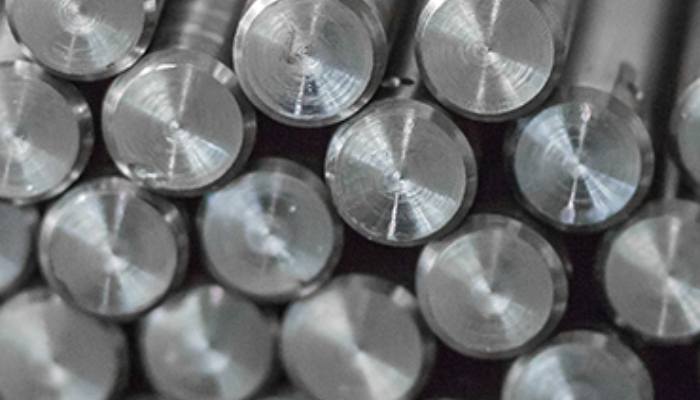
ASTM F136 titanium rod is a wrought Ti-6Al-4V ELI titanium alloy product. It is commonly known as Grade 23 titanium rod, Ti-6Al-4V ELI bar, or UNS R56401 titanium rod. “ELI” means extra low interstitial, which refers to tighter control of elements such as oxygen, nitrogen, carbon, and hydrogen.
This matters because these interstitial elements can affect ductility, toughness, and long-term reliability. Compared with standard Grade 5 Ti-6Al-4V, Grade 23 is often selected when the buyer needs a cleaner material route, better ductility, and stronger documentation control.
| Specification Item | Typical Requirement for ASTM F136 Titanium Rod | Buyer Note |
|---|---|---|
| Material name | Ti-6Al-4V ELI titanium alloy | Also called Grade 23 titanium |
| UNS number | UNS R56401 | Confirm on MTC |
| Main standard | ASTM F136 | Confirm revision before order |
| Related standards | ISO 5832-3, ASTM B348 Grade 23, AMS 4930 | Not always interchangeable |
| Product form | Rod, round bar, billet, forged bar, ground bar | Select by machining route |
| Common supply length | 4 m, 5.8 m, 6 m, or cut length | Custom length available by order |
| Surface options | Black, peeled, bright, polished, ground, centerless ground | Surface affects machining allowance |
| Documentation | MTC, heat number, test report, EN 10204 3.1 if required | Must be confirmed before production |
Chemical Composition
For buyers, chemistry is not just a table in a standard. It is the first signal that the material is really Grade 23 ELI and not a general Ti-6Al-4V bar. The oxygen and iron limits are especially important when comparing Grade 23 with Grade 5.
| Element | Typical ASTM F136 / Grade 23 Range or Limit, wt% | Why Buyers Check It |
|---|---|---|
| Aluminum, Al | 5.50-6.50 | Main strengthening alloying element |
| Vanadium, V | 3.50-4.50 | Main beta stabilizing element |
| Iron, Fe | <=0.25 | Lower control than many general Ti-6Al-4V grades |
| Oxygen, O | <=0.13 | Key ELI control point |
| Carbon, C | <=0.08 | Confirm on final MTC |
| Nitrogen, N | <=0.05 | Confirm on final MTC |
| Hydrogen, H | <=0.012 | Important for embrittlement control |
| Titanium, Ti | Balance | With permitted residuals |
| Residual elements | Subject to applicable standard | Confirm latest standard version |
These are typical reference values. Final acceptance should always be based on the applicable standard, purchase order, heat number, and final MTC.
Mechanical Properties
A machining factory may only ask for diameter and length at first. But if the part will be used for dental, orthopedic, or medical device components, mechanical values become part of the approval chain. Tensile strength, yield strength, elongation, and reduction of area should be checked against the certificate.
| Eigentum | Typical Minimum Value | Buyer Note |
|---|---|---|
| Tensile strength | >=860 MPa | Confirm by final test report |
| Yield strength, 0.2% offset | >=795 MPa | May vary by standard and condition |
| Elongation | >=10% | Depends on test method and product size |
| Reduction of area | >=25% | Useful for ductility review |
| Hardness | Order-specific | Specify if required |
| Ultrasonic testing | Order-specific | Recommended for critical or large-diameter bars |
If your customer asks for ASTM F136 titanium rod, do not rely only on catalogue data. The final MTC should show the actual heat chemistry and mechanical test results.
ASTM F136 Titanium Rod Production Process
For ASTM F136 titanium rod, buyers usually care about two things: the bar must be suitable for machining, and the material identity must stay clear from melting to shipment. A typical production route may include the following steps, depending on diameter, surface condition, and order standard.
| Step | Production Process | What It Means for the Buyer |
|---|---|---|
| 1 | Titanium sponge and alloy element preparation | Chemistry starts here, especially Al, V, O, Fe, H control |
| 2 | Vacuum melting and remelting, where specified | Helps improve cleanliness and chemical consistency |
| 3 | Ingot inspection and surface conditioning | Removes visible surface defects before hot working |
| 4 | Billet forging or hot rolling | Forms the bar structure and prepares the required size range |
| 5 | Heat treatment / annealing | Helps achieve required mechanical properties |
| 6 | Straightening | Improves usability for cutting and CNC machining |
| 7 | Peeling, grinding, polishing, or centerless grinding | Controls surface condition and machining allowance |
| 8 | Cut-to-length processing | Supports machining blanks or export-length supply |
| 9 | Marking and heat number control | Keeps traceability clear |
| 10 | Final inspection and packing | Protects the rod before shipment |
For CNC buyers, ground or centerless-ground rod can reduce machining time. For implant-related parts, the buyer should confirm whether annealed bar, forged bar, peeled bar, or ground bar is required before quotation.
Inspection and Quality Control Flow
ASTM F136 titanium rod is not a product where inspection should be treated as a formality. The QC flow needs to support traceability, dimensional reliability, and document review.
| QC Stage | Inspection Item | Buyer Benefit |
|---|---|---|
| Material identity review | Grade, heat number, standard, melt record | Reduces risk of wrong-grade supply |
| Chemical analysis | Al, V, Fe, O, C, N, H, Ti balance | Confirms Grade 23 / ELI chemistry |
| Mechanical testing | Tensile, yield, elongation, reduction of area | Confirms standard-related properties |
| Dimensional inspection | Diameter, length, tolerance, straightness | Helps machining planning |
| Surface inspection | Cracks, scratches, pits, folds, contamination | Reduces rejection risk |
| Ultrasonic testing | Internal quality, if required | Important for critical or large bars |
| Certificate review | MTC, standard, test values, heat number | Supports customer audit and incoming inspection |
| Packaging inspection | Labels, protection, wooden case or bundle | Protects surface and traceability in transit |
Before shipment, buyers should confirm whether the certificate needs to show ASTM F136 only, or whether ISO 5832-3, ASTM B348 Grade 23, EN 10204 3.1, or other order-specific requirements must also be included.
Product Forms Available
ASTM F136 usually appears in rod and bar inquiries, but buyers may also need related titanium forms for the same project.
| Product Form | Typical Supply Discussion | Common Buyer Use |
|---|---|---|
| Titanium round rod | Diameter, length, surface, tolerance | CNC turning and medical blanks |
| Titanium round bar | Hot rolled, forged, annealed, ground | Precision parts and OEM machining |
| Cut-to-size blank | Saw cutting or other cutting methods by order | Short machining blanks |
| Ground bar | Tight tolerance and smooth surface | Precision turning |
| Forged bar | Larger diameter and higher reliability requirements | Heavy-duty or critical components |
| Titanium plate / sheet | Thickness, surface, flatness | Medical and industrial components |
| Custom processed parts | Drawing, tolerance, inspection | OEM buyers |
Gemeinsame Anwendungen
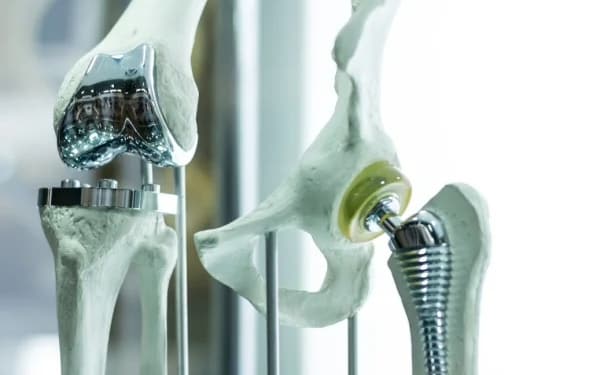
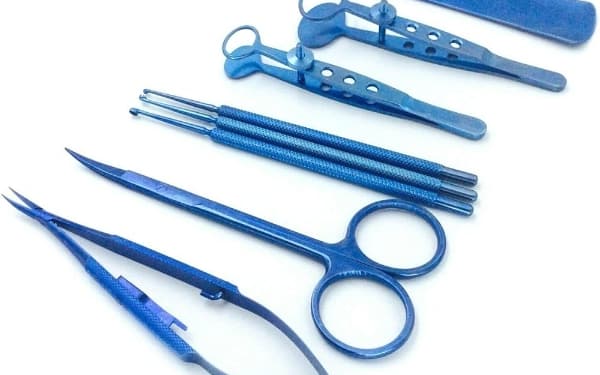
ASTM F136 titanium rod is commonly used for orthopedic screws, bone plates, dental implant components, spinal fixation systems, trauma devices, surgical tools, and precision medical machined parts. It can also be selected for non-medical components where the buyer wants Grade 23 chemistry, strong traceability, and reliable corrosion resistance.
The material is popular because it combines high strength, low density, corrosion resistance, and ELI chemistry control. But the raw material standard does not approve a finished medical device. Machining, cleaning, surface treatment, sterilization, validation, and regulatory approval remain separate responsibilities.
How to Choose the Right Material
If your drawing says ASTM F136, it is better to quote ASTM F136 directly instead of offering a general titanium bar. If the drawing says ASTM B348 Grade 23, the buyer should confirm whether ASTM F136 is also required. If the part is not medical and does not need ELI chemistry, Grade 5 titanium may be enough and may reduce cost.
| Buyer Situation | Better Material Direction | What to Confirm |
|---|---|---|
| Implant-related machining | ASTM F136 / ISO 5832-3 | MTC, heat number, mechanical test |
| Dental component machining | ASTM F136 or ISO 5832-3 | Surface, tolerance, certificate |
| General industrial Ti-6Al-4V part | Grade 5 or Grade 23 depending on requirement | Whether ELI is necessary |
| Precision CNC blank | Ground or centerless-ground Grade 23 rod | Diameter tolerance, straightness |
| Large-diameter bar | Forged or hot-worked bar | UT, surface condition, mechanical test |
Standards and Testing
| Standard | Material Scope | Buyer Note |
|---|---|---|
| ASTM F136 | Wrought Ti-6Al-4V ELI for surgical implant applications | Main standard for this article |
| ISO 5832-3 | Wrought Ti-6Al-4V alloy for implants for surgery | Often requested by international medical buyers |
| ASTM B348 Grade 23 | Titanium and titanium alloy bars and billets | General bar and billet procurement |
| ASTM F1472 | Ti-6Al-4V alloy for surgical implant applications, non-ELI | Different from ASTM F136 |
| ASTM F67 | Unalloyed titanium for surgical implant applications | CP titanium, not Ti-6Al-4V ELI |
| AMS 4930 | Ti-6Al-4V ELI material for aerospace-style requirements | Confirm revision and product form |
Testing may include chemical analysis, tensile test, dimensional inspection, surface inspection, ultrasonic testing, hardness testing if required, and final MTC review.
Packaging and Delivery
Titanium rod should be packed to avoid scratches, moisture, contamination, and handling damage. Depending on size and surface finish, packaging may include thick woven bags, plastic film, wooden cases, wooden pallets, metal straps, end protection, and clear heat-number labels.
Sea freight is usually suitable for regular orders. Air freight can be discussed for urgent small-volume orders, but packaging weight and freight cost should be considered.
What Buyers Should Confirm Before Ordering
| Item | What to Send Before Quotation |
|---|---|
| Klasse | ASTM F136 Grade 23 / Ti-6Al-4V ELI / UNS R56401 |
| Standard | ASTM F136, ISO 5832-3, ASTM B348 Grade 23, AMS 4930 |
| Size | Diameter, length, cut length, tolerance |
| Quantity | Pieces, kg, tons, or annual demand |
| Delivery condition | Annealed, forged, hot rolled, cold drawn, ground |
| Surface finish | Black, peeled, polished, bright, centerless ground |
| Inspection | Chemical, tensile, UT, hardness, dimensional inspection |
| Certificate | MTC, heat number, EN 10204 3.1 if required |
| Anwendung | Medical, dental, machining, OEM, industrial |
| Verpackung | Wooden case, pallet, bundle, special protection |
| Destination | Port, airport, country, Incoterms if known |
Why Work With DAXUN ALLOY
For ASTM F136 titanium rod, the value is not only in quoting a price. A reliable supplier should help the buyer make the order clear before production starts. DAXUN ALLOY can discuss titanium grade, standard, diameter, surface finish, cutting requirement, testing, certificate, and export packaging before quotation.
This helps buyers avoid common problems such as wrong standard, missing MTC details, unsuitable surface condition, unclear tolerance, or packaging that does not protect the material during international shipment.

FAQ
Is ASTM F136 titanium rod the same as Grade 23 titanium bar?
ASTM F136 is commonly associated with Grade 23 Ti-6Al-4V ELI, UNS R56401. The final order should still confirm the exact standard and MTC.
Can ASTM F136 titanium rod be used for implants?
It is a raw material standard for surgical implant applications. Finished device compliance depends on design, machining, cleaning, sterilization, validation, and regulatory approval.
What is the difference between Grade 5 and Grade 23 titanium?
Both are Ti-6Al-4V alloys. Grade 23 is the ELI version with lower interstitial limits, especially oxygen, and is often chosen for medical and high-reliability applications.
Can DAXUN supply ground ASTM F136 titanium rod?
Ground or centerless-ground surface can be discussed according to diameter, tolerance, quantity, and delivery condition.
Can the rod be cut to size?
Yes, cut-to-length service can be discussed. Please provide diameter, length, tolerance, quantity, and cutting requirement.
Can you provide MTC?
MTC can be discussed according to order requirements. ASTM F136, ISO 5832-3, EN 10204 3.1, and other certificate requirements should be confirmed before quotation.
What information is needed for quotation?
Send grade, standard, diameter, length, quantity, surface finish, delivery condition, tolerance, testing, certificate requirement, application, and destination port.
Schlussfolgerung
ASTM F136 titanium rod is not a simple titanium bar purchase. The buyer needs Grade 23 Ti-6Al-4V ELI chemistry, controlled production, reliable inspection, clear traceability, and an MTC that supports the order requirement. To receive an accurate quotation from DAXUN ALLOY, send the grade, standard, diameter, length, quantity, delivery condition, surface finish, testing requirement, certificate requirement, application, and destination port.
Material Traceability and Quality Documentation
For medical-grade titanium materials, traceability is essential.
DAXUN ALLOY can provide:
– Heat number traceability
– Chemical composition reports
– Mechanical test reports
– Ultrasonic testing records
– Mill Test Certificates (MTC)