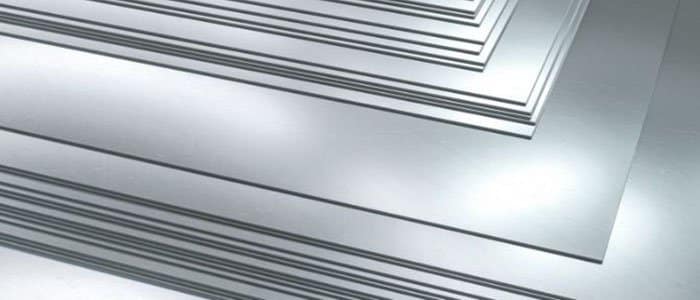



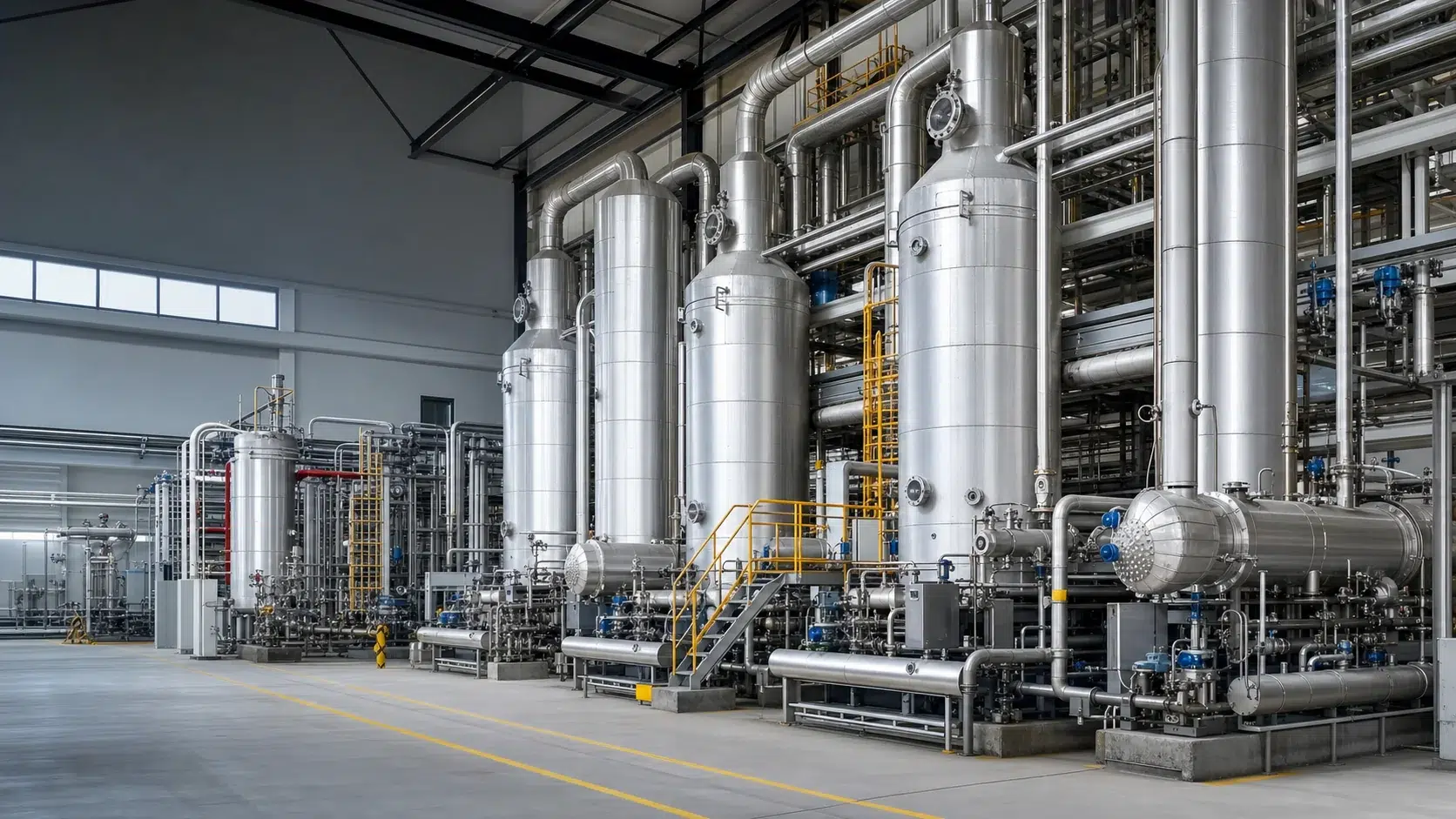
Direct answer: Nickel 200 and Nickel 201 are usually the first nickel materials to evaluate for hot, concentrated caustic soda because commercially pure nickel develops a protective oxide film and has very low corrosion rates in many sodium-hydroxide environments. Nickel 201 is preferred when metal temperature can exceed approximately 315 C because its lower carbon content reduces the graphitization risk associated with prolonged high-temperature exposure. Alloy 600 becomes attractive when the design needs greater strength, heating-coil performance, or improved tolerance of certain sulfur-bearing contaminants, but severe hot caustic can cause stress-corrosion cracking if stress and metallurgical condition are not controlled.[1][2][3]
FIRST CORROSION SCREEN
Nickel 200 or Nickel 201 for many hot concentrated caustic conditions
HIGH-TEMPERATURE DISTINCTION
Nickel 201 where graphitization risk makes low carbon essential
CONDITIONAL ALTERNATIVE
Alloy 600 when strength, heating duty, or specific contaminants justify it
DAXUN manufactures Nickel 200, Nickel 201, and Alloy 600 sheet, plate, pipe, and tube for project-defined caustic soda equipment. The correct material is selected by equipment zone and exposure, not by assigning one alloy to an entire evaporator train.
Why a Caustic Soda Evaporator Needs Zone-by-Zone Material Selection
Membrane-cell caustic is commonly produced at approximately 33% concentration and then evaporated to a commercial 50% solution. Diaphragm-cell liquor can enter evaporation at a lower concentration.[4] Higher concentration, rising boiling point, local film temperature, contaminants, and residual stress change the corrosion problem as liquor moves through the system.
The material-selection chain is:
concentration and boiling regime -> metal temperature and impurity activity -> general corrosion, graphitization, embrittlement, or cracking mechanism -> alloy, condition, fabrication, and inspection plan
That is why "50% NaOH" is not enough information. The same nominal concentration may contact a low-stress vessel wall, a hotter tube wall, a steam-heated surface, a stagnant crevice, or a weld with high residual stress. Those locations do not have the same risk.
Practical Selection Summary
| Service question | Material direction | Engineering limitation |
|---|---|---|
| Is high caustic corrosion resistance the primary requirement below about 315 C? | Start with Nickel 200 or Nickel 201 | Confirm concentration, actual metal temperature, chlorates, sulfur compounds, and weld condition |
| Can metal temperature exceed about 315 C for sustained periods? | Prefer low-carbon Nickel 201 over Nickel 200 | The boundary addresses graphitization risk; it is not a universal design-temperature rating |
| Does a heating coil or pressure boundary require higher strength than commercially pure nickel? | Evaluate Alloy 600 | Hot concentrated caustic SCC, residual stress, and heat treatment still require qualification |
| Are oxidizable sulfur compounds present at elevated temperature? | Alloy 600 may be favored over Nickel 201 | Sulfur chemistry and temperature must be quantified; generic "sulfur present" is inadequate |
| Are chlorates or other oxidizing contaminants present? | Do not rely on a clean-caustic corrosion chart | Use representative corrosion testing or documented service evidence |
| Is the equipment a multi-effect evaporator? | Select by effect, surface temperature, and component function | One material for every effect can add cost or leave the hottest zone underqualified |
This table is a screening tool, not a material-selection standard. Final selection belongs to the responsible equipment and corrosion engineers.
Nickel 200 and Nickel 201 in Caustic Soda Service
Nickel 200 (UNS N02200) and Nickel 201 (UNS N02201) are commercially pure wrought nickel grades. Their principal procurement difference for high-temperature service is carbon control: Nickel 201 is the lower-carbon grade.[2]
The Nickel Institute reports that Nickel 200 and Nickel 201 are generally the most corrosion-resistant commercial materials across broad caustic soda conditions. In compiled guide data, corrosion rates through approximately 73% caustic are generally below 0.025 mm/year (1 mpy), with rates increasing somewhat above that concentration.[1] This is a useful selection reference, not a guaranteed design allowance. Source data include particular specimens, exposure histories, impurity levels, velocities, and test methods.
Special Metals publishes one laboratory example for Nickel 200 in 50% caustic soda at 150 C: 0.010 mm/year after a 336-hour exposure.[2] The value demonstrates why pure nickel is considered for concentrated caustic, but it must not be copied into a corrosion allowance without confirming that the project chemistry and heat-transfer conditions are comparable.
Why Nickel 201 Is Preferred at Higher Temperature
Nickel 200 is normally limited to service below approximately 315 C where prolonged exposure could otherwise allow carbon to precipitate as graphite and reduce ductility. Nickel 201 was developed with lower carbon for resistance to this graphitization mechanism.[2]
The resulting decision is not "Nickel 201 is always better." Below the graphitization range, both grades can be technically appropriate. Above it, Nickel 201 removes a material risk that Nickel 200 cannot address merely through thicker wall.
When Alloy 600 Is the Better Candidate
Alloy 600 (UNS N06600) contains at least 72% nickel plus cobalt, 14-17% chromium, and 6-10% iron in the producer-published composition.[3] Compared with commercially pure nickel, it offers higher strength and retains useful properties at elevated temperature.
The Nickel Institute describes Alloy 600 as having caustic corrosion resistance similar to commercially pure nickel through anhydrous caustic in many conditions. It is used for heating coils and other components where higher-temperature strength matters. The same guide also identifies sulfur-bearing caustic as a case where Alloy 600 may be preferred because it is less susceptible than commercially pure nickel to a low-melting nickel-sulfide reaction.[1]
Those advantages do not make Alloy 600 immune to caustic cracking. Producer guidance warns that high-strength caustic at elevated temperature can cause stress-corrosion cracking, particularly when high residual or operating stress is present. Stress-relief examples are published for specific conditions, but the project must approve the actual cycle because heat treatment also affects grain size, dimensions, surface, and mechanical response.[3]
Use Alloy 600 because a defined requirement justifies it, such as:
- higher mechanical strength at the design temperature;
- a heating-coil or heat-transfer geometry with demanding thermal stress;
- sulfur-bearing contamination that changes the failure mechanism;
- a broader mixed-contaminant environment supported by test or service data;
- an approved equipment design already qualified around UNS N06600.
Do not select it merely because "more alloying" sounds safer.
Concentration Is Only One Decision Variable
Metal Temperature
Bulk liquor temperature may be lower than the tube-wall or heating-surface temperature. Local overheating can increase corrosion, concentrate impurities at the surface, and change stress-corrosion-cracking risk. The material review should use credible maximum metal temperature, not only outlet temperature.
Chlorates and Oxidizing Species
Commercially pure nickel performs especially well in reducing caustic conditions because of its protective oxide. Chlorates and oxidizable sulfur compounds can disrupt the expected behavior and increase corrosion.[1][2] Feed analysis, upset chemistry, and cleaning chemicals belong in the material specification.
Chlorides
Chlorides can make austenitic stainless steels vulnerable to chloride stress-corrosion cracking at elevated temperature. This does not mean every chloride-containing caustic service automatically requires Alloy 600. It means the engineer must evaluate both the alkaline environment and the contaminant-driven cracking mechanism.
Stress and Fabrication History
Cold forming, welding, tube expansion, thermal cycling, and restrained assembly can create residual stress. In Alloy 600, stress can convert an otherwise acceptable general-corrosion result into a cracking problem. A corrosion-rate coupon alone does not measure that susceptibility.
Velocity, Wetting, and Deposits
Flow distribution, two-phase wetting, vapor-liquid interfaces, deposits, and stagnant pockets create local exposures. An evaporator body, tube sheet, heating tube, vapor line, distributor, and condensate-side component should not be assumed to share one corrosion rate.
Match the Alloy to the Product Form and Standard
Material selection is incomplete until the component form has a valid procurement route.
| المواد | Plate, sheet, and strip | Seamless pipe and tube | Condenser and heat-exchanger tube |
|---|---|---|---|
| Nickel 200 / Nickel 201 | ASTM B162-26[5] | ASTM B161-25[6] | ASTM B163-26, where the ordered alloy, condition, and dimensions are within scope[7] |
| Alloy 600 | ASTM B168-19e1[8] | ASTM B167-23[9] | ASTM B163-26, where the ordered alloy, condition, and dimensions are within scope[7] |
ASTM B162-26 covers UNS N02200 and N02201 plate, sheet, and strip. ASTM B168-19e1 includes UNS N06600 plate, sheet, and strip. ASTM B161-25 and ASTM B167-23 are seamless pipe-and-tube routes for their listed alloys; neither is a welded-tube specification. ASTM B163-26 is specifically for seamless nickel and nickel-alloy condenser and heat-exchanger tubes up to the dimensional limits stated in its scope.[5][6][7][8][9]
The purchase order must state the edition, grade, product form, dimensions, condition, tests, and any supplementary requirements. A vessel plate certificate does not certify a heat-exchanger tube, and a tube certificate does not qualify a completed evaporator.
Equipment Components That Need Separate Review
Evaporator Body and Heads
Sheet or plate selection depends on pressure design, forming strain, weld design, heat treatment, corrosion allowance, and local temperature. Clad construction, if considered by the equipment designer, requires its own bond, forming, welding, and inspection specification.
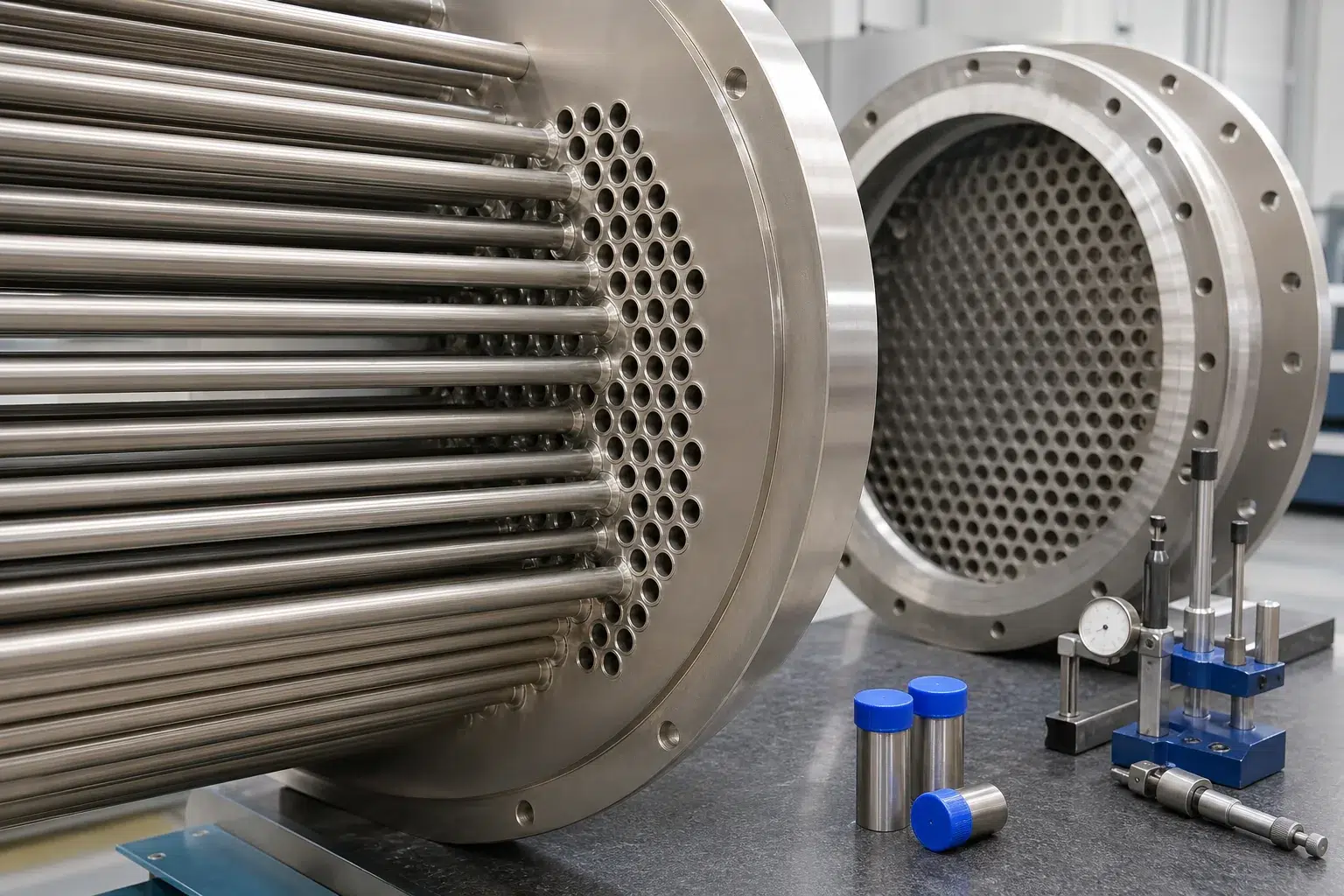
Heating Tubes and Coils
Tube selection must consider wall temperature, heat flux, fouling, tube-to-tubesheet joint design, thermal expansion, and cleaning. Nickel 200/201 can lead on corrosion resistance; Alloy 600 can lead where strength or a specific contaminant case controls.
Tube Sheets, Nozzles, and Fittings
Mixing alloy families without reviewing galvanic behavior, weld compatibility, and differential thermal expansion can move the failure to a joint. Matching forgings and fittings must be ordered to an applicable product standard and approved grade rather than described only as "nickel alloy."
Vapor and Condensate Zones
These zones may see different chemistry from the concentrated liquor. Carryover, condensate contamination, oxygen, and startup or shutdown conditions should be identified before extending the liquor-side material choice to the whole system.
Engineering boundary: a low general-corrosion rate does not by itself establish resistance to caustic stress-corrosion cracking, graphitization, weld attack, or contaminant-driven failure.
Common Failure Modes
| Failure mode | Consequence | Required control |
|---|---|---|
| Selecting only by NaOH concentration | Hot-wall and contaminant effects are missed | Define normal, startup, shutdown, upset, and cleaning envelopes |
| Using Nickel 200 above its suitable thermal range | Graphitization can reduce ductility | Use Nickel 201 where the qualified metal-temperature history requires it |
| Assuming Alloy 600 cannot crack in caustic | Residual-stress-assisted cracking may occur | Control condition, forming, welding, stress, and approved heat treatment |
| Ignoring chlorates or sulfur compounds | Corrosion can differ sharply from clean-caustic data | Analyze feed and concentrated liquor; test representative chemistry |
| Applying one alloy to every evaporator effect | Cost rises or the most severe zone remains underqualified | Complete a component-by-component material map |
| Treating a corrosion-rate table as a design guarantee | Test conditions may not match heat-transfer surfaces | Record source conditions and validate against the project envelope |
| Ordering the right alloy to the wrong product standard | Dimensions and acceptance tests may not match the component | Match plate, sheet, pipe, tube, fitting, and forging to their proper routes |
| Certifying raw material but not fabrication | Welding, forming, and heat treatment can change risk | Qualify procedures and inspect the final manufactured condition |
How to Validate the Material Choice
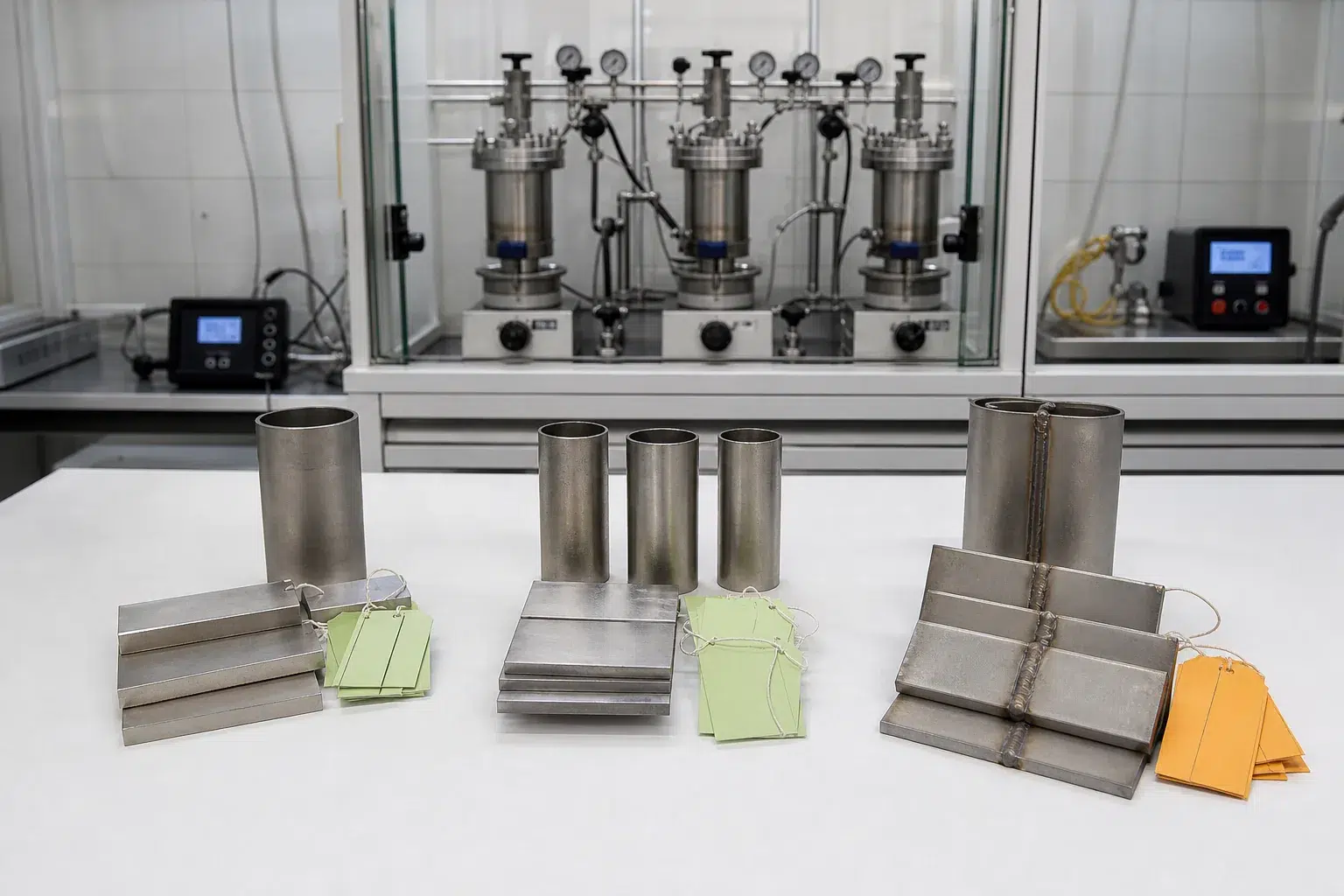
A defensible qualification plan can combine several evidence levels:
- Current specification review: confirm alloy, product form, condition, dimensions, and acceptance tests.
- Authoritative published data: use Nickel Institute and producer data to screen candidates, while retaining their test conditions and limitations.
- Process chemistry definition: document NaOH concentration, maximum metal temperature, chlorides, chlorates, sulfur compounds, oxygen, cleaning chemicals, and upset limits.
- Representative corrosion testing: expose the actual candidate condition, weld, and heat-affected zone where published evidence does not cover the service.
- Cracking assessment: add stressed specimens or another approved SCC method when Alloy 600 stress-corrosion cracking is a credible mechanism.
- Fabrication qualification: verify forming, welding, tube joining, heat treatment, cleaning, and NDE on representative production material.
- Inspection and records: retain heat traceability, MTCs, procedure records, test results, dimensional reports, and release documentation.
Short coupon exposure can rank alloys, but it may not reproduce years of heat flux, deposits, shutdown concentration, and cyclic stress. The responsible engineer should state how laboratory evidence is translated into corrosion allowance, inspection interval, and service life.
DAXUN Nickel and Alloy 600 Manufacturing Scope
DAXUN manufactures Nickel 200, Nickel 201, and Alloy 600 materials for caustic-processing equipment. Available product forms can include sheet, plate, cut blanks, seamless pipe, seamless tube, and heat-exchanger tube to the confirmed specification and drawing.
Project-defined manufacturing can include cutting, forming, heat treatment, tube sizing, end preparation, machining, surface finishing, cleaning, dimensional inspection, supplementary testing, marking, and controlled packaging. Heat and lot traceability are maintained through the agreed production route.
DAXUN's role is to convert an engineering material decision into a coherent material package. We do not treat a raw-material certificate as certification of the finished evaporator. Pressure design, equipment code compliance, welding qualifications, corrosion design, and final system approval remain project-controlled requirements.
A useful quotation starts with the real exposure envelope. Send concentration, maximum metal temperature, contaminants, component form, fabrication history, and required validation records.
RFQ Checklist for Caustic Soda Equipment Materials
Provide the following information with the inquiry:
- equipment type and component: body, head, tube sheet, coil, tube, pipe, nozzle, or fitting;
- candidate alloy or request for Nickel 200, Nickel 201, and Alloy 600 comparison;
- normal and maximum NaOH concentration;
- bulk temperature, design temperature, and estimated maximum metal temperature;
- chlorides, chlorates, sulfur compounds, oxygen, and other contaminants;
- normal, startup, shutdown, upset, and cleaning conditions;
- pressure, heat flux, flow regime, and expected deposits where relevant;
- product form, dimensions, quantity, and drawing;
- ASTM specification and edition, or request for technical review;
- forming, welding, heat treatment, NDE, corrosion testing, and witness requirements;
- MTC, traceability, inspection documentation, packaging, and destination.
الأسئلة المتداولة
What material is best for a caustic soda evaporator?
There is no single best material for every component. Nickel 200 or Nickel 201 is often the first corrosion-resistant choice for hot concentrated caustic. Nickel 201 is preferred for sustained exposure above approximately 315 C, while Alloy 600 may be selected for greater strength, heating coils, or certain sulfur-bearing conditions. Actual chemistry, metal temperature, stress, and equipment design govern.[1][2][3]
What is the difference between Nickel 200 and Nickel 201?
Both are commercially pure nickel grades. Nickel 201 has lower carbon, which reduces the risk of graphitization and embrittlement during prolonged exposure above approximately 315 C.[2]
Is Alloy 600 always better than Nickel 201?
No. Alloy 600 offers higher strength and can be advantageous in specific contaminant or heating-coil cases. Commercially pure nickel often provides the simpler corrosion choice in clean caustic, while Alloy 600 introduces a stress-corrosion-cracking question that must be controlled.
Can 316L stainless steel be used in a caustic soda evaporator?
Suitability depends on concentration, temperature, contaminants, stress, and component zone. Hot chloride-bearing caustic can create serious cracking risk for austenitic stainless steel. This page focuses on the nickel materials DAXUN manufactures for the more demanding hot and concentrated zones; it does not establish a universal stainless-steel limit.
Which ASTM standard applies to Nickel 201 plate?
ASTM B162-26 covers Nickel 200 and low-carbon Nickel 201 plate, sheet, and strip.[5] Tube, pipe, and heat-exchanger tube require the applicable tubular standard rather than B162.
Which ASTM standard applies to Alloy 600 heat-exchanger tube?
ASTM B163-26 is the seamless condenser and heat-exchanger tube route discussed here, subject to its listed alloys, conditions, and dimensional scope.[7] ASTM B167-23 is a separate seamless pipe-and-tube route and should not be described as a welded-tube standard.[9]
Technical Accuracy Statement
This article provides material-selection guidance, not an equipment design approval. Published corrosion rates are evidence from stated or compiled conditions, not universal design allowables. Final selection must follow the approved process envelope, current purchase specifications, governing construction code, qualified fabrication procedures, and the responsible engineering authority.
Last reviewed: August 1, 2026
Technical Sources
- Nickel Institute, Alloy Selection for Service in Caustic Soda, Technical Guide 10019
- Special Metals, Nickel 200 and Nickel 201 Technical Bulletin
- Special Metals, INCONEL Alloy 600 Technical Bulletin
- OxyChem, Caustic Soda Handbook
- ASTM B162-26, Standard Specification for Nickel Plate, Sheet, and Strip
- ASTM B161-25, Standard Specification for Nickel Seamless Pipe and Tube
- ASTM B163-26, Standard Specification for Seamless Nickel and Nickel Alloy Condenser and Heat-Exchanger Tubes
- ASTM B168-19e1, Standard Specification for Listed Nickel-Alloy Plate, Sheet, and Strip
- ASTM B167-23, Standard Specification for Listed Nickel-Alloy Seamless Pipe and Tube