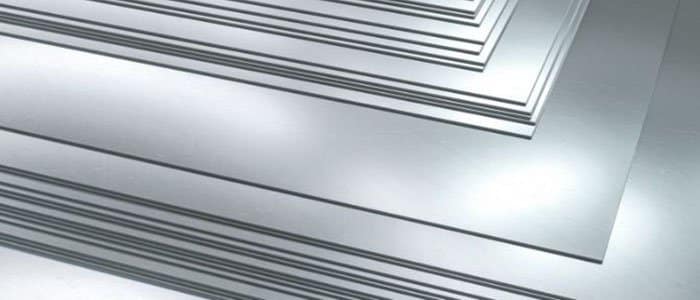



PH 13-8Mo Plate, Forgings & Round Bar | DAXUN
Direct answer: PH 13-8Mo is a high-strength, precipitation-hardening martensitic stainless steel identified as UNS S13800. Engineers choose it when they need a demanding combination of strength, fracture toughness, transverse ductility, and resistance to stress-corrosion cracking. For the DAXUN supply scope discussed on this page, we focus on heavy plate, forgings, and round bar. We do not list PH 13-8Mo pipe, tubing, or thin sheet as standard DAXUN offer forms.
If your drawing simply says “13-8 Mo,” we will not rush to quote by grade name alone. We first want to know whether you need rolled plate, a forged block or shape, or round bar. Those products can share the same UNS number while following different specifications, conversion routes, test locations, ultrasonic requirements, and acceptance values.
That distinction matters most in thick sections. A surface hardness reading may look excellent while the center of a large forging has experienced a different cooling rate. Likewise, a rectangular saw-cut piece from bar does not become certified plate, and a forged block should not be represented as rolled plate. Our job before quotation is to help you place the requirement in the correct product and specification route.
| Item | DAXUN quotation scope for this page |
|---|---|
| Material | PH 13-8Mo precipitation-hardening stainless steel, UNS S13800 |
| Product forms | Heavy plate, forged plate/block or custom forging, and round bar |
| Common supply condition | Solution heat treated (Condition A), or an agreed aged condition when technically available |
| Aerospace routes | AMS 5864D for plate; AMS 5629K for bars and forgings within their stated scopes |
| General industrial ASTM routes | ASTM A693 for flat products, ASTM A564/A564M for bars and shapes, and ASTM A705/A705M for forgings, as applicable |
| Melt route | VIM plus consumable-electrode remelting when the ordered aerospace specification requires it |
| Processing to discuss | Saw cutting, rough machining, grinding, solution treatment, aging, and inspection, as confirmed in the quotation |
| Standard exclusions | Pipe, tubing, and thin sheet are not presented as standard DAXUN PH 13-8Mo supply forms |
| Documents | MTC and agreed dimensional, heat-treatment, NDT, traceability, or supplementary reports |
Exact dimensions, stock, process route, test coverage, and delivery condition remain subject to technical review and written quotation. A standard’s maximum scope is not a promise that every size is immediately available.
What Is PH 13-8Mo Stainless Steel?
PH 13-8Mo is a low-carbon, martensitic precipitation-hardening stainless steel. Its nominal alloy concept combines about 13% chromium, 8% nickel, 2.2% molybdenum, and 1.1% aluminum. Solution treatment develops the martensitic matrix, while subsequent aging forms fine strengthening precipitates. By changing the aging temperature, engineers can move the balance between maximum strength and greater ductility, toughness, and stress-corrosion resistance.
You may see the grade written as PH13-8Mo, PH 13-8 Mo, 13-8Mo, UNS S13800, XM-13, or the European cross-reference 1.4534 / X3CrNiMoAl13-8-2. These names help identify the alloy family; they do not prove that two products are contractually interchangeable.
| Designation | How we use it during order review | Important limitation |
|---|---|---|
| PH 13-8Mo / 13-8Mo | Common commercial grade name | Does not define product form, standard revision, melt route, or condition |
| UNS S13800 | Unified alloy identifier | Chemistry identity alone does not establish aerospace quality or mechanical acceptance |
| XM-13 | Historical/common ASTM grade reference | The actual ASTM product specification and edition still control |
| 1.4534 / X3CrNiMoAl13-8-2 | Common European cross-reference | Do not substitute for AMS or ASTM material without engineering approval |
| H950 to H1150 | Aging-condition designations based on nominal Fahrenheit temperature | Full time, temperature tolerance, cooling method, and prior condition must follow the governing specification |
One feature separates premium aerospace PH 13-8Mo from a generic chemistry match: melt quality. AMS 5629K explicitly covers premium aircraft-quality material produced by vacuum induction melting plus consumable-electrode remelting. Producer literature commonly describes this route as VIM-VAR.
This route supports cleanliness, chemical homogeneity, and reliable transverse properties. However, the MTC and approved source must confirm it. We never infer VIM-VAR from an UNS number alone.
Why Buyers Choose PH 13-8Mo for Thick and Highly Loaded Parts
Customers rarely choose this alloy because they need “another stainless steel.” Usually, a designer is trying to solve several problems at once:
- The part needs substantially higher strength than an austenitic stainless steel can normally provide.
- A large section needs useful longitudinal and transverse ductility rather than strength at the surface only.
- Fracture toughness, fatigue resistance, and cleanliness matter in a safety-critical component.
- The service creates concern about stress-corrosion cracking in a high-strength steel.
- The component must remain corrosion resistant in a compatible environment while carrying a high mechanical load.
PH 13-8Mo can answer that combination well, but only after the team chooses the product form, aging condition, test orientation, and corrosion assumptions correctly.
H950 may attract attention because it produces the highest strength. However, a higher aging condition can be the wiser choice when toughness, dimensional stability, machining response, or stress-corrosion resistance carries more weight.
Heavy Plate, Forging, or Round Bar: Which Form Do You Actually Need?
The outline of a finished part does not tell us which starting form is correct. We look at load direction, section size, machining removal, grain flow, material utilization, test access, and the governing drawing.
| Product form | Best fit | Engineering advantage | Purchasing point often missed |
|---|---|---|---|
| Rolled heavy plate | Wide, relatively flat machined or structural parts | Predictable rolling directions and efficient nesting | Specify longitudinal, long-transverse, and short-transverse orientation |
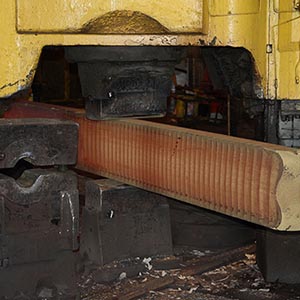
| Forged plate or block | Very thick rectangular sections or parts outside a rolled-plate route | Forging can consolidate the section and tailor reduction and grain flow | A forged block remains a forging; define reduction, coupon location, heat treatment, and NDT |
| Custom open-die or closed-die forging | Shafts, disks, rings, lugs, landing-gear or actuator shapes | Grain flow can follow part geometry and reduce unfavorable short-transverse loading | Send the forging drawing, allowance, radii, grain-flow expectation, and qualification plan |
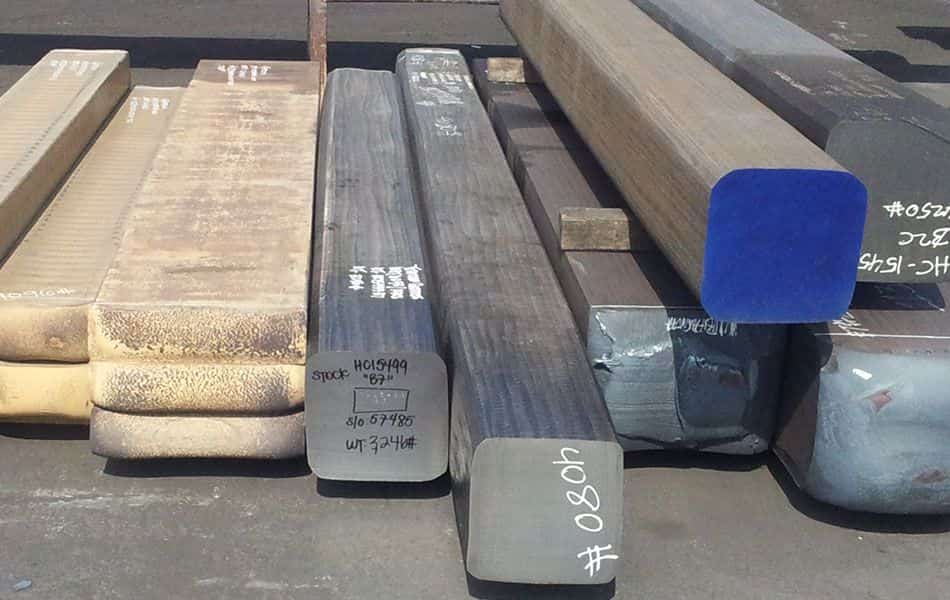
| Round bar | Shafts, pins, fasteners, valve parts, and cylindrical components | Efficient turning, grinding, and bar-level traceability | State whether hot-finished, forged, peeled, turned, ground, or cold-finished material is required |
A critical plate boundary: AMS 5864D covers PH 13-8Mo plate only through 3.00 in. (76.2 mm), inclusive. If your part needs a thicker rectangular section, please do not write “AMS 5864 plate” automatically.
We may need to review an ASTM plate route, an AMS 5629 or ASTM A705 forging route, or a customer-controlled forged-block specification. The final answer depends on the drawing and the design authority.
Similarly, AMS 5629K covers bars and forgings up to 12 in. (305 mm) nominal diameter or least distance between parallel sides in the solution-treated condition, plus stock of any size for subsequent forging, rings, or extrusion. That is a specification scope, not DAXUN’s guaranteed stock range.
PH 13-8Mo Standards and Product Responsibilities
The following map uses the standards current at the technical review date of this article, 15 July 2026. Your purchase order should still state the required edition because customer approvals and legacy drawings may control a different revision.
| Padrão | Product covered for this article | What the buyer should state |
|---|---|---|
| SAE AMS 5864D | VIM plus consumable-electrode-remelted plate up to 76.2 mm | Thickness, dimensions, Condition A or aging responsibility, NDT, and drawing requirements |
| SAE AMS 5629K | Premium aircraft-quality bars and forgings, among other listed forms | Exact form, size, melt route, condition, test direction, NDT class, and approved source |
| ASTM A564/A564M-25 | Hot- or cold-finished precipitation-hardening bars and shapes | Bar form, finish, condition, dimensions, supplementary tests, and general requirements |
| ASTM A705/A705M-23 | Age-hardening stainless steel forgings | Forging drawing, condition, heat treatment, mechanical tests, impact requirements, and supplementary controls |
| ASTM A693-24 | Precipitation-hardening stainless flat products | Required heavy-plate route; do not infer aerospace melt quality from ASTM compliance |
| AMS-STD-2154E | Ultrasonic inspection process for wrought metals | Coverage, class, reference standard, scan surfaces, and acceptance level |
| ASTM A388/A388M-26 | Contact ultrasonic examination of steel forgings | Required quality level, coverage, calibration, scan direction, and reporting |
An alloy cross-reference never replaces a product specification. “UNS S13800, H1000” still leaves unanswered whether the product is plate, bar, or forging; whether it is VIM-VAR; where the tensile coupon comes from; and which ultrasonic indications are acceptable.
ASTM A693 flat products are generally furnished solution annealed, with aged test samples used to demonstrate the precipitation-hardening response. ASTM A564 likewise places XM-13 bar in its specified solution-annealed delivery route.
The current AMS 5629K and AMS 5864D scopes also describe solution-heat-treated, precipitation-hardenable products. Therefore, if you want finished stock delivered in H950, H1000, or another aged condition, identify that requirement and the party responsible for final aging. Then verify that the requested certification route permits it.
For aerospace, nuclear, pressure-containing, or other regulated work, material compliance does not certify the finished component. The design organization and equipment manufacturer remain responsible for design, machining, welding, final heat treatment, NDT, code calculations, source approval, and completed-component conformity.
Chemical Composition of PH 13-8Mo
The following limits come from ATI’s published PH 13-8Mo plate and bar product data. Contractual acceptance must follow the exact material specification, approved producer requirements, and final MTC. An AMS or customer-controlled premium route may impose tighter residual-element controls.
| Elemento | Mass fraction, wt.% | Why it matters |
|---|---|---|
| Carbon, C | 0.05 max | Low carbon supports toughness and welding-process control |
| Manganese, Mn | 0.20 max | Residual-element control supports consistency |
| Silicon, Si | 0.10 max | Controlled residual and deoxidizer level |
| Phosphorus, P | 0.010 max | Low limit supports toughness and cleanliness |
| Sulfur, S | 0.008 max | Low sulfur reduces inclusions and directional property loss |
| Chromium, Cr | 12.25–13.25 | Provides the stainless corrosion-resisting base |
| Nickel, Ni | 7.50–8.50 | Supports transformation behavior and toughness |
| Molybdenum, Mo | 2.00–2.50 | Supports corrosion resistance and the strength-toughness balance |
| Aluminum, Al | 0.90–1.35 | Principal precipitation-hardening addition |
| Iron, Fe | Equilíbrio | Base metal |
Handheld XRF can help confirm chromium, nickel, and molybdenum identity, but it does not verify the complete chemistry table. Carbon and other low-level elements require suitable laboratory methods.
Therefore, we use heat traceability and the MTC as the primary release path. Independent chemical analysis should be added only when the purchase order requires it.
Condition A and Precipitation-Hardening Conditions
PH 13-8Mo normally reaches the customer in solution-treated Condition A or an agreed aged condition. Published producer guidance uses a solution-treatment temperature of approximately 927°C (1700°F), followed by air cooling. Cooling below approximately 16°C (60°F) is recommended to promote complete martensitic transformation before aging.
Large sections demand more than copying a temperature from a datasheet. Furnace loading, thermocouple placement, time after the coldest point reaches temperature, transfer time, cooling access, section geometry, and the lowest achieved temperature can all influence the center.
| Estado | Nominal aging temperature | Typical producer hold | General property direction |
|---|---|---|---|
| H950 | 510°C / 950°F | 4 h, air cool | Highest strength; lower ductility and greater process sensitivity |
| H1000 | 538°C / 1000°F | 4 h, air cool | Very high strength with a more balanced toughness/SCC profile |
| H1025 | 552°C / 1025°F | 4 h, air cool | Intermediate strength and ductility |
| H1050 | 566°C / 1050°F | 4 h, air cool | Lower strength with higher ductility and toughness |
| H1100 | 593°C / 1100°F | 4 h, air cool | Greater ductility and dimensional stability |
| H1150 | 621°C / 1150°F | 4 h, air cool | Lower strength with high ductility |
| H1150M | 760°C for 2 h, air cool; then 621°C for 4 h, air cool | Two-stage cycle | Controlled overaged condition often used to improve machinability |
These temperatures summarize producer practice. They do not replace the time and tolerance requirements in AMS, ASTM, a customer process specification, or a drawing.
Never age material directly from an unknown prior condition. First confirm that the material received the required solution treatment and transformation cycle.
Allow for Dimensional Contraction
Aging causes a small but measurable dimensional change. Published ARMCO data give the following approximate linear contraction from Condition A.
| Aging condition | Approximate contraction, in./in. |
|---|---|
| H950 | 0.0004–0.0006 |
| H1000 | 0.0004–0.0006 |
| H1050 | 0.0005–0.0008 |
| H1100 | 0.0008–0.0012 |
| H1150 | Approximately 0.0030 |
| H1150M | Approximately 0.0035 |
For a precision part, we normally ask who will perform aging and whether final machining happens before or after that operation. The answer determines machining allowance, distortion planning, datum strategy, and responsibility for final dimensions.
Mechanical Properties: Read the Test Context Before the Numbers
The following table shows a published property trend for 15.9 mm (0.625 in.) bar. It helps compare H950 through H1150, but these values are not automatic guarantees for heavy plate, large round bar, or a thick forging.
| Estado | 0.2% yield strength, MPa | Tensile strength, MPa | Alongamento, % | Reduction of area, longitudinal/transverse, % |
|---|---|---|---|---|
| H950 | 1415 | 1515 | 10 | 45 / 35 |
| H1000 | 1310 | 1415 | 10 | 50 / 40 |
| H1025 | 1205 | 1275 | 11 | 50 / 45 |
| H1050 | 1140 | 1205 | 12 | 50 / 45 |
| H1100 | 931 | 1035 | 14 | 50 / 50 |
| H1150 | 620 | 931 | 14 | 50 / 50 |
Why are we so careful with this table? Because a value without product form, size, orientation, heat-treatment lot, and test location can mislead a designer.
ATI, for example, publishes an H1000 plate reference minimum of approximately 1413 MPa tensile strength, 1310 MPa yield strength, 10% elongation, and 43 HRC. That does not make the same values universal for every ASTM route or every thickness.
For a thick-section order, please define:
- Required aging condition and whether testing occurs after final heat treatment.
- Tensile orientation: longitudinal, transverse, or another drawing-defined direction.
- Coupon location: surface, quarter-thickness, mid-radius, center, prolongation, or sacrificial block.
- Whether the coupon is integral, attached, separately forged, or heat-treated with the production lot.
- Required tensile, yield, elongation, reduction of area, hardness, Charpy impact, fracture toughness, or fatigue data.
- Retest rules and lot definition.
Hardness offers a fast process-control signal, although it cannot replace tensile or toughness testing.
| Estado | Published HBW reference | How to use it |
|---|---|---|
| Solution treated | 363 max | Confirm Condition A response and screen for unintended hardening |
| H950 | 430 min | Verify high-strength aging response within the ordered test plan |
| H1000 | 400 min | Use with tensile results and heat-treatment records |
| H1050 | 372 min | Do not interpolate an unlisted condition without the governing specification |
| H1100 | 313 min | Confirm the expected reduction as aging temperature rises |
| H1150 | 283 min | Evaluate with strength, ductility, and application requirements |
| H1150M | 302 max | Identify the controlled overaged condition; it is not equivalent to H1150 |
The current Carpenter hardness table does not list a separate H1025 value. We leave it out rather than inventing one. The governing standard and actual test report should provide the acceptance basis.
Useful Physical Data
| Imóveis | Published reference value | Design note |
|---|---|---|
| Densidade | About 7.74 g/cm³ in Condition A; 7.76 g/cm³ in H1000 | Use the design-approved value for mass calculations |
| Elastic modulus | Approximately 194–202 GPa | Source and test method still matter |
| Mean thermal expansion coefficient, 21–93°C | Approximately 10.4 × 10⁻⁶/°C in H1000 | Consider machining temperature and service growth |
| Magnetism | Martensitic PH stainless; magnetic | Do not select where a nonmagnetic alloy is mandatory without approval |
These figures are producer reference data, not purchasing acceptance limits.
Thick-Section Engineering: What Changes at the Center?
For PH 13-8Mo heavy plate and forgings, the centerline deserves deliberate attention. Thick material creates longer thermal paths, while a large forging can contain different working histories from surface to core.
| Thick-section concern | What can happen | How to control the risk |
|---|---|---|
| Cooling after solution treatment | The center may cool more slowly and transform differently | Use a qualified cycle, suitable loading, a thermocouple plan, and section-aware cooling |
| Forging reduction | Insufficient working may leave segregation or weak consolidation | State minimum reduction or an approved forging procedure |
| Grain-flow direction | A machined feature may load the least favorable direction | Review the forging sketch, part orientation, and test direction |
| Centerline cleanliness | Internal discontinuities become commercially important in large sections | Define UT method, coverage, reference reflectors, class, and acceptance |
| Mechanical-property location | Surface coupons may not represent the center | Specify quarter-thickness, mid-radius, center, or drawing-defined sampling |
| Residual stress and distortion | Rough machining and aging can move critical datums | Use balanced stock removal and adequate final allowance |
| Section transitions | Heavy-to-thin geometry changes heating, cooling, and strain | Review forging design and heat-treatment fixturing |
This is why “same heat number” is necessary but not always sufficient. For critical parts, the purchase order should connect heat identity, forging lot, heat-treatment lot, test coupon, NDT report, and final piece marking.
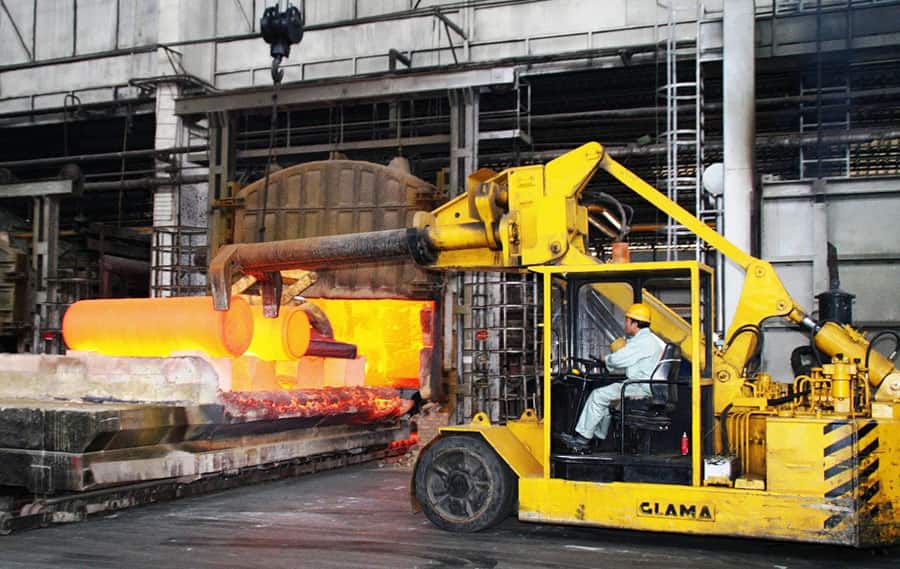
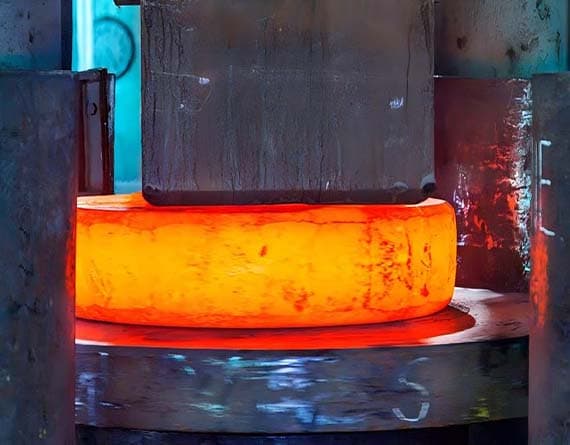
How PH 13-8Mo Heavy Plate, Forgings, and Round Bar Are Produced
The exact manufacturing chain depends on the selected source mill and order. We do not imply that every operation occurs on one DAXUN-owned line.
DAXUN reviews the required route, coordinates supply and agreed processing, checks the release documents, and preserves traceability within the scope stated in the quotation.
| Stage | Heavy plate route | Forging route | Round-bar route |
|---|---|---|---|
| Contract review | Confirm standard, thickness, direction, condition, UT, and drawing | Confirm forging drawing, stock, reduction, grain flow, test material, and NDT | Confirm diameter, finish, condition, straightness, length, and UT |
| Melting/remelting | VIM plus the required remelt route; verify source and heat identity | Use the specified premium melt route when ordered | Do not infer aerospace quality from UNS alone |
| Primary conversion | Break down the ingot to slab with controlled hot work | Convert billet or ingot through open- or closed-die forging | Convert billet by forging or rolling |
| Product forming | Hot roll with controlled reductions and directions | Forge to the approved envelope, flow direction, and allowance | Roll or forge to round and straighten as applicable |
| Tratamento térmico | Solution treat; age only when ordered and approved | Use a section-aware solution cycle, then age when required | Solution treat and age by lot when ordered |
| Surface preparation | Descale, grind, machine, or finish as specified | Rough machine inspection surfaces and remove scale | Turn, peel, grind, or centerless grind when ordered |
| Inspection | Dimensions, surface, mechanical tests, hardness, UT, and traceability | Dimensions, tests, UT, MT/PT, and forging records as ordered | Diameter, straightness, surface, testing, UT, and identity |
| Cutting and packing | Use the agreed cutting process without changing certification origin | Mark each piece and protect inspection surfaces | Cut to length, transfer heat identity, bundle or crate |
Published producer guidance uses forging temperatures around 1177–1204°C (2150–2200°F) and recommends completing substantial final reduction below approximately 1038°C (1900°F) before air cooling.
These figures are process guidance, not a substitute for an approved forging procedure, especially for aerospace parts or very large cross-sections.
Inspection and Quality Control for PH 13-8Mo
Quality control begins before production. If a customer requests “UT and 3.1 certification” only after the material has already been produced, the required coverage, acceptance class, or witnessing may no longer be possible.
We prefer to settle the inspection plan while the quotation remains open.
| Control step | What we review or arrange | What the RFQ should define |
|---|---|---|
| Contract review | Product form, standard edition, condition, dimensions, source restrictions, and drawing notes | Governing documents and order of precedence |
| Melt and chemistry verification | Heat number, MTC chemistry, melt/remelt route, and traceability | Approved source and independent chemistry requirements |
| Heat-treatment control | Furnace/cycle record and lot identity when included | Condition, process specification, pyrometry, thermocouple, and chart requirements |
| Mechanical testing | Tensile, yield, elongation, reduction of area, hardness, impact, or other tests | Temperature, direction, location, quantity, lot definition, and acceptance values |
| Ultrasonic testing | Wrought-product or forging UT according to the ordered method | Revision, class, scan directions, coverage, surface state, and report format |
| Surface NDT | Magnetic-particle or penetrant testing when suitable and ordered | Method, stage, coverage, indication evaluation, and acceptance criteria |
| Macro/micro examination | Macroetch, grain size, inclusion cleanliness, or microstructure | Sampling location, method, rating system, and acceptance limit |
| Dimensional inspection | Plate thickness/flatness, forging envelope, bar diameter/straightness | Drawing, tolerances, datums, frequency, and report requirements |
| Final release | Marking, identity transfer, certificate review, packing, and document index | Certificate type, reports, language, legalization, and destination requirements |
AMS-STD-2154E provides ultrasonic methods for wrought metals, while ASTM A388/A388M-26 covers contact ultrasonic examination of steel forgings.
Neither “UT tested” nor a test-method number is enough. The order must also state the acceptance class or quality level, scan coverage, reference basis, and reporting requirement.
Because PH 13-8Mo is ferromagnetic in its martensitic condition, magnetic-particle testing can detect suitable surface and near-surface discontinuities. Liquid penetrant testing remains useful for surface-breaking indications on accessible nonporous surfaces.
The drawing or inspection plan must choose the method and acceptance criteria. A laboratory should not invent them after examination.
Third-party inspection can be discussed before quotation. Please identify the inspection body, document-review points, witness or hold points, test scope, acceptance criteria, report format, inspection location, and cost responsibility.
An MTC, EN 10204 certificate type, third-party stamp, or aerospace release document should be requested by its exact contractual name rather than treated as interchangeable paperwork.
Machining, Grinding, and Welding Considerations
PH 13-8Mo rewards process planning. Its high strength means that tooling, residual stress, and final aging sequence deserve more attention than they would for a soft annealed stainless grade.
Machining: Condition A is commonly selected for machining before final aging, while H1150M may improve machinability for some routes. Use rigid setups, sharp tools, controlled feeds, and effective cooling. Avoid rubbing because work hardening and heat can shorten tool life.
On a large block, remove material in a balanced sequence and leave enough allowance for movement during aging.
Grinding: Control heat input and surface integrity. If the part is fatigue critical, the drawing may require burn inspection, controlled stock removal, or a specified final surface direction. These are component requirements, not automatic material-certificate tests.
Welding: The alloy can be welded with qualified procedures, but a weld changes the local thermal history. The fabricator must control cleanliness, filler selection, interpass practice, post-weld heat treatment, distortion, and final NDT.
Supplying AMS or ASTM PH 13-8Mo base material does not certify the completed weldment or restore parent-metal properties automatically.
Corrosion and Embrittlement Boundaries
Producer data describe PH 13-8Mo general corrosion resistance as approaching Type 304 in many media and better than common 400-series martensitic stainless steels.
Other producer data note that its performance can be below 17-4PH in certain strongly oxidizing or reducing environments. Both statements can be true because corrosion depends on the medium, concentration, temperature, aeration, deposits, crevices, surface condition, and applied stress.
We do not present PH 13-8Mo as a universal substitute for 316L, duplex stainless steel, or a nickel alloy.
Before selection, send us or your corrosion engineer the real service data:
- Normal and upset process chemistry
- Chloride concentration
- pH range
- Maximum metal temperature
- Cleaning chemicals
- Crevice geometry
- Galvanic contacts
- Applied potential
- Expected stress
Stress-corrosion resistance generally improves as the alloy is aged away from the maximum-strength H950 condition. Producer guidance often considers H1000 or a higher aging temperature when SCC resistance carries more weight.
The design authority must still choose the final condition using validated environmental and mechanical data.
Hydrogen deserves equal attention. Like other ultra-high-strength martensitic steels, PH 13-8Mo can become vulnerable to hydrogen-assisted cracking.
Acid pickling, electroplating, cathodic cleaning, corrosion under cathodic protection, or unsuitable process delays can introduce hydrogen. Plating specifications, cleaning procedures, baking requirements, maximum delay times, and verification belong in the finished-part process plan.
PH 13-8Mo vs. 17-4PH Stainless Steel
These precipitation-hardening grades sometimes appear on the same shortlist, but they are not drop-in substitutes.
| Selection point | PH 13-8Mo / UNS S13800 | 17-4PH / UNS S17400 |
|---|---|---|
| Strengthening system | Aluminum-containing precipitation system | Copper-containing precipitation system |
| Typical premium route | Frequently specified VIM-VAR for aerospace products | Available through broader commercial and aerospace routes |
| Main attraction | High strength, fracture toughness, transverse properties, cleanliness, and SCC capability | Broad availability, familiar processing, and practical strength/corrosion balance |
| Product availability | More specialized; this page focuses on heavy plate, forgings, and round bar | Widely available in plate, sheet, bar, forgings, and other forms |
| Corrosion decision | Good in compatible media, but environment and aging condition matter | Also environment-dependent and may perform better in some media |
| Cost and lead time | Usually higher and more source-sensitive | Often more economical and easier to source |
| Substitution rule | Requires design-authority approval | Requires design-authority approval |
If a drawing requires PH 13-8Mo, we do not suggest 17-4PH merely because both can reach high strength. Fracture toughness, transverse performance, melt cleanliness, SCC qualification, and the approved-material list may be the reasons the designer selected S13800.
Common Applications by Product Form
| Aplicação | Common starting form | Why PH 13-8Mo may be selected | What still needs confirmation |
|---|---|---|---|
| Aircraft structural and landing-gear components | Forging, heavy plate, or bar | Strength, fracture toughness, transverse performance, and cleanliness | Approved source, AMS route, grain flow, fracture mechanics, NDT, and process qualification |
| Actuator shafts, pins, and fasteners | Round bar or forging | High yield strength and corrosion resistance | Final condition, thread process, surface treatment, hydrogen control, and fatigue testing |
| Valve stems and pressure-control parts | Round bar or forging | Strength and resistance in selected industrial fluids | Fluid compatibility, code status, pressure-boundary responsibility, and impact requirements |
| Gears, couplings, and drive components | Forged blank or bar | High core strength and good toughness balance | Surface treatment, distortion, contact fatigue, and hardness profile |
| Energy and nuclear auxiliary parts | Forging or heavy plate | Clean material, thick-section capability, and high mechanical performance | Project specification, source approval, corrosion data, and nuclear QA |
| Semiconductor and precision equipment | Plate, forged block, or bar | Strength, controlled dimensional stability, and clean premium material | Cleanliness, magnetic behavior, contamination limits, finish, and process sequence |
The application name does not certify suitability. Aerospace, nuclear, pressure-equipment, and semiconductor projects may each impose approval systems beyond the base material standard.
What Controls PH 13-8Mo Price and Lead Time?
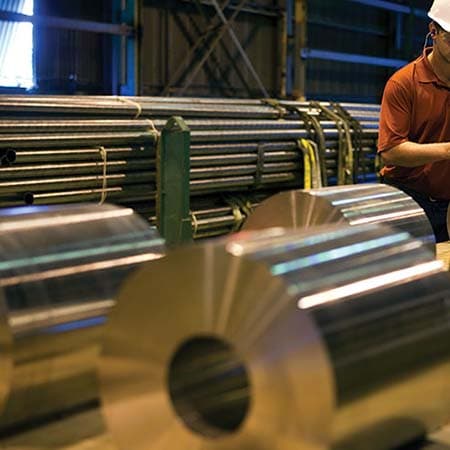
A useful price cannot come from grade and weight alone. PH 13-8Mo is source-sensitive, and one inspection clause can change the production route more than a small dimensional change.
When comparing quotations, make sure each supplier has priced the same technical package.
| Cost or schedule driver | Why it matters |
|---|---|
| Approved melt source and remelt route | Aerospace material and source approvals narrow the supply base |
| Product form and section size | Plate, forged block, custom forging, and large bar use different production routes |
| Condition and heat-treatment responsibility | Final aging, furnace qualification, and thermocouple requirements change process time |
| Forging geometry and reduction | Dies, open-die operations, flow controls, test prolongations, and allowances affect input weight |
| Mechanical sampling | Extra orientations, center coupons, impact sets, and fracture testing add time and material |
| UT and surface NDT | Higher sensitivity, greater coverage, and formal reports add operations |
| Documentation and source surveillance | Charts, source records, hold points, and release documents require planning |
| Quantity and cutting yield | A small part may require a much larger qualified parent plate, bar, or forging stock |
| Packing and logistics | Custom crates, heavy lifting, urgent air freight, and destination rules affect delivered cost |
We would rather explain these factors than quote an attractive number against an incomplete scope. Send inspection and certification clauses with the first inquiry so we can separate mandatory costs from optional testing.
Packaging, Marking, and Export Delivery
We plan packing around product mass, machined surfaces, corrosion-protection compatibility, lifting, and traceability.
| Product | Practical packing approach | Traceability point |
|---|---|---|
| Heavy plate | Protected faces, edge protection, strong skid or pallet, waterproof wrapping, and agreed lifting plan | Keep heat, lot, and piece marks visible or transfer them to an approved tag/map |
| Round bar | Bundles or wooden cases with separators, waterproof wrapping, and secure strapping | Mark each bar or bundle and preserve cut-piece identity |
| Forjamento | Custom skid or case, protected machined/UT surfaces, moisture barrier, and lifting points | Match piece number, forging lot, heat-treatment lot, and certificate index |
Temporary rust preventive, desiccant, vacuum-barrier packing, export wood compliance, sea freight, or urgent air shipment can be discussed.
The protective material must remain compatible with the customer’s cleaning, welding, vacuum, or semiconductor process.
What to Confirm Before Ordering PH 13-8Mo
The fastest quotation is not the shortest RFQ. A clear technical package lets us compare the correct source, process, and test plan the first time.
| RFQ field | Information to send |
|---|---|
| Product form | Rolled heavy plate, forged plate/block, custom forging, or round bar |
| Material identity | PH 13-8Mo / UNS S13800 and any approved-producer restriction |
| Governing standard | AMS 5864, AMS 5629, ASTM A693, ASTM A564, ASTM A705, or customer specification, including revision |
| Estado | Condition A, H950, H1000, H1025, H1050, H1100, H1150, H1150M, or customer cycle |
| Dimensões | Finished and stock sizes, machining allowance, length, quantity, and piece-weight limits |
| Drawing controls | Grain flow, rolling direction, datums, radii, test prolongations, and identification zones |
| Surface/finish | As-rolled, descaled, ground, peeled, turned, machined, or another measurable requirement |
| Mechanical tests | Values, orientation, location, temperature, frequency, lot definition, and coupon disposition |
| NDT | Method, revision, acceptance class, coverage, scan direction, stage, and report |
| Documentation | MTC, certificate type, melt-route evidence, heat-treatment charts, NDT reports, and source approval |
| Third-party inspection | Agency, witness/hold points, scope, location, notice period, and acceptance authority |
| Aplicação | Component, load direction, environment, design temperature, regulatory route, and critical risks |
| Logistics | Destination, Incoterm, packing, lifting limits, marking, and required date |
Why Discuss the Order With DAXUN?
We know that PH 13-8Mo inquiries often arrive with a difficult drawing and very little room for material ambiguity. Our useful role is not to repeat the grade name back to you.
We help separate plate, bar, and forging requirements, identify where a standard stops, discuss processing and inspection before quotation, and keep the agreed heat, lot, test, and piece documents connected through delivery.
DAXUN works across stainless steel and other engineering-alloy product forms, with cutting and processing options subject to quotation. We confirm actual source, dimensions, condition, inspection, certification, and schedule for each order.
Where a requirement falls outside a standard or our confirmed scope, we say so before production rather than hiding it in general sales language.
Perguntas mais frequentes
What is PH 13-8Mo stainless steel?
PH 13-8Mo is a martensitic precipitation-hardening stainless steel, UNS S13800, designed for high strength together with good fracture toughness, transverse ductility, and stress-corrosion resistance. Its properties depend strongly on solution treatment, aging condition, section size, and product specification.
Does DAXUN supply PH 13-8Mo pipe or thin sheet?
Not as standard forms within this page’s DAXUN supply scope. We focus on PH 13-8Mo heavy plate, forgings, and round bar. Any request for a different form requires a separate source, standard, and availability review.
Which standard applies to PH 13-8Mo heavy plate?
AMS 5864D is the direct aerospace plate specification and covers nominal thickness through 76.2 mm. ASTM A693 may apply to an industrial flat-product order when correctly invoked. A thicker rectangular section may require a forged-block route.
Is AMS 5629 used for both round bar and forgings?
Yes. The current AMS 5629K scope includes premium aircraft-quality bars and forgings, along with other listed wrought forms. The order must still distinguish the exact form, dimensions, condition, test orientation, NDT class, and source approval.
Which condition gives the highest strength?
H950 generally gives the highest strength among the common aging conditions. H1000 and higher temperatures trade some strength for greater ductility, toughness, dimensional stability, and often better stress-corrosion behavior.
Can a saw-cut rectangular piece from round bar be certified as plate?
No. Cutting changes geometry, not product origin or certification. The piece remains derived from bar, with the bar’s working direction, specification, test basis, and dimensional history.
What ultrasonic standard should I specify?
AMS-STD-2154E is commonly used for aerospace wrought products. ASTM A388/A388M-26 addresses steel forgings when invoked by the order. In both cases, state the acceptance class, coverage, calibration basis, scan direction, surface condition, and reporting requirement.
Can PH 13-8Mo replace 17-4PH?
Not without engineering approval. PH 13-8Mo often emphasizes premium melt quality, fracture toughness, transverse performance, and SCC resistance. 17-4PH generally offers broader availability and lower sourcing complexity.
Send Us a PH 13-8Mo RFQ We Can Review Properly
When you send DAXUN the product form, standard and revision, condition, dimensions, quantity, drawing, test orientation and location, NDT acceptance level, certificate requirement, application, destination, and required date, we can discuss a technically meaningful quotation.
For a large plate or forging, please include the finished-part outline and load direction. Those details often decide whether rolled plate, forged block, or a custom forging is the sound starting route.
Technical Sources
- SAE AMS 5629K: PH 13-8Mo bars and forgings
- SAE AMS 5864D: PH 13-8Mo plate
- ASTM A564/A564M-25
- ASTM A705/A705M-23
- ASTM A693-24
- Carpenter Technology 13-8Mo datasheet
- Cleveland-Cliffs / ARMCO PH 13-8 Mo product data bulletin
- ATI 13-8 Mo product data
- SAE AMS-STD-2154E
- ASTM A388/A388M-26
- ASTM E1417/E1417M-21e1
- ASTM E1444/E1444M-26
Accuracy note: Standard editions, producer capabilities, dimensional ranges, heat-treatment requirements, and acceptance values can change. The signed purchase order, approved drawing, applicable standard edition, and final MTC govern each delivery. This article does not constitute design approval or completed-component certification.